White vs. Black Garlic: 6 Unique Benefits of This Fermented Superfood
You’ve heard garlic’s good for you, but not all cloves are equal. White garlic hits hard with allicin for immunity and blood pressure, while black garlic—slowly fermented—brings smoother digestion, fewer odors, and a richer antioxidant punch. You’ll also find differences in gut support, heart health, and even how your brain benefits. And yes, their flavors can change how you cook, from savory to subtly sweet. Which one fits your goals—and your kitchen—might surprise you.
Black vs. White Garlic: Key Differences and How to Choose
Curious which garlic to grab? Choose based on flavor, nutrients, and how you’ll use it.
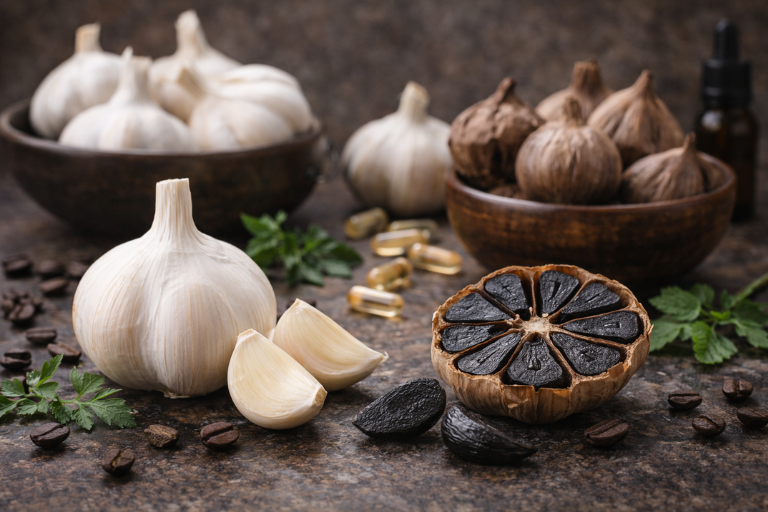
White garlic hits hard: sharp, pungent, sometimes spicy, and aromatic. It can dominate a dish, especially raw, though cooking mellows it to a lightly sweet note.
Black garlic tastes entirely different—umami-rich with caramel, balsamic, and molasses hints—soft, chewy, and subtly fragrant. Black garlic is easier to digest, making it a gentler choice for those with sensitive stomachs.
For health perks, white garlic delivers more allicin and slightly more vitamin C. Black garlic offers higher total antioxidants, more sulfur compounds, and S-allyl-cysteine. Fermentation often enhances bioactives without stripping benefits.
In the kitchen, pick white garlic for bold, savory recipes that welcome its punch. Use black garlic when you want complexity that blends into sweet or savory dishes, from dressings and marinades to desserts.
Digestibility and Gut Comfort: Black vs. White Garlic
While both types can be gentle when cooked, black garlic tends to sit better on your stomach than white garlic.
Fermentation transforms sharp allicin into milder compounds like S-allyl cysteine, cutting the pungency that often triggers cramping, gas, or nausea. Lower allicin means less gastric irritation and a softer response from digestive enzymes.
Fermentation tames allicin into gentler compounds, easing gastric irritation and promoting calmer digestion.
You’ll also notice a sweeter, mellow taste and tender texture from aging at about 70°C and high humidity, which improves tolerance and bioavailability without upset. Black garlic also shows superior antioxidant and antimicrobial activities compared to white garlic, which can further support gut comfort.
Black garlic’s higher antioxidants help protect your gut lining from oxidative stress, support anti-inflammatory activity, and reduce lipid peroxidation. Reduced volatile sulfurs further limit gut fermentation issues.
White garlic can still work for you—especially cooked—but its raw pungency and variable genotypes often make digestibility less predictable.
No Garlic Breath: Why Black Garlic Smells Less
Because black garlic is gently heated and aged, it loses the volatile sulfur compounds that cause classic “garlic breath.” Controlled fermentation at about 60–90°C with high humidity converts sharp allicin and allyl methyl trisulfide into stabler, less smelly molecules, while Maillard reactions create sweeter aromas like 2‑acetyl‑pyrrole and furfural.
You notice the difference right away: the harsh, oniony bite fades, and a mellow, sour‑sweet scent emerges. Heat and humidity drive down total sulfurous compounds—allicin decomposes, cycloalliin vanishes, and pungent trisulfides drop—so you don’t exhale that lingering garlic cloud. Alliinase inactivation during heat treatment prevents the conversion of alliin to pungent allicin, further reducing sulfurous odors.
Meanwhile, Maillard chemistry shifts flavor toward molasses, tamarind, and licorice notes. Even low‑temperature aging at 5–10°C for 50–70 hours helps strip irritating volatiles. As sugars rise and new antioxidants form, the cloves turn black, chewy, and jelly‑like.
Sensory tests show you’ll prefer the softer aroma and cleaner aftertaste, so you can enjoy more without worrying about breath.
Prebiotic Fiber and Your Microbiome: Black vs. White Garlic
That gentler aroma points to another shift: how garlic affects your gut. Fresh white garlic gives you inulin, a proven prebiotic that feeds beneficial microbes. Incorporating fiber-rich foods into your diet can further enhance the support for your microbiome.
Black garlic, though fermented, keeps some prebiotic activity, but its content likely changes. Even so, both versions support helpful bacteria and a more diverse microbiome. Proper nutrition supports gut health.
If your stomach’s sensitive, you may tolerate black garlic better. Its softer texture and milder taste are less irritating, and its anti-inflammatory compounds may soothe the gut lining.
Studies—mostly in vitro or in animals—show black garlic can boost Bifidobacterium, Faecalibacterium, Lactobacillaceae, Akkermansiaceae, and SCFA producers like Bacteroidaceae, while garlic generally reduces Prevotella.
Preliminary data suggest better nutrient absorption after fermentation. Still, human trials are limited, so treat black garlic as supportive, not a standalone prebiotic.
Antioxidants and Sulfur Compounds: Where Black Garlic Leads
Even after you account for taste and texture, black garlic pulls ahead on chemistry that protects your cells.
Thermal aging sparks Maillard reactions that ramp up antioxidant power, raising total phenolics and flavonoids several fold and boosting DPPH radical scavenging. As browning deepens, melanoidins and HMF form, signaling new antioxidant metabolites that also contribute antibacterial and anti-inflammatory activity. Additionally, ginger’s antioxidant properties enhance overall immune function, making it a powerful ally in protecting the body.
You also get a decisive rise in water‑soluble organosulfur compounds.
S‑allyl cysteine (SAC) climbs 3–8x—peaking around 45 days at gentle temperatures—delivering stable antioxidant, anti‑inflammatory, hepatoprotective support. Process too hot, and SAC drops, so 40–60°C with humidity preserves it best.
Meanwhile, sulfides and diallyl trisulfide concentrate through fermentation and aging, retaining H2S‑releasing activity and driving free‑radical quenching.
Net result: denser, more bioavailable antioxidant and sulfur chemistry than fresh garlic. Black garlic can activate the Nrf2‑ARE pathway in liver‑derived cells, upregulating antioxidant enzymes linked to hepatoprotection.
Beyond the Gut: Heart, Brain, and Metabolic Effects Compared
Those chemistry gains don’t stay in the lab—they show up in real-world outcomes for your heart, brain, and metabolism.
You’ll see white garlic shine for blood pressure, thanks to allicin’s vasodilating effect and anti-platelet action that helps prevent clots. Black garlic takes the cholesterol lane, lowering LDL while guarding vessels from oxidative stress and supporting overall cardiovascular function. Use both for complementary heart coverage. Black garlic, formed through a 75-day fermentation, offers a milder taste and added digestive support without causing bad breath. Additionally, both types of garlic contain potent antioxidants that can enhance your immune response.
For your brain, fermentation boosts protective compounds. Black garlic’s higher sulfur antioxidants reduce inflammation and oxidative stress tied to neurodegeneration, while both forms help preserve cognitive health.
Metabolically, black garlic supports blood sugar control and improves lipids, with extra fiber and slightly higher sugars increasing energetic value.
White garlic supplies vitamin C, B6, selenium, and manganese that aid enzymes, immunity, and metabolic resilience.
Frequently Asked Questions
Can I Safely Eat Black Garlic During Pregnancy or While Breastfeeding?
Yes, you can eat black garlic in normal food amounts. Avoid medicinal or high-dose supplements, especially near delivery, due to bleeding risk. If you’re pregnant, breastfeeding, or on blood thinners, consult your clinician. Watch for heartburn or allergies.
Does Black Garlic Interact With Common Medications Like Blood Thinners?
Yes. You risk additive blood thinning. Black garlic can potentiate warfarin, aspirin, clopidogrel, and DOACs, and may affect saquinavir. Watch for bruising, nosebleeds, bleeding gums. Use culinary amounts, avoid supplements, skip ginger combos, and consult your clinician, monitoring INR/hemoglobin.
How Should Black Garlic Be Stored, and How Long Does It Last?
Store whole bulbs in their paper skins, cool, dark, and dry; they last about a month. Don’t refrigerate whole bulbs. Refrigerate peeled cloves airtight for 1–4 weeks, or freeze peeled cloves up to a year; label dates.
Is Black Garlic Suitable for Low-Fodmap or Ketogenic Diets?
Yes—keto, generally; low-FODMAP, it’s contested. You’ll likely stay in ketosis thanks to low net carbs and higher antioxidants. For IBS, test tolerance: start with tiny portions, monitor symptoms, and follow Monash guidance over app or brand claims.
Can People With Garlic Allergies Tolerate Black Garlic?
Yes, some can. Fermentation reduces allergenic proteins and sulfur compounds, improving tolerance. You should reintroduce small amounts, monitor symptoms, and stop if reactions appear. Seek an allergist’s guidance for testing, especially with prior severe reactions or gastrointestinal issues.
Conclusion
You’ve got two powerful options on your plate. Choose white garlic when you want that sharp kick, immune support, and blood pressure benefits from allicin. Reach for black garlic when you crave gentle digestion, no garlic breath, and a bigger antioxidant boost. You’ll also feed your microbiome with prebiotic fibers and support your heart, brain, and metabolic health. Mix both in your routine—savory or sweet—to flex different benefits and keep your meals exciting, balanced, and brilliantly flavorful.