Top 13 Bee Pollen Benefits for Allergy Relief, Energy, and Overall Health
You’ve heard bee pollen praised for easing allergies, boosting energy, and supporting overall wellness—but what’s hype and what’s backed by science? You’ll find essential amino acids, vitamins, and antioxidants that can influence immunity, inflammation, and even gut health. There are also practical questions: which form works best, how much to take, and who should avoid it? If you want clarity on benefits like workout recovery, focus, and heart support, you’re about to get a balanced, evidence-aware guide.
Bee Pollen 101: What It Is and Key Nutrients
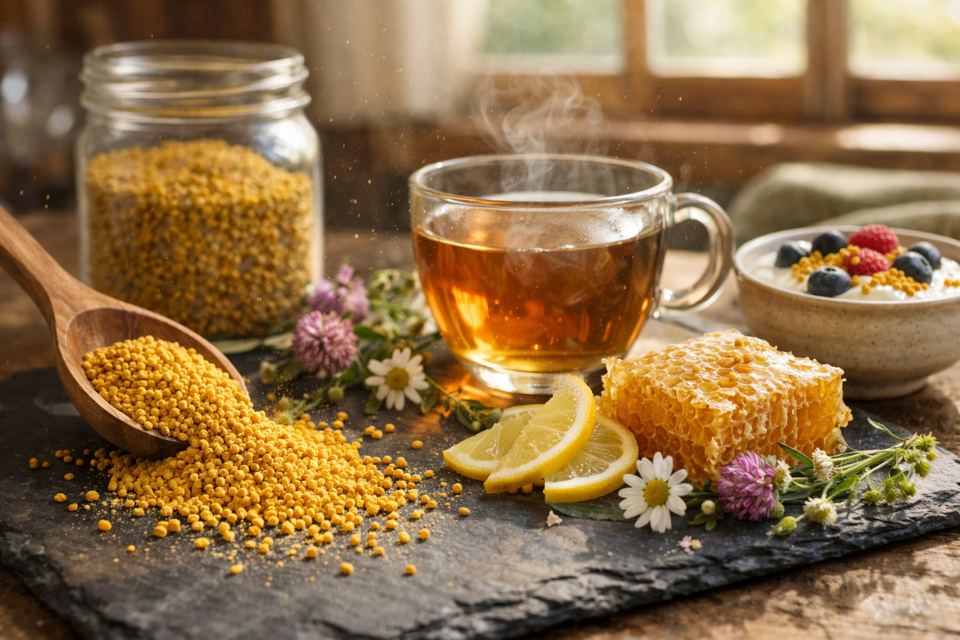
Although it’s often labeled a “superfood,” bee pollen is simply a compact mix of flower pollen, nectar, enzymes, honey, wax, and bee secretions that worker bees collect and pack into granules.
You’ll find tiny, colorful pellets with a slightly floral, earthy taste.
When you look at nutrients, bee pollen delivers protein (including essential amino acids), carbohydrates, and small amounts of healthy fats.
It also supplies B vitamins (like B1, B2, B6, and folate), vitamin C, and vitamin E.
You’ll get minerals such as potassium, calcium, magnesium, zinc, and iron.
It contains natural enzymes and trace phytonutrients that support everyday nutritional needs.
How Bee Pollen Works: Antioxidants and Mechanisms
While the nutrient profile sets the stage, bee pollen’s impact comes from its antioxidant and anti-inflammatory compounds working together. You’re getting flavonoids, phenolic acids, carotenoids, and vitamin C that neutralize free radicals and reduce oxidative stress. This helps protect lipids, proteins, and DNA, supporting cellular resilience.
These compounds also modulate key inflammatory pathways. They can downshift NF-κB signaling, temper COX and LOX enzyme activity, and influence cytokine balance.
In parallel, micronutrients support mitochondrial function, promoting steadier energy output. By stabilizing redox status and calming overactive pathways, bee pollen helps your cells maintain equilibrium, recover from daily stressors, and perform more efficiently.
Bee Pollen for Allergies: What the Evidence Says
You’ve probably heard claims that bee pollen eases seasonal sniffles, but the evidence is limited, mixed, and often based on small or low-quality studies.
You should weigh that uncertainty against real risks, since bee pollen can contain windborne allergens and trigger reactions, including severe ones.
If you’re considering it, you’ll want to assess your allergy history and talk with a clinician before testing it.
Evidence Quality Overview
Even if bee pollen sounds promising for seasonal sniffles, the evidence for allergy relief is thin and low quality.
You’ll find small, short trials, inconsistent dosing, and mixed formulations that make results hard to compare. Many studies lack placebo controls, use self-reported outcomes, or recruit few participants, increasing bias and imprecision.
You also face variability in pollen composition by region, plant source, and processing, so one product’s results may not apply to another.
Meta-analyses remain preliminary or inconclusive. Until larger, well-controlled, standardized trials report consistent benefits on validated allergy endpoints, you should treat claims cautiously and consider bee pollen an unproven option.
Allergen Exposure Risks
How could a product made from pollen not trigger allergies? It often does.
Bee pollen can contain windborne pollens, molds, and bee-derived proteins that provoke reactions. If you have seasonal allergies, asthma, or a pollen-food allergy syndrome, you’re at higher risk. Symptoms range from itching, hives, and wheezing to anaphylaxis.
Labels rarely list specific pollens, so you can’t predict exposure. Cross-reactivity with ragweed, birch, or mugwort is possible. Medications like beta-blockers can worsen outcomes in severe reactions.
If you still want to try it, start with a tiny dose under medical guidance, carry epinephrine if prescribed, and stop at first symptoms.
Immune Support: Calming Inflammation and Cytokines
While inflammation is an essential defense, bee pollen may help keep it in check by modulating cytokines—the signaling proteins that drive immune reactions. You support balance, not suppression: less runaway signaling, more targeted responses.
Antioxidants in pollen can blunt oxidative stress that often amplifies inflammatory cascades, while polyphenols may influence NF-κB and MAPK pathways linked to cytokine release. You could notice fewer flare-ups when your immune system isn’t overreacting to minor triggers.
Early evidence suggests complementary benefits alongside healthy habits, not a cure-all. Pay attention to how your body responds and prioritize consistency. Incorporating anti-inflammatory diet principles—like antioxidant-rich fruits and vegetables and limiting added sugars—can further help keep inflammation in check.
- Supports balanced Th1/Th2 responses
- May reduce IL-6 and TNF-α signaling
- Antioxidants buffer ROS-driven inflammation
- Polyphenols potentially modulate NF-κB
- Promotes resilience after stress exposures
Safe Use: Dosage, Forms, and Timing
Balanced immune support only matters if you use bee pollen safely and consistently.
Start low: 1/8–1/4 teaspoon daily for granules, increasing every few days as tolerated. Typical maintenance is 1–2 teaspoons daily or 500–1,000 mg in capsules.
Choose raw granules for versatility, capsules for precise dosing, or powder for smoothies. Take with breakfast for steady energy; split doses morning and early afternoon if you’re sensitive.
Keep it under the tongue briefly to gauge tolerance, then swallow with food.
Cycle usage: 5–6 days on, 1–2 days off.
Store airtight in the fridge or freezer to preserve enzymes and potency.
Who Should Avoid Bee Pollen and Drug Interactions
Even natural doesn’t mean risk-free, so know who should skip bee pollen and when to be cautious.
If you’re allergic to bees, pollen, or honey, don’t use it—reactions can be severe. If you’re pregnant or breastfeeding, avoid it due to limited safety data.
Bee pollen can interact with medications and worsen certain conditions, so review the list below and talk to your clinician.
- Anticoagulants/antiplatelets: may increase bleeding risk (warfarin, aspirin, clopidogrel).
- Immunosuppressants: could stimulate immune activity.
- MAOIs/SSRIs: potential neurotransmitter effects; monitor closely.
- Hormone-sensitive conditions: possible estrogenic effects.
- Kidney/liver disease: contaminants or metabolites may add strain.
For those prone to vaginal infections, be aware that certain supplements can affect vaginal pH and flora balance, which may influence risks related to bacterial vaginosis.
Natural Energy and Stamina Without the Crash
If bee pollen fits your health profile, it may offer a steady lift that doesn’t spike and crash like caffeine. You’ll feel a gentle rise in alertness that lasts through workouts, long shifts, or afternoon slumps.
Its mix of natural carbohydrates and amino acids helps fuel muscles while supporting mental focus. You can take a small dose in the morning or pre-workout and avoid jitters, palpitations, or a late-day dip.
Start low, track how you feel, and stay hydrated. Pair it with balanced meals and consistent sleep.
Choose reputable sources, store it cool, and monitor for sensitivity. Stop if adverse symptoms appear.
For added immune support, consider pairing bee pollen with citrus foods rich in vitamin C to help increase white blood cell production.
Bee Pollen and Gut Health: Enzymes and Microbiome
You’ll notice bee pollen brings natural digestive enzymes that help you break down proteins, fats, and carbs more efficiently.
It can also support microbiome diversity by nourishing beneficial bacteria and helping balance your gut ecosystem.
Its polyphenols act like prebiotics, feeding good microbes and promoting healthier metabolites.
Natural Digestive Enzymes
While bee pollen isn’t a magic bullet, it does deliver a mix of natural enzymes—like amylases, proteases, and lipases—that help break down carbs, proteins, and fats before they reach the lower gut.
You support digestion upstream, easing the workload on your stomach and small intestine. That can translate to less post-meal heaviness and more efficient nutrient uptake.
Start low; enzymes are potent, and you want to watch tolerance.
- Choose raw, minimally processed pollen to preserve enzyme activity.
- Pair with meals rich in fibers for steady gastric transit.
- Begin with 1/4 teaspoon daily; increase gradually.
- Store chilled to limit degradation.
- Stop if you notice sensitivity.
Microbiome Diversity Support
Beyond easing digestion with enzymes, bee pollen can feed a broader cast of gut microbes.
You’re not just breaking down food; you’re nurturing a richer microbial neighborhood that supports balanced metabolism, vitamin synthesis, and resilient immunity.
Bee pollen delivers varied carbohydrates, amino acids, and trace minerals that different microbes prefer, helping keep one species from dominating.
This diversity can crowd out opportunists and reduce bloating, irregularity, and discomfort.
Start small—1/4 to 1/2 teaspoon daily—and watch how you feel.
If you have pollen allergies, pregnancy, or take anticoagulants, talk to your clinician first.
Choose raw, unheated pollen to preserve delicate compounds.
Prebiotic Polyphenol Action
Curiously, bee pollen’s polyphenols don’t just act as antioxidants—they behave like prebiotics that your gut microbes can metabolize into beneficial compounds.
You feed these molecules to bacteria that convert them into short-chain fatty acids, which support barrier integrity, mood signaling, and metabolic balance. You also harness enzymatic cofactors in pollen that help release bound polyphenols, increasing bioavailability where it matters: the colon.
Dose consistently, pair with fiber, and watch resilience improve without spikes in sugar or stimulants.
- Enhance SCFA production (acetate, propionate, butyrate)
- Support tight-junction integrity
- Modulate bile acids and lipid metabolism
- Tame post-meal inflammation
- Encourage Bifidobacterium and Lactobacillus growth
Skin Benefits: Hydration, Glow, and Wound Care
Though bee pollen is better known as a superfood, it’s also emerging as a skin ally for hydration, glow, and wound support. You’ll find its amino acids, minerals, and vitamins help fortify your moisture barrier, reducing dryness and tightness.
Antioxidants counter dullness from environmental stress, so your complexion looks brighter and more even. Enzymes and flavonoids may support healthy skin turnover, smoothing texture.
Topically, bee pollen–infused balms can comfort minor scrapes and calm stressed areas, while oral use may nourish skin from within.
Patch-test first, and avoid if you’re allergic to pollen or bee products. Choose reputable, contaminant-tested sources.
Workout Recovery: Muscle Repair and Inflammation
While you’re pushing for progress, bee pollen may help your body bounce back by supporting muscle repair and tempering inflammation.
Bee pollen can bolster recovery by supporting muscle repair and easing workout-induced inflammation.
You get amino acids to rebuild tissue, antioxidants to limit oxidative stress, and enzymes that may aid nutrient absorption. Pair it with protein and carbs post-workout to amplify recovery.
Start low, monitor how you feel, and be mindful of allergies. Consistency matters; small daily amounts often work best. Hydrate well to move nutrients where they’re needed.
- Complete amino acids support protein synthesis
- Antioxidants help curb exercise-induced inflammation
- Enzymes may improve nutrient uptake
- Trace minerals aid muscle contraction and repair
- Convenient addition to shakes or yogurt
Heart Health: Cholesterol, Circulation, Blood Pressure
You want bee pollen’s nutrients to support a better LDL and HDL balance, which can influence your overall cholesterol profile.
By promoting nitric oxide activity and reducing oxidative stress, it may help maintain healthy arterial flow.
That combo supports smoother circulation and steadier blood pressure.
LDL And HDL Balance
Even as bee pollen draws interest for overall wellness, heart health still hinges on keeping LDL (“bad”) and HDL (“good”) cholesterol in balance to support clear arteries, steady circulation, and healthy blood pressure.
You’re aiming to lower LDL while nudging HDL upward. Bee pollen’s polyphenols may help curb LDL oxidation, while plant sterols can modestly support healthy lipid profiles.
Pair it with fiber-rich foods, regular exercise, and smart fats to reinforce results. Always check for allergies and medication interactions, especially with blood thinners. Monitor your numbers, adjust habits, and stay consistent.
- Emphasize soluble fiber
- Favor omega-3 fats
- Limit trans fats
- Move daily
- Track lipid panels regularly
Healthy Arterial Flow
Balanced LDL and HDL set the stage for smoother arterial flow, but circulation and blood pressure also depend on flexible vessels and calm inflammation.
Bee pollen offers antioxidants, nitric-oxide–supportive nutrients, and polyphenols that may help your endothelium relax vessels and resist oxidative stress. You support healthy tone in arteries, which encourages steady pressure and efficient oxygen delivery.
Its amino acids, minerals, and B vitamins can aid red blood cell function and energy metabolism, helping blood move without overworking your heart.
Pair bee pollen with hydration, fiber, potassium-rich foods, and movement. If you take anticoagulants or have allergies, consult your clinician before using.
Metabolic Support: Hormones and Blood Sugar
While research is still emerging, bee pollen shows promise for supporting metabolic health by interacting with key hormonal and glucose-regulating pathways.
Emerging research suggests bee pollen may bolster metabolic health via hormonal and glucose-regulating pathways.
You may notice steadier energy when nutrients and polyphenols help your body handle carbs and fats more efficiently. Bee pollen’s antioxidant profile can ease oxidative stress that disrupts insulin signaling. It may also influence leptin and adiponectin, hormones tied to appetite and fat metabolism.
Pair it with balanced meals and movement for best results, and start low to watch for sensitivities.
- Supports insulin sensitivity and post-meal glucose control
- Modulates leptin/adiponectin for satiety cues
- Aids liver lipid processing
- Counters glycation damage
- Complements fiber-rich diets
Brain Benefits: Focus, Memory, and Stress Resilience
Although research is still growing, bee pollen stands out for brain support thanks to its antioxidants, B vitamins, amino acids, and trace minerals that fuel neural energy and protect cells.
You may notice sharper focus as neurotransmitter cofactors help signal efficiently, while polyphenols counter oxidative stress that slows processing. Memory can benefit from improved mitochondrial output and choline precursors that aid acetylcholine pathways.
When stress rises, bee pollen’s adaptogenic-like effects may steady cortisol and inflammation, helping you stay calm and productive.
Choose raw, uncontaminated sources and start small—especially if you have pollen allergies. Pair with sleep, hydration, and omega-3s to amplify results.
Frequently Asked Questions
Is Bee Pollen Quality Affected by the Flowers or Region It Comes From?
Yes. You’re influenced by floral source and region: nutrient profile, flavor, color, enzyme activity, and potential contaminants vary. You should choose trusted brands, seek monofloral or regional transparency, check lab tests, ascertain freshness, and watch for allergies.
How Can I Verify My Bee Pollen Isn’T Contaminated With Pesticides or Heavy Metals?
You verify purity by requesting a recent third-party Certificate of Analysis showing pesticide and heavy metal panels, including glyphosate and lead/arsenic. Choose organic, single-origin batches, avoid roadside/industrial sources, store sealed. If uncertain, send a sample to an ISO-accredited lab.
What Certifications or Lab Tests Should Reputable Bee Pollen Products Have?
Look for third‑party COAs showing pesticide, heavy‑metal, and microbiological panels. Prefer ISO/IEC 17025–accredited labs. Seek certifications: USDA Organic (or EU organic), Non‑GMO Project, GMP (NSF or USP), and optionally monofloral/pollen‑profile analysis verifying botanical origin and purity.
Does Harvesting Bee Pollen Harm Bees or Impact Hive Sustainability?
It doesn’t have to. When you use properly sized traps, leave enough pollen, and harvest seasonally, you minimize stress. You should monitor brood, provide supplemental feed during dearths, and avoid over-collection to keep colonies sustainable.
How Should Bee Pollen Be Stored to Maintain Potency Over Time?
Store bee pollen airtight, cold, and dark. Freeze it for longest potency, or refrigerate up to a year. Keep moisture below 6%, avoid heat, light, and oxygen. Use desiccants, reseal quickly, and never leave it at room temperature.
Conclusion
You’ve seen how bee pollen can support allergies, energy, and overall wellness with its rich nutrients, antioxidants, and anti-inflammatory power. If you’re curious, start low, go slow, and choose quality sources. Time it around workouts for recovery, and pair it with a balanced diet for heart, metabolic, and brain benefits. Watch for allergies and talk to your healthcare provider if you’re pregnant, nursing, or on meds. With smart use, you’ll harness bee pollen’s natural boost safely and effectively.