12 Dry Skin Care Tips for Deep Hydration and Long-Lasting Moisture
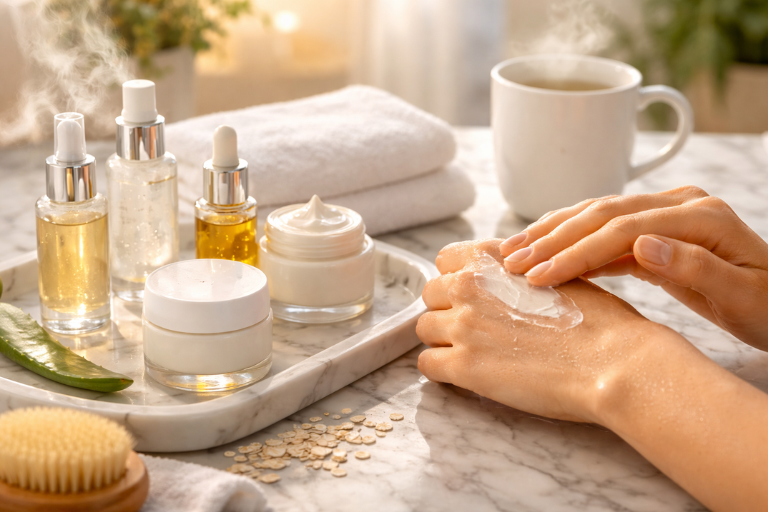
If your skin feels tight, flaky, or dull, you’re likely missing a few simple steps that lock in moisture all day. You’ll learn a quick 3-step routine, how to spot your dry skin triggers, and what to use—and avoid—for a calmer barrier. We’ll cover the best hydrators, when to exfoliate, and why SPF matters even indoors. You’ll even get tips for humidity and nighttime occlusives. Ready to make dryness a rare occurrence?
Your 3-Step Dry Skin Routine (Start Here)
Three simple steps can calm tight, flaky skin fast: cleanse gently, layer lightweight hydration, and seal with a rich moisturizer—then add sunscreen in the morning.
Start with a cream, milk, or oil-based cleanser without sulfates or alcohol, using lukewarm water. Cleanse only morning and night. Pick formulas with glycerin, hyaluronic acid, ceramides, or plant oils. Pat dry softly and leave skin slightly damp. To avoid stripping the skin’s natural barrier, use warm water instead of hot during cleansing. Remember that cold weather strips skin of essential moisture.
Choose a gentle cream, milk, or oil cleanser; cleanse twice daily, pat dry, and keep skin slightly damp.
Next, sweep on an alcohol-free hydrating toner, then apply a humectant-rich serum or essence—think hyaluronic acid, glycerin, panthenol, squalane, or polyglutamic acid. Use niacinamide or snow mushroom for added barrier support. Apply both on damp skin.
Finish with a rich, fragrance-free cream or ointment featuring ceramides, cholesterol, fatty acids, and shea butter. Use more at night.
In the morning, apply broad-spectrum SPF 30+.
Identify Your Dry Skin Type and Triggers
Wondering if your skin is truly dry or just dehydrated?
Dry skin means low sebum and a weak lipid barrier, so you feel chronic tightness, roughness, flaking, and fine lines—especially after washing. Staying hydrated is crucial for managing and preventing dry skin, as well-hydrated bodies maintain natural moisture levels in the skin.
Dehydrated skin means low water; any skin type (even oily) can look dull and feel sensitive, with changes that fluctuate with weather, heaters, flights, or sun. Knowing your skin type helps you choose products that prevent irritation and maintain a healthy barrier.
Use quick tests.
Bare-face test: cleanse, wait 30 minutes—persistent tightness and flaking point to dry skin.
Blotting sheet test: almost no oil from T‑zone and cheeks suggests dryness; visible oil suggests otherwise.
Clues include almost invisible pores, redness, itch, and easily irritated hands or elbows that chap or crack.
Track triggers: genetics, age/menopause, eczema, medications, low fluids/nutrition, cold wind, low humidity, UV, hot showers, harsh soaps, detergents, and frequent handwashing. Incorporating omega-3 fatty acids into your diet can also support skin health and hydration.
Cleanse With Lukewarm Water and Gentle Surfactants
Even if your skin feels parched, you can cleanse without making it tighter by using lukewarm water and a mild, pH‑balanced cleanser.
Cleanse parched skin gently with lukewarm water and a mild, pH-balanced cleanser to avoid tightness.
Lukewarm water preserves natural lipids, softens keratin, and boosts surfactant efficacy without stripping, unlike hot water, which raises TEWL and irritation, or cold water, which leaves residue. It also helps sensitive skin maintain comfort and reduces the risk of irritation during cleansing.
Pick syndet or “soap‑free” formulas with gentle surfactants like betaines or glucosides.
Low‑foaming, pH 4.5–5.5 cleansers with glycerin or emollients minimize protein denaturation and tightness.
Use soft fingertips; avoid brushes and rough towels.
Cleanse only where needed—T‑zone or sweat‑prone areas—and keep contact time brief (about 20–30 seconds on the face).
Rinse thoroughly with lukewarm water to remove residual surfactant.
Pat‑dry, don’t rub, and limit washing to once or twice daily.
Apply Hydrating Layers on Damp Skin
After you cleanse, keep your face slightly damp and start layering hydration right away. Dampness increases the stratum corneum’s permeability, so small, water‑soluble actives diffuse more easily. Those surface water molecules act like temporary channels, boosting penetration and helping thin liquids spread evenly for better coverage with less product.
Work fast—think the “3‑second rule.” Mist or pat on a hydrating toner or essence, then follow with a lightweight hydrating serum, and finish with a moisturizer to seal. Each layer helps push the previous one in, trapping free water and humectant‑bound water so skin looks plumper and feels smoother longer. Applying products immediately after cleansing optimizes absorption because timing enhances how effectively actives penetrate damp skin.
Prioritize humectant‑rich formulas—glycerin, panthenol, aloe—and light lotions or gel‑creams. This “moisture sandwich” can even support eczema‑prone skin by reducing transepidermal water loss.
Use Multi-Weight Hyaluronic Acid for Deep Hydration
You’ve laid a great base with damp-layered hydration—now amplify it with multi-weight hyaluronic acid.
Combining high, medium, and low molecular weights creates a three-dimensional hydration matrix that works at every level. High molecular weight stays on the surface to form a moisture-sealing shield and curb transepidermal water loss. Medium weight slips into the stratum corneum to fortify your barrier and cut moisture escape. Low weight (under 100 kDa) reaches the epidermis and upper dermis, activating fibroblasts to support collagen and elastin. Clinical studies show it enhances skin hydration with up to a 60% improvement in hydration depth. Additionally, chlorophyll’s natural anti-inflammatory properties can further benefit skin health by calming irritation and promoting a balanced complexion.
A three-weight hyaluronic matrix layers hydration, seals moisture, fortifies barrier, and energizes fibroblasts for plumper, smoother skin.
Expect fast, measurable results: moisturization rises within 30 minutes and remains significant for up to 24 hours, with twice-daily use.
Over two to four weeks, dryness, roughness, and fine lines visibly improve. Suitable for dry, dehydrated, sensitive, and aging skin.
Boost With Glycerin, Aloe, or Honey
While your hyaluronic acid layers pull in water fast, boost and stabilize that hydration with classic humectants—glycerin, aloe, and honey.
Glycerin is the humectant backbone: it draws water into the stratum corneum, relieves tightness, and supports barrier repair by lowering TEWL. It hydrates dose‑dependently—effective around 3%, with peak benefits near 20–40% in creams—and enhances aquaporins for a plumper look. Because glycerin is widely available and cost‑effective, it’s included across many formulas to improve skin hydration.
It’s noncomedogenic, buffers irritation from actives, and performs best in leave‑on formulas. In very dry air, keep it diluted and pair with emollients.
Aloe vera delivers soothing, lightweight hydration via polysaccharides, calms redness, and adds antioxidants. Use gels or toners under richer layers.
Honey, a natural humectant with mild antimicrobial activity, helps bind water and smooth texture. Choose formulas combining these for longer‑lasting comfort.
Seal With a Ceramide-Rich Cream
Two pumps of a ceramide-rich cream lock in the water you’ve added and rebuild your barrier. You’re replacing lipids that make up roughly 50% of the barrier, reducing transepidermal water loss and extending hydration. Ceramides comprise about 50–60% of the intercellular lipids in the skin’s outer layer, forming a protective barrier that supports moisture retention.
With consistent use, clinical results show about 30–35% increases in skin hydration and ~20% drops in TEWL, so dryness, flaking, and rough texture soften.
Clinically, hydration rises 30–35% and TEWL drops ~20%, softening dryness, flaking, and rough texture.
- Choose multi-lipid formulas that pair ceramides with cholesterol and fatty acids, plus humectants like hyaluronic acid, to mimic your natural barrier and seal in water.
- Pick pH-balanced, fragrance-free, non-comedogenic options that integrate into the stratum corneum and calm redness, stinging, and sensitivity.
- Apply morning and evening after humectants: smooth a thin layer over damp skin, including around the eyes and neck, to reinforce resilience and comfort over time.
Add Occlusives at Night for Long-Lasting Moisture
As night ushers in your skin’s natural repair mode, add an occlusive as the final step to lock in moisture and cut water loss.
Occlusives create a barrier that slows transepidermal water loss, keeping humectants and emollients working longer so you wake up soft and supple. Apply a thin layer over damp skin after toner, serum, and a hydrating cream. Clinical studies show occlusives provide sustained hydration by reducing transepidermal water loss over time.
Choose textures that match your comfort: petrolatum for maximal occlusion (up to 99% TEWL reduction), lanolin for severely dry patches, shea butter or beeswax for rich protection, or dimethicone for a lighter feel.
Use full-face “slugging” or spot-treat cheeks, nose, and mouth. A pea- to fingertip-size amount is enough.
After showering, smooth occlusives onto slightly damp body skin to trap residual water and boost overnight hydration.
Ease Up on Exfoliation to Protect Your Barrier
Even if smooth skin tempts you to scrub, easing up on exfoliation protects your barrier from needless damage. Over-exfoliation disrupts the corneocyte–lipid structure of the stratum corneum, strips ceramides, fatty acids, and cholesterol, and ramps up transepidermal water loss. Regular exfoliation can also enhance how well moisturizers and serums absorb by clearing away dead cells, but choose gentle options to avoid irritation from over-exfoliating.
You’ll feel it as dryness, flaking, stinging, and sudden sensitivity—especially in low humidity, where water loss is already high.
1) Dial back frequency: limit exfoliation to 1–2 times weekly for dry or sensitive skin, and cut further in arid climates.
2) Choose gentler methods: opt for low-strength lactic acid, PHA, or mild BHA; avoid gritty scrubs and strong, low‑pH acids; use light pressure and shorter contact times; patch test first.
3) If irritated, pause exfoliants for 2–4 weeks and focus on barrier-repair hydration.
Choose Gentle, Fragrance-Free Dry Skin Products
While a pretty scent can be tempting, dry, reactive skin does best with gentle, fragrance‑free products that won’t provoke irritation. Fragrance—synthetic, natural, or essential oils—ranks among the most common triggers for cosmetic allergy and contact dermatitis, especially when your barrier’s compromised. Choosing fragrance‑free moisturizers helps minimize allergic reactions and irritation across all skin types. Going fragrance‑free cuts stinging, rashes, and flares, helping skin retain moisture and repair faster.
Fragrance-free formulas are best for dry, reactive skin—fragrance often triggers irritation and contact dermatitis.
Prioritize formulas with humectants (hyaluronic acid, glycerin), emollients (shea butter, squalane), and occlusives (rich butters, balms) to lock in hydration. Ceramides and fatty acids rebuild the barrier, while colloidal oatmeal and aloe calm without added scent.
Read labels: avoid “fragrance,” “parfum,” “aroma,” “perfume,” and “essential oil blend.” Choose “fragrance‑free,” not “unscented.” Favor short ingredient lists and dermatologist‑recommended options.
Layer a hydrating serum under a rich, fragrance‑free cream or balm.
Use Daily SPF to Prevent Barrier Damage
Because UV rays quietly infiltrate skin year‑round—even through clouds—daily, broad‑spectrum SPF is non‑negotiable for protecting your moisture barrier.
UVA and UVB cause invisible, cumulative damage that accelerates wrinkles, discoloration, and barrier weakness, and they’re a major driver of skin cancer. A hydrating SPF shields against UV while helping prevent dehydration and barrier disruption.
1) Choose protection: Use broad‑spectrum SPF 30+ daily (SPF 50 for prolonged outdoor time). Look for ceramides, glycerin, and hyaluronic acid to lock in moisture without greasiness.
2) Apply correctly: After cleansing and treatments, smooth sunscreen onto dry skin, covering face, ears, neck, and hands. Use enough—about two fingers for face.
3) Stay consistent: Reapply every two hours, or sooner if you’re swimming or sweating. Consistency preserves youthful tone and resilience while lowering cancer risk.
Hydrate, Humidify, and Shield From Dry Air
How do you keep moisture in your skin when the air steals it first? Start by managing humidity. Aim for 40–60% indoors (at least 30–50% to prevent winter xerosis).
A cool‑mist or ultrasonic humidifier restores ambient moisture, easing tight, scaly, cracked skin and helping it look softer, more supple, and radiant. Place the unit on a stable, elevated surface away from bedding and electronics. Use whole‑room models or high‑capacity tanks for consistent levels, and track with a hygrometer to avoid over‑humidification.
Run a humidifier in winter, dry climates, and HVAC‑heavy spaces like bedrooms and home offices. You’ll enhance humectants (glycerin, hyaluronic acid), reduce flaking, and support overnight repair—especially lips and under‑eyes.
Keep showers warm, not hot, moisturize immediately, and clean/disinfect tanks regularly.
Frequently Asked Questions
How Do Medications or Retinoids Affect Chronic Dryness and Hydration Strategies?
Medications and retinoids can worsen chronic dryness initially by reducing sebum and thinning the barrier, yet improve hydration long-term. You’ll start low and slow, moisturize with ceramides, buffer applications, simplify actives, choose time‑release formulas, and protect with sunscreen.
Can Hard Water or Water Softeners Worsen Dry Skin Despite a Good Routine?
Yes. Hard water leaves mineral-soap residue that disrupts your barrier, boosts TEWL, and makes products underperform, prompting over-washing. Softeners help, but sodium-rich water plus harsh cleansers or hot showers can still strip lipids. Use gentle cleansers, lukewarm showers, immediate moisturization.
What Fabrics and Laundry Detergents Are Best for Very Dry, Sensitive Skin?
Choose organic cotton, linen, silk, lyocell/TENCEL, bamboo, hemp, or superfine merino; avoid rough wool, tight synthetics, heavy textures, and treated fabrics. Use liquid, free‑and‑clear, hypoallergenic detergents with minimal additives; skip fragrances, dyes, enzymes, brighteners, and fabric softeners.
How Does Menopausal or Hormonal Change Alter Lipid Barrier Needs?
Menopause shifts your lipid barrier needs toward ceramide-rich, longer-chain lipids and replenishing sebum-mimicking oils. You’ll need barrier-repair formulas with ceramides, cholesterol, fatty acids, plus humectants like HA, because estrogen decline shortens ceramides, reduces sebum, and increases permeability and TEWL.
Are Probiotic or Microbiome-Supporting Products Beneficial for Persistent Dryness?
Yes—probiotic or microbiome-supporting products can help persistent dryness. You’ll strengthen your barrier, boost ceramides and hyaluronic acid, lower TEWL, balance pH and microbiota, calm inflammation, and improve elasticity. Choose clinically studied strains and gentle, non-stripping formulations for consistency.
Conclusion
You’ve got everything you need to keep dry skin calm, cushioned, and hydrated. Stick to a gentle cleanse, layer humectants on damp skin, and seal with a ceramide-rich cream. Ease up on exfoliation, wear SPF daily, and choose fragrance-free formulas to protect your barrier. Keep showers warm, moisturize right after, and boost indoor humidity. At night, add an occlusive and track your triggers. Stay consistent and patient—you’ll see smoother, softer, longer-lasting moisture day after day.