10 Summer Skin Care Tips to Protect Your Skin From Heat and Sun Damage
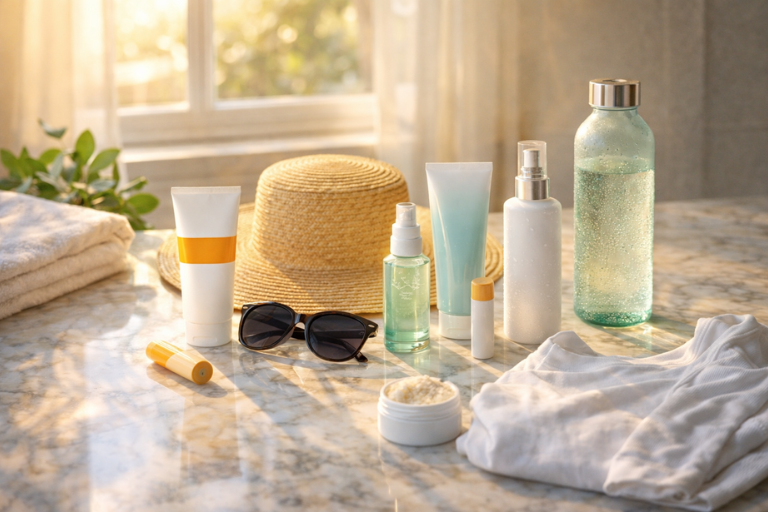
Summer sun can be brutal on your skin, but a few smart habits can make all the difference. You’ll want the right SPF, the right timing, and the right textures to stay protected without feeling greasy. From planning around peak UV to choosing UPF gear and soothing post-sun care, small tweaks add up fast. Ready to avoid sunburn, shine, and irritation while keeping your skin calm and hydrated? Here’s where to start.
Apply Broad-Spectrum SPF 30+: How Much and How Often
Two key rules anchor effective SPF: apply enough, and reapply when needed. To get the labeled protection, use about 2 mg/cm²—roughly 1 ounce (a shot glass) for your whole body. For your face, use about a teaspoon or the length of your index and middle fingers; the common two‑finger rule for face/neck matches this dose. Under‑applying (just 25–50% of what’s needed) slashes real protection far below the SPF on the label.
Apply broad‑spectrum SPF 30+ daily—even on cloudy days, during short errands, and when you’re indoors near windows, since UVA penetrates glass. In high UV or outdoor work, choose SPF 50+ and be generous. Reapply every two hours to maintain protection, and do so after swimming or sweating.
Put sunscreen on 15–30 minutes before sun, as the last skincare step before makeup. Cover all exposed skin, including ears, neck, hands, and scalp.
Reapply Every 2 Hours: and After Water, Sweat, or Towels
Even when you’ve applied enough, protection fades, so plan to reapply at least every 2 hours during ongoing sun exposure—and sooner after swimming, sweating, or toweling off.
Water, sweat, and friction thin the sunscreen film, cutting real protection well before labeled limits. If you’re at the beach, on a run, or working outdoors, set a timer and reapply generously.
Water, sweat, and friction thin sunscreen fast—set a timer and reapply generously outdoors.
After any dip, recoat immediately—salt, chlorine, and turbulence strip filters and leave gaps. Sweat streaks product and heat softens films, so top up when you notice shine or wiping. Towels remove sunscreen fast; reapply after patting dry. Remember that SPF level does not change the need for reapplication.
- Keep your skin calm—don’t let gaps invite a burn.
- Protect today to preserve tomorrow’s glow.
- Reapply now; regret never helps later.
- Your future self will thank you.
Avoid Peak UV: Plan Around 10 A.M.–4 P.M
You’ve got reapplication down; now cut your exposure by planning around the 10 a.m.–4 p.m. peak. That window delivers the strongest UV in the continental U.S., driven by the high solar angle near local noon.
The UV Index—often highest around 11:30–1:30—can hit 8–10+ in summer and 11+ at altitude or subtropical latitudes. At higher elevations, UV exposure increases because altitude impacts UV.
Schedule outdoor workouts, yardwork, and errands for early morning or late afternoon. At UV 3–5, fair skin can burn in about 45 minutes; at 6–7, around 30 minutes; at 8–10, roughly 20; at 11+, 10 minutes or less.
Don’t trust cool air or cloud cover—up to 80% of UV penetrates thin clouds, and heat sensation doesn’t track UV.
Check your local UV Index daily and adjust timing accordingly.
Use Shade, Hats, and UPF to Cut UV
Shade, hats, and UPF clothing form a simple, high-impact trio for cutting UV fast.
Start with shade as your first line: solid roofs, dense awnings, and deep tree canopies block 50–95% of direct UV. Public health campaigns in the region emphasize sun protection to reduce rising skin cancer rates, highlighting the importance of awareness and consistent protective behaviors.
Position yourself to guard against overhead and side-angle sun, and remember reflected UV from water, sand, and concrete still reaches you.
Don’t let shade justify longer exposure—layer protection.
Choose hats that do the real work: wide brims (3–4 inches) to cover face, ears, and neck; dark, tightly woven fabrics; flaps for extra neck protection; and sturdy brims that won’t tilt.
Pull on UPF clothing for reliable coverage—UPF 50 lets only 2% of UV through.
- Feel cooler, safer, steadier.
- Keep your face in shadow.
- Beat glare near water.
- Leave less skin exposed.
Choose Mineral Sunscreens for Sensitive Skin
Why pick mineral sunscreen when your skin protests everything else? Mineral filters sit on the surface and bounce UV away, so they interact less with living skin layers and cut stinging.
Dermatologists favor zinc oxide and titanium dioxide for reactive, acne‑prone, post‑procedure, or allergy‑prone skin because they’re inert and rarely sensitizing. Zinc oxide also soothes, easing redness, rosacea flares, and inflammatory acne, and it’s far less likely to burn eyes. They’re also typically reef-safe, avoiding chemicals like oxybenzone that can harm marine life. Additionally, using mineral sunscreens can help maintain skin elasticity by preventing damage from UV rays that break down collagen.
You also get immediate, photostable, broad‑spectrum protection—no 15–30 minute wait, less UV‑triggered free radicals, and strong long‑wave UVA defense with non‑nano zinc.
Choose 100% mineral actives, ideally non‑nano, and look for fragrance‑free, alcohol‑free, dye‑free labels. Pick non‑comedogenic formulas with calming extras like ceramides, aloe, or madecassoside to support a fragile barrier.
Use Tinted Mineral SPF to Help Prevent Dark Spots
Even if you’re diligent with sunscreen, tinted mineral SPF adds essential protection that helps stop dark spots before they set in. Zinc oxide and titanium dioxide deliver broad‑spectrum UVA/UVB defense to reduce melanocyte activity, while iron oxides in the tint shield visible and HEV/blue light—major triggers for melasma and hyperpigmentation, especially on melanin‑rich skin. Dermatology sources show iron‑oxide tints markedly cut blue light exposure, lowering flare risk. Choose a broad spectrum SPF 30–50+ formula you’ll wear daily. The DAILY PREVENTION pure mineral tinted moisturizer SPF 30 is fragrance‑free and non‑comedogenic, providing sheer, seamless coverage with mineral UV filters zinc oxide and titanium dioxide.
- Feel confident: sheer coverage softens dark spots without a heavy base.
- Feel seen: multiple shades minimize white cast across skin tones.
- Feel protected: antioxidants like vitamins C and E fight free radicals.
- Feel consistent: elegant, non‑comedogenic textures encourage everyday use.
Consider options like EltaMD UV Restore Tinted SPF 40.
Hydrate Smart: Water, Lightweight Moisturizers, Ceramides
While heat and sun ramp up water loss, you can keep skin balanced by hydrating inside and out. Drink water consistently to counter transepidermal water loss and support turgor; add hydrating foods like watermelon, cucumbers, and citrus. If you enjoy coffee or alcohol, offset them with extra water to prevent dullness and fine lines. Proper moisture balance helps maintain overall skin health and prevent dehydration. Additionally, incorporating lemon water into your routine can enhance hydration and support skin elasticity.
Switch to lightweight moisturizers—gel, gel-cream, or water-based—so skin feels hydrated without heaviness. Look for humectants such as hyaluronic acid, glycerin, and polyglutamic acid; they attract water and sit comfortably under sunscreen and makeup without pilling.
Choose fragrance-free or low-fragrance options with soothing aloe, green tea, or chamomile, plus antioxidants like vitamins C and E.
Prioritize ceramide-containing formulas (with cholesterol and fatty acids) to reinforce your barrier and reduce moisture loss in heat.
Cleanse Gently and Manage Oil, Sweat, and Clogged Pores
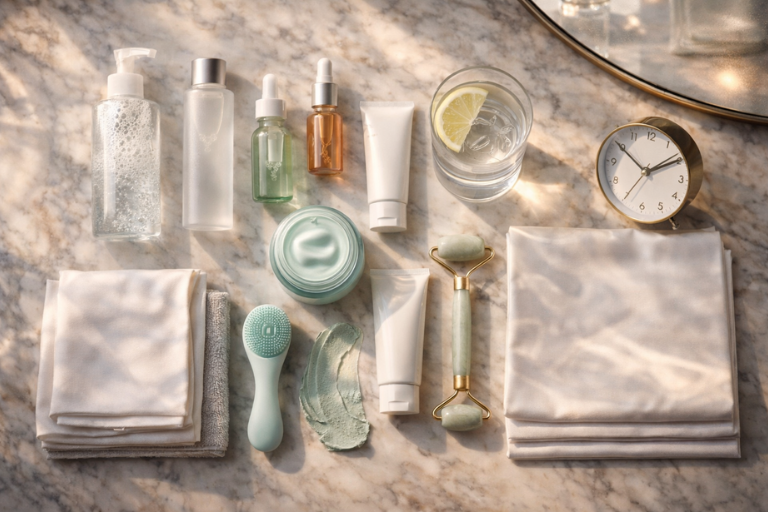
Hydrated skin still needs smart cleansing when heat and humidity spike oil, sweat, and pH shifts. Choose a mild foam or gel cleanser with amino‑acid–based surfactants (like sodium cocoyl glycinate) to lift sweat and sebum while preserving barrier lipids and a near‑physiologic pH (≈5.5–6.0). In summer’s heat and humidity, sebaceous glands can boost sebum output by 2–3 times, making diligent but gentle cleansing especially important. Staying hydrated is also crucial for maintaining skin health and preventing dryness.
Wash twice daily—morning and night. Use short, lukewarm rinses; skip hot water that inflames and very cold that won’t dissolve oil. Post‑cleanse, your face should feel comfortable, not tight.
Target shine strategically: blot mid‑day or cleanse only the T‑zone to avoid over‑washing. Pick oil‑free, non‑comedogenic gels and mattifying SPF moisturizers; add 2% niacinamide to curb sebum over weeks. Support from within with a lower‑glycemic, less sugary diet.
- Feel fresh, not stripped.
- Breathe easier, pores.
- Stay matte, stay confident.
- Calm skin, clear mind.
Cool and Recover Post-Sun Without Harsh Exfoliation
After a day in the sun, act fast: cool your skin, rehydrate, and skip anything harsh.
Take a short, cool shower to lower skin temperature and curb inflammation, then pat dry—don’t rub. Move into a temperature-controlled space to let skin stabilize before applying products. Stay in the shade when possible and avoid peak sun hours to minimize further irritation.
Replenish fluids with water and electrolyte drinks, and snack on hydrating foods like cucumbers and watermelon.
Layer soothing hydration: apply aloe vera, then a humectant-rich moisturizer (hyaluronic acid is ideal). Seal with an emollient cream featuring ceramides or safflower oil to strengthen your barrier.
Avoid AHAs, BHAs, retinol, and any physical scrubs—especially if you’re sunburned.
Once sensitivity eases, reintroduce only very gentle exfoliation. For recovery, use calming serums with niacinamide or vitamin C, and consider omega-rich overnight treatments.
Make Sun Protection a Daily Habit: Even on Cloudy Days
Cooling and calming your skin is only half the battle; protect it every day so it can actually heal.
Cloud cover doesn’t block the risk—up to 80–90% of UV still penetrates, and reflected rays from water, sand, cement, or snow add up. UV sneaks through windows and peaks from 10 a.m. to 4 p.m., delivering nearly half your daily dose. Even after 5 p.m., lingering UVA rays can still cause skin damage, so protection remains important.
Make protection automatic: apply a broad-spectrum SPF 30+ every morning, 15–30 minutes before going out, and reapply every two hours or after swimming, sweating, or toweling.
- Don’t let a cool breeze fool you—UV ages skin and raises cancer risk.
- That quick commute? Incidental exposure accumulates.
- Short shadow, stronger UV—seek shade.
- Sunglasses, hats, and long sleeves spare tomorrow’s skin.
Check the UV Index; add extra protection whenever it’s 3+.
Frequently Asked Questions
How Do Medications Affect Sun Sensitivity and Protection Needs?
Medications can heighten sun sensitivity and change protection needs. You might burn faster, blister, or develop rashes (phototoxic/photoallergic). Review your drugs, use broad-spectrum SPF 50+, UPF clothing, shade, and hydration, and ask your clinician about alternatives and timing.
Can Antioxidants or Vitamin C Serums Enhance Sun Defense?
Yes. You can boost sun defense with topical antioxidants, especially 10–20% L‑ascorbic acid. Apply a morning vitamin C serum under broad‑spectrum SPF. It neutralizes UV‑generated free radicals, reduces erythema and DNA damage, and synergizes with vitamin E/ferulic acid.
What Sunscreen Options Are Safe for Coral Reefs?
Choose mineral sunscreens with non-nano zinc oxide or titanium dioxide. Avoid oxybenzone, octinoxate, octocrylene, and butylparaben. Pick lotions over sprays, paraben-free, and biodegradable formulas. Check labels for broad-spectrum SPF 30+. You’ll protect reefs while safeguarding your skin.
How Should Sunscreen Be Applied Over Facial Hair?
Massage SPF 30–50 into your beard, mustache, and underlying skin. Section dense areas, lift hair, and use circular motions; a brush helps thick beards. Apply generously, wait 20–30 minutes, then reapply every two hours or after sweat/water.
Do Window Films or Car Glass Block Harmful UV Rays?
Yes. Standard windshields block most UVB but let UVA through; side/rear windows often allow more UVA. Install clear UV films that block >99% UVA/UVB, cut heat, protect skin and eyes. Still wear sunscreen when near windows or driving.
Conclusion
You’ve got everything you need to keep your skin healthy all summer. Layer on a broad-spectrum SPF 30+, reapply every two hours, and plan around peak sun. Lean on shade, hats, and UPF, and pick mineral formulas if you’re sensitive. Stay hydrated inside and out with water and lightweight, ceramide-rich moisturizers. Cleanse gently to manage oil and sweat, and soothe skin post-sun with calming care—skip harsh exfoliants. Make protection a daily habit, even on cloudy days.