5 Ways Bentonite Clay Masks Detox Your Pores and Fight Acne Overnight
You want clearer skin by morning, but your routine feels hit‑or‑miss. Bentonite clay can help by pulling out excess oil and impurities, gently loosening dead cells, and calming the look of redness without harsh scrubbing. Its negative charge even binds breakout‑causing gunk you can’t see. Used right, it supports hydration and a healthier skin environment overnight. The key is knowing how to mix it, how long to leave it on, and when to use it next.
Bentonite Clay: How It Detoxes Pores and Controls Oil
While it looks simple, bentonite clay works like a charged magnet on your skin to detox pores and tame shine. When you mix it with water, the clay’s negative charge creates an ionic pull that latches onto positively charged impurities—bacteria, chemicals, and even heavy metals.
As the mask dries, those molecules bind and lift away. Hydrated clay swells into a porous, sponge‑like network with huge surface area, maximizing contact with oil and debris. Through physical adsorption, it draws out dirt, surplus sebum, and pollutants without penetrating inward.
This pore‑clearing action removes blockages and dead cells, refining texture and minimizing visible pores. You’ll also control oil. The clay absorbs excess sebum, balances slick zones, prevents new clogs, and reduces breakout triggers by removing bacteria and impurities.
Additionally, its mineral-rich composition from volcanic ash contributes to detoxification and supports smoother, clearer-looking skin.
Gentle Exfoliation and Soothing Benefits for Sensitive, Acne‑Prone Skin
Even if your skin flares easily, a bentonite clay mask can gently calm and smooth it when you use it right. As the thin layer dries, it lifts dead skin cells and surface buildup, lightly exfoliating while soothing redness with anti-inflammatory properties. You’ll notice softer texture, less visible roughness, and a more balanced feel after rinsing. It acts like a magnet for impurities, helping draw out toxins and excess oil from pores for a clearer look. Additionally, the mask’s ability to promote natural detoxification enhances your skin’s health by filtering out harmful toxins.
Patch test first, then start once weekly. For sensitive or dry‑ish skin, apply a light layer to clean skin for 5–10 minutes, avoiding eyes. Mix the powder with water or a hydrating serum to buffer potential dryness.
Remove with a warm, wet towel; increase to twice weekly only if your skin tolerates it.
Expect calmer-looking breakouts, renewed smoothness, brighter tone, and skin that absorbs subsequent products more effectively.
How Bentonite Clay Helps Reduce Acne (What Science and Practice Show)
Curious how a simple clay mask can dial down breakouts? Bentonite clay tackles acne on multiple fronts. Its negative charge and high cation‑exchange capacity act like a sponge, binding lipids, dead cells, and positively charged impurities. Additionally, adopting an anti-inflammatory diet can further support skin health and complement the benefits of the clay mask.
You’ll shed excess surface oil, reduce follicular occlusion, and see fewer open and closed comedones. Clinical trials show twice‑weekly use lowers sebum and improves lesion counts and severity, with high tolerance and satisfaction.
You also get antimicrobial benefits: the clay’s layered structure adsorbs bacteria and helps stabilize your skin microbiome, easing inflammatory lesions without harsh additives. In a randomized trial, a Bentonite–Alcea sulphurea mask used with azithromycin led to significant lesion reductions and higher patient satisfaction than placebo over eight weeks.
Its mineral profile soothes irritation while improving hydration and transepidermal water loss, enhancing texture and evenness. As an add‑on therapy, it’s effective for moderate acne and perceived oil control.
How to Apply a Bentonite Clay Mask: Mix, Timing, and Rinse Steps
Now that you know how bentonite helps calm breakouts, here’s how to use it for best results.
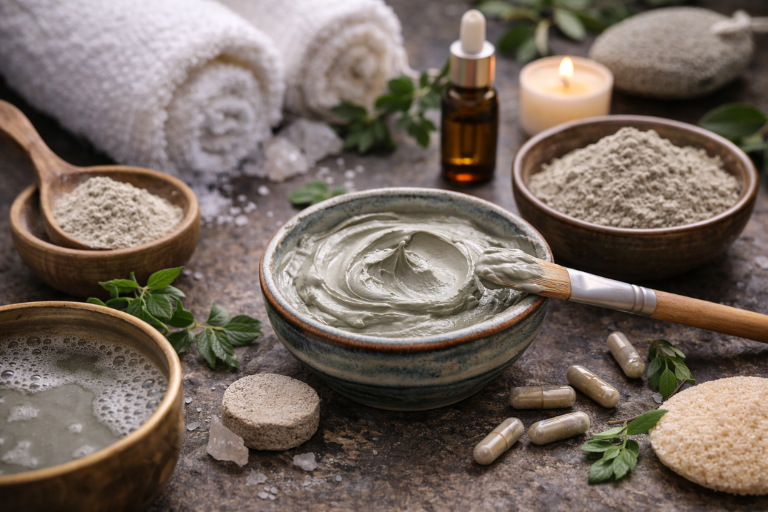
Mix 1 part clay with 2 parts liquid in a glass bowl using non‑metal tools. Water works, but expect clumps; smooth them with your fingers as you apply. For a creamier, less messy paste, use organic apple cider vinegar and stir until silky. For optimal results, choose dry clay powder to avoid preservatives and mix it fresh each time.
Mix 1 part clay with 2 parts liquid; use ACV for a silky, lump‑free paste.
Apply with clean fingers in small, smooth strokes. Use a thin layer for dry to normal skin. For combination skin, keep it thin overall but add a thicker layer to the T‑zone. If you’re oily, apply a thick layer across the face.
Let it dry 15–20 minutes for normal/oily skin, 8–10 for dry, and 5–10 for sensitive.
Rinse thoroughly with warm water or a warm washcloth. Pat dry, tone, moisturize, then re‑moisturize after 15 minutes.
Frequency, Safety, and Results: How Often to Use and What to Expect
A smart bentonite routine balances frequency with skin type so you get clear, calm results without irritation.
If you’re oily or acne-prone, mask 2–3 times weekly to reduce excess sebum and keep pores clear.
Combination skin benefits from 1–2 times weekly, focusing on the T‑zone.
Normal skin should cap use at twice weekly.
Dry or sensitive skin should stick to once weekly; very sensitive types may prefer every two weeks and must patch test.
Never use daily—overuse strips oils, causing tightness, redness, and dryness.
Expect weekly use to lift impurities, smooth texture, and reduce breakouts while maintaining elasticity. For added benefits, choose a clay type suited to your skin—bentonite for oily, kaolin for sensitive, and French green for combination—to leverage each clay’s unique benefits.
Always moisturize after masking.
Adjust frequency seasonally—more in summer, less in winter.
Customize with aloe for hydration or oil-absorbers for shine.
Spot-treat to minimize exposure.
Consistency beats rigidity.
Frequently Asked Questions
Can I Mix Bentonite Clay With Other Active Ingredients Like Niacinamide or Vitamin C?
No—you shouldn’t mix bentonite clay with niacinamide or vitamin C. The clay binds and deactivates actives, risks irritation, burns, and barrier damage. Use them separately. If you must mix, stick to water, rose water, or diluted ACV.
Is Bentonite Clay Safe for Eczema, Rosacea, or Compromised Skin Barriers?
Yes, but only with caution. Patch test first. Limit use to once or twice weekly. Choose pure, fragrance-free formulas. Prefer kaolin if sensitive. Mix with soothing add-ins like honey. Remove early if tingling, tightness, or redness starts.
Does Tap Water Versus Apple Cider Vinegar Change Mask Effectiveness?
Yes. You’ll get better effectiveness with apple cider vinegar. It drops the mask’s pH near skin’s 5.5, reducing irritation, boosting impurity adsorption. Tap water keeps it alkaline, disrupts your barrier, increases redness. Remove before fully drying, moisturize after.
Will Bentonite Clay Interact With Prescription Acne Medications or Retinoids?
Yes—topical bentonite can bind or irritate, potentially reducing absorption of prescription topicals and worsening dryness with retinoids. Space it at least two hours apart, patch test, limit to 1–2 times weekly, and ask your dermatologist before combining.
How Should I Store Mixed Clay and for How Long Is It Stable?
You shouldn’t store mixed clay; make it fresh. If you must, refrigerate in a clean, airtight, non-metal container for 24 hours max. Skip metal tools, label the date, discard at odor, texture, or color changes.
Conclusion
By now, you know how bentonite clay works hard while you sleep—drawing out impurities, gently exfoliating, binding breakout‑causing bacteria, calming irritation, and supporting hydration and a healthier microbiome. Apply it right, and you’ll wake to smoother, clearer, less oily skin. Keep your routine consistent, listen to your skin, and adjust frequency as needed. If you’re sensitive, patch test first and moisturize after. Stick with it, and you’ll see calmer pores, fewer breakouts, and a balanced glow by morning.