Turmeric’s Best Friend: 5 Ways Black Pepper Maximizes Nutrient Absorption
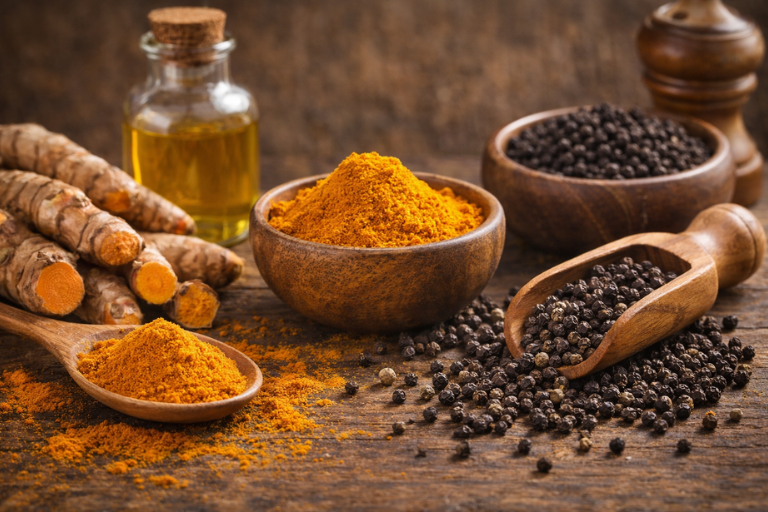
You want more from turmeric than a golden glow, and black pepper is the quiet helper that makes it happen. Piperine slows how fast your body breaks curcumin down and blocks its exit, so more stays in your bloodstream longer. Pair it with the right fat, a bit of heat, and smart timing, and the benefits add up fast. But dosing, safety, and meds matter—and the best daily ways to use them might surprise you.
Get More From Turmeric Fast: Timing, Fat, Heat, and Pepper
Although curcumin is notoriously hard to absorb, you can boost it quickly by timing turmeric with meals, adding a little fat, using gentle heat, and including black pepper.
Eat turmeric with food to slow release and support steadier uptake. Add a small fat source—like almond milk in hot tea or coffee with a curcumin capsule—to aid micelle formation and ease liver processing. Incorporating ginger’s immune system support can further enhance overall nutrient absorption.
Pair turmeric with meals and a little fat to steady absorption and ease liver handling
Cook turmeric into warm, starchy dishes to keep absorption safer while helping curb post-meal blood sugar.
Use just 1/20 teaspoon black pepper in meals to markedly raise turmeric’s bioavailability while keeping absorption gradual. Pairing turmeric with black pepper can increase curcumin absorption by up to 2,000%.
Heated turmeric-pepper meals have shown lower postprandial glycemia and reduced hunger without notable gastrointestinal changes, though they can taste less pleasant.
How Piperine Boosts Curcumin Absorption and Half-Life
Even before you add fat or heat, black pepper’s piperine can make curcumin last longer and absorb better by slowing its breakdown and blocking its expulsion from gut cells.
It inhibits CYP3A4, which would otherwise convert curcumin to tetrahydrocurcumin, and it suppresses P-glycoprotein efflux, so more curcumin crosses and stays within epithelial cells. This enhanced absorption contributes to curcumin’s powerful antioxidant protection, allowing it to neutralize reactive oxygen species effectively.
You also benefit from piperine’s possible boosts to intestinal blood flow and absorptive surface area, which can promote active transport.
In vitro Caco-2 assays show about a 2.5-fold rise in curcumin uptake and markedly reduced efflux with piperine. Caco-2 permeability assays also confirm low baseline permeability for curcumin from dried turmeric rhizomes, with piperine-containing formulations under certain conditions showing limited detectable permeation despite its bioavailability-enhancing role.
Animal studies report higher serum levels, longer tissue residence, and a 48% spike in initial brain uptake.
Human data show striking early increases—up to 2,000%—but from a very low baseline without lipid.
Doses That Work: Curcumin, Piperine, Pepper Amounts, and Timing
Dose and timing decide whether curcumin shows up in your blood or barely registers. Taken alone, even 2 g often yields undetectable levels; 4–8 g peaks near 0.41–1.75 µM at 1 hour, with steady-state only 22–41 ng/mL after weeks.
Pair it with piperine and you change the math. Use 20 mg piperine with 2 g curcumin (about a 100:1 turmeric:black pepper ratio). That combo boosts bioavailability about 2,000% within 45 minutes and can extend half-life from ~2.2 to ~4.5 hours. Co-ingestion with black pepper significantly increases urinary excretion of curcumin and prolongs its half-life compared with curcumin alone.
Smaller intakes help: 5–10 mg piperine or as little as 1/20 teaspoon black pepper meaningfully improves absorption. Everyday 360 mg black pepper delivers roughly 18–32 mg piperine.
Take piperine and curcumin together; piperine promotes rapid intestinal uptake within the first 1–2 hours.
Safety and Meds: Who Should Avoid or Talk to a Clinician
You’ve seen how pairing curcumin with piperine can turbocharge absorption; that same boost can also magnify side effects and drug interactions.
If you use blood thinners or antiplatelet drugs (including warfarin), talk to your clinician—turmeric slows clotting and piperine can raise drug levels. Avoid high doses if you’ve had liver issues; rare hepatitis cases occurred with piperine-enhanced turmeric. Watch for jaundice, dark urine, fatigue, or right‑upper‑abdominal pain.
Because black pepper inhibits CYP3A4 and P‑gp, it can increase levels of statins, amlodipine, midazolam, loratadine, losartan, verapamil, and antibiotics like norfloxacin. Curcumin alone has virtually zero systemic bioavailability, which is why piperine-driven boosts can also heighten the risk of interactions.
Use extra caution with narrow‑therapeutic‑index drugs (tacrolimus, lithium, digoxin, phenytoin). If you’re on cancer therapies (tamoxifen, topoisomerase I inhibitors, doxorubicin, paclitaxel) or immunosuppressants, consult your oncology or transplant team before adding turmeric plus black pepper.
Easy Daily Ways to Take Turmeric + Black Pepper (With Examples)
Whether you prefer a cozy drink or a quick sprinkle, it’s easy to fold turmeric and black pepper into your day for better absorption and steady benefits.
Try a golden latte: warm dairy, almond, or coconut milk; whisk in turmeric, a fat source (ghee or olive oil), and a dash of freshly ground pepper. Sip in the evening to support digestion and calm inflammation.
At meals, sprinkle turmeric and pepper over eggs, soups, rice, or roasted veggies. This combo can blunt post-meal glucose spikes, curb hunger, and keep you satisfied. In a small randomized crossover study, adding black pepper and turmeric to meals lowered postprandial glycemia and reduced hunger without harming gastrointestinal comfort.
For cooking, use a fresh grind; piperine can boost curcumin uptake up to 2000%.
Prefer supplements? Choose turmeric paired with black pepper extract. Take with a snack containing fat for consistent, well-tolerated anti-inflammatory support.
Frequently Asked Questions
Does Black Pepper Enhance Absorption of Other Nutrients Besides Curcumin?
Yes. You absorb more vitamin C, B6, β-carotene, magnesium, iron, selenium, CoQ10, and resveratrol with piperine. It also boosts glucose and amino acid uptake by inhibiting metabolizing enzymes and P-glycoprotein. Typical effective doses: 5–10 mg.
Are Whole Peppercorns or Ground Pepper More Effective With Turmeric?
Whole peppercorns are more effective when you grind them fresh with turmeric. You’ll retain piperine and volatile oils, boosting curcumin absorption. Pre-ground pepper loses potency over time, so you’d need more. Add fat and gentle heat for best results.
Do Different Turmeric Varieties Affect Piperine’s Enhancement Equally?
No—you’ll see uneven enhancement. You get stronger boosts with ar-turmerone‑rich, whole-extract varieties like BioTurm or water‑dispersible turmeric, while isolated curcumin or low‑piperine blends underperform. Extraction method and piperine dose (about 10%) drive the difference.
How Do Ginger or Other Spices Interact With Piperine Beyond Turmeric?
They synergize. You pair piperine with gingerol to boost drug bioavailability 10–85%. You inhibit CYP450 and P-gp, delay gastric emptying, and enhance uptake, raising antibiotics and CNS/CVS drug exposure 30–200%, sometimes tripling AUC and sustaining blood levels.
Can Cooking Methods Degrade Piperine’s Effectiveness in Meals?
Yes. You’ll lose piperine with heat: ~4–12.5% open-pan, ~12.5–34% pressure cooking, ~27–34% boiling. Slow cookers lose ~6%. Add pepper late, use oil, avoid prolonged high heat, and store cool to preserve effectiveness.
Conclusion
You’ve got simple, proven ways to get more from turmeric. Pair it with black pepper to boost curcumin’s absorption and half-life, add a little fat, use gentle heat, and time your dose with meals. Stick to evidence-based amounts, and if you’re on meds or pregnant, check with your clinician first. Then make it effortless: season your food, blend golden milk, or take a combined supplement. Do this consistently, and you’ll reveal turmeric’s benefits faster and for longer.