7 Tropical Health Benefits of Eating Fresh Coconut Meat
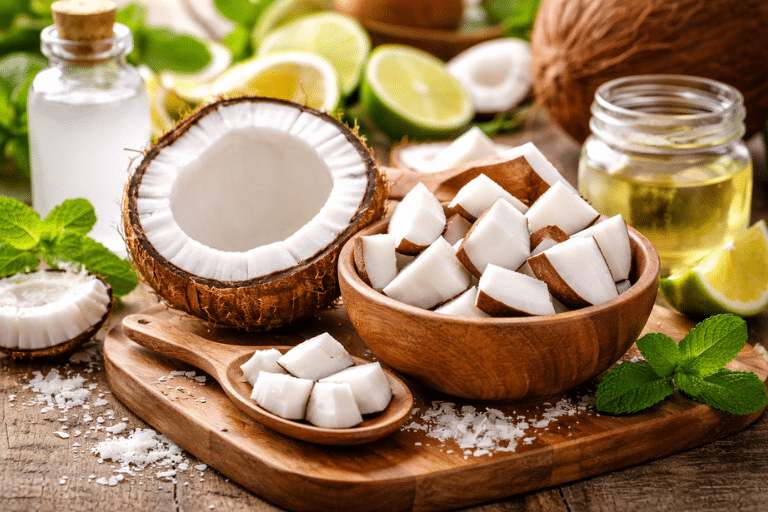
When you crack open a fresh coconut, you’re not just getting a tasty snack—you’re tapping into a surprisingly powerful source of nutrition. From clean, quick energy to support for your heart, digestion, and metabolism, fresh coconut meat offers benefits that go far beyond its tropical flavor. And whether you’re watching your blood sugar or your waistline, its unique mix of fats and fiber might change how you think about this simple fruit.
What Is Fresh Coconut Meat? Quick Nutrition and Benefits
Fresh coconut meat is the thick, white flesh you scrape from the inside of a mature coconut, and it’s very different from coconut water. You’re eating the edible endosperm, or copra, not the shell, skin, or liquid. It’s dense, chewy, and rich, coming from a drupe that protects its seed with a hard covering.
Nutritionally, you get a high‑calorie, high‑fat food: about 283 calories and 27 grams of fat per 1 cup (80g) shredded, with moderate carbs and a little protein. A piece measuring 2 x 2 x 0.5 inches (about 1.6 oz) provides around 159 calories, which can take roughly 18 minutes of jogging to burn for an average adult woman.
It’s especially rich in manganese and copper, plus iron, selenium, potassium, and zinc. You also take in substantial insoluble fiber—around 7 grams per cup—supporting regular bowel movements, gut health, and overall digestion when you enjoy it in reasonable portions.
Fast, Clean Energy From Fresh Coconut Meat
Fresh coconut meat is a natural source of fast, clean energy thanks to its rich content of healthy fats, especially medium-chain triglycerides (MCTs). These fats are quickly absorbed and converted into energy by the body, making coconut an excellent choice for sustained fuel without the crash associated with refined sugars.
Along with energizing fats, fresh coconut meat also provides fiber to support steady digestion and essential minerals like potassium and magnesium to help maintain proper muscle and nerve function. It’s a simple, whole-food way to power your day naturally.
Fresh Coconut Meat for Heart Health and HDL Cholesterol
Although coconut’s saturated fat content can sound intimidating at first, the type and balance of fats in fresh coconut meat tell a more heart-friendly story—especially for your HDL (“good”) cholesterol.
Most of coconut’s saturated fat comes as medium-chain triglycerides (MCTs), which your body absorbs quickly and sends straight to the liver for energy instead of easily storing as body fat. This rapid absorption is similar to how omega-3 fatty acids benefit heart health by improving lipid profiles.
Coconut’s MCTs are rapidly absorbed and burned for energy, not readily tucked away as body fat
When you eat fresh coconut meat regularly but moderately—about half a cup gives just over half your daily saturated fat limit—you may support a more favorable lipid profile. Coconut is also high in fiber, which can further support heart and digestive health by helping regulate bowel movements and cholesterol levels.
Research on coconut oil and milk shows consistent HDL increases of around 4 points, often outperforming other vegetable oils. Higher HDL generally aligns with better cardiovascular resilience, especially when paired with an overall heart-conscious diet.
Fiber-Rich Fresh Coconut Meat for Digestion and Gut Health
While its creamy texture often steals the spotlight, fresh coconut meat quietly delivers impressive digestive benefits thanks to its rich fiber content. Just 1 cup of shredded meat gives you about 7 grams of mostly insoluble fiber—nearly a quarter of your daily needs—helping food move smoothly through your system, preventing constipation, and supporting regularity. Additionally, incorporating fiber-rich foods into your diet can enhance overall digestive health.
This fiber forms bulk in your gut, promoting healthy motility and a balanced intestinal environment. Manganese, copper, iron, phosphorus, and zinc work alongside fiber to support digestive enzymes and nutrient breakdown, so you absorb more from every meal. With each cup providing about 52% manganese, fresh coconut meat plays a key role in supporting the metabolic processes that keep digestion running efficiently.
- Picture tender white shreds folded into a bright fruit salad
- Imagine crunchy coconut atop warm oatmeal
- See it blended into a tropical smoothie
- Visualize fresh slices beside yogurt
Antioxidant Power of Fresh Coconut Meat
Even beyond its fiber and healthy fats, fresh coconut meat quietly packs real antioxidant power that helps shield your cells from everyday oxidative stress.
When you eat young coconut meat, you’re getting the strongest protection: it shows about 52% DPPH and 45% ABTS radical scavenging activity, higher than mature or makapuno varieties. These antioxidant activities in coconut meat and water are closely linked to their DNA damage protection potential, supporting cellular health benefits observed in laboratory studies.
FRAP tests back this up, with young coconut meat reaching roughly 169 μg/g fresh weight and over 2,100 μg/g when freeze‑dried, confirming robust reducing power across fresh and processed forms.
These lab results translate into real biological effects: coconut meat extracts help protect DNA from damage in oxidative systems, again with young meat leading.
You also take in phenolics like gallic, caffeic, salicylic, and p‑coumaric acids, which further counter free radicals.
Coconut Meat for Blood Sugar, Weight, and Metabolic Health
Long beyond its tropical flavor, coconut meat interacts with your metabolism in ways that can steady blood sugar and support a healthy weight when you eat it in the right context.
Its fibre and healthy fats slow how quickly glucose enters your bloodstream, so you experience fewer sharp spikes. Because it’s low-glycemic and rich in antioxidants, it can enhance insulin sensitivity and overall glucose control. When eaten alongside other whole foods and as part of a balanced meal plan, coconut meat can further support stable blood sugar by helping regulate overall carbohydrate intake.
Fresh coconut also supports weight management when you use it to replace more refined, high-calorie ingredients. Studies in healthy young adults show diets enriched with fresh coconut reduce both blood glucose and body weight.
- White coconut shavings softening the impact of sweet banana
- A small bowl of coconut beside your running shoes
- Smooth, creamy bites replacing sugary snacks
- Measured coconut pieces balancing your plate
Easy Ways to Add Fresh Coconut Meat Every Day
Once you know how versatile fresh coconut meat is, it becomes easy to tuck it into meals you already love instead of treating it as a special-occasion ingredient.
Blend it into smoothies for a creamy base, whip up coconut milk by blending with water and straining, or mix the puree into dips, sauces, and caramel-apple–style smoothies.
Shred or cube it for fruit salads, yogurt bowls, and colorful mixed-fruit plates. You can also gently toast shredded coconut meat in a low oven to create homemade coconut flakes that add flavor and crunch to both sweet and savory dishes.
Stir it into oatmeal, porridge, cooked grains, or breakfast stir-fries, or pair it with granola and energy bites.
For snacks, enjoy raw bites, frozen chunks, jerky-like dehydrated strips, or toasted shreds in trail mix.
In savory cooking, add chunks to curries, use as a crunchy coating, or bake into macaroons and bars.
Frequently Asked Questions
Is Fresh Coconut Meat Safe for People With Tree Nut or Coconut Allergies?
It’s not safe. If you’ve a known coconut allergy, avoid fresh coconut completely. With tree nut allergy, risk’s low but possible; don’t try it without allergist-guided testing and an observed oral food challenge.
How Does Fresh Coconut Meat Compare to Coconut Oil Nutritionally and Health-Wise?
You get more fiber, protein, vitamins, and minerals from fresh coconut meat, with fewer calories and less saturated fat than oil. Coconut oil’s pure fat boosts cholesterol more, so you should treat it as an occasional, concentrated fat source.
Can Children and Pregnant Women Eat Fresh Coconut Meat Daily?
Yes, they can eat it daily in moderation if there’s no coconut allergy. You should watch portions to avoid excess calories, practice good food safety, and always check with your or your child’s healthcare provider.
Does Freezing or Refrigerating Fresh Coconut Meat Reduce Its Health Benefits?
Freezing or refrigerating fresh coconut meat doesn’t greatly reduce its health benefits. You’ll still get MCTs, fiber, minerals, and antioxidants. Freeze quickly, avoid repeated thawing, and eat within months to keep nutrients and texture ideal.
Are There Medication Interactions or Health Conditions That Restrict Coconut Meat Intake?
Yes, you do face some restrictions. You should use caution if you’ve high cholesterol, cardiovascular disease, kidney problems, or take blood thinners, antihypertensives, or diabetes medications; always discuss amounts with your healthcare provider.
Conclusion
Fresh coconut meat isn’t just a tasty tropical treat—it’s a smart everyday upgrade for your health. You’ll fuel your body with fast, clean energy, support your heart, and nourish your gut with fiber. Its antioxidants and healthy fats help steady blood sugar, support a healthy weight, and keep your metabolism humming. Start small: blend it into smoothies, toss it into salads, or snack on it plain. Your body will feel the difference.