5 Traditional Benefits of Curry Leaves for Hair Growth and Digestion
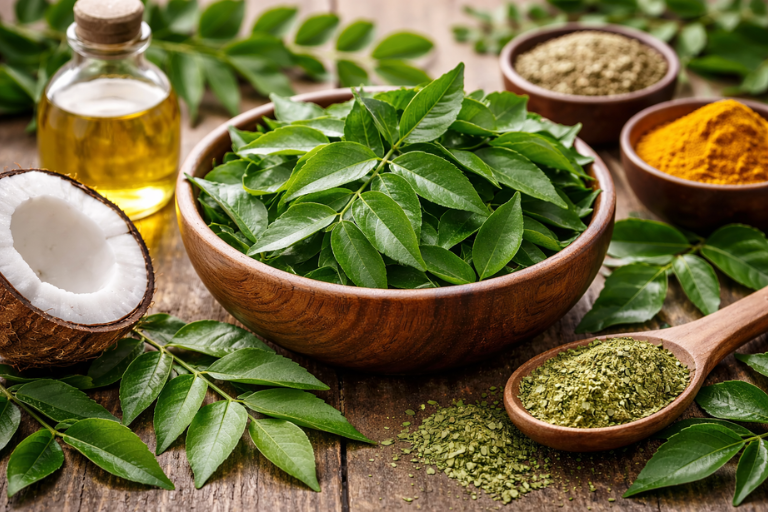
When you think about caring for your hair and digestion, curry leaves might not be the first thing you consider, yet they’ve been used for centuries for exactly that. You’ll find they offer support for hair growth, scalp health, and even premature greying, while also easing common digestive discomforts. What’s interesting is how simply you can add them to your routine, once you understand the key ways they work.
Evidence-Based Hair Benefits of Curry Leaves
Although curry leaves are often praised in traditional remedies, the evidence-backed hair benefits mainly relate to their rich nutritional profile and bioactive compounds that can support overall scalp and hair health. You get beta-carotene, proteins, and amino acids that help reinforce hair fibers and support follicle integrity.
Vitamins A, B, C, and E nourish the scalp, while iron and calcium support circulation that keeps follicles functioning well. Their carbazole alkaloids and phenolic compounds show strong antioxidant and anti-inflammatory activity in laboratory studies, helping defend follicles from free-radical damage and oxidative stress linked to hair weakening and premature graying.
Ginger possesses potent antimicrobial properties that may help control dandruff and scalp infections, creating a healthier scalp environment, though human clinical trials remain limited. Antimicrobial compounds such as mahanimbine and mahanine help control dandruff and scalp infections, creating a healthier scalp environment, though human clinical trials remain limited.
Additionally, traditional Ayurvedic texts such as the Charaka Samhita describe curry leaves as a revered hair tonic, highlighting their longstanding use for promoting hair strength and vitality.
Curry Leaves for Hair Growth, Strength, and Hair Fall
When you use curry leaves consistently, they can support hair growth, increase strand strength, and help curb hair fall by feeding follicles with a dense mix of proteins, beta-carotene, vitamins, and antioxidants. Almond milk’s low glycemic index helps stabilize blood sugar levels, which can also contribute to healthier hair by preventing hormonal imbalances that may lead to hair loss.
You’re fundamentally giving your hair the raw materials it needs, since hair itself is mostly protein. Regular use also helps prevent dandruff, keeping the scalp cleaner and more balanced for better hair growth.
Beta-carotene and amino acids fortify roots, while vitamins A, B, C, and E back collagen production and reduce breakage.
Iron and minerals boost blood flow to follicles, so strands grow thicker and more resilient.
You can heat 15–20 fresh leaves in coconut or mustard oil until crisp, then use this infused oil regularly.
Or blend leaves with coconut oil into a paste or mask to reinforce growth and reduce shedding.
Curry Leaves, Scalp Health, and Premature Greying
Beyond strengthening strands, curry leaves also support the scalp itself, which is where healthy hair really begins. Their antimicrobial and anti-inflammatory compounds help calm irritation, control dandruff, and reduce the impact of oxidative stress linked to scalp conditions.
By supplying essential minerals like iron and phosphorus, they further nourish the scalp environment needed for strong, resilient hair. Additionally, their ability to enhance brain health can indirectly support overall well-being, including scalp vitality.
By improving blood circulation, they nourish follicles so hair can grow from a cleaner, better-balanced scalp.
Curry leaves boost circulation, feeding follicles so hair grows from a cleaner, more balanced scalp
You also get support against premature greying because curry leaves are naturally rich in vitamins, minerals, and antioxidants that protect hair pigment.
- Antioxidants and carbazole alkaloids combat oxidative stress on the scalp.
- Vitamin C and E help maintain skin and scalp firmness.
- B vitamins and beta-carotene support melanin production and hair color.
- Proteins, amino acids, and minerals nourish follicles from within.
- Flavonoids and plant nutrients may slow age-related pigment changes.
Still, evidence remains limited and mostly anecdotal.
Other Health Benefits of Curry Leaves (Including Digestion)
While curry leaves are best known for hair and scalp support, they quietly deliver a wide range of whole-body benefits, especially for digestion and metabolic health. You get powerful antioxidants that neutralize free radicals, shield your nervous system, heart, brain, and kidneys, and slow cellular aging.
They also support healthy blood sugar by activating pancreatic beta cells, improving insulin activity, and protecting against diabetes-related nerve and kidney damage. Their anti-inflammatory compounds calm irritation, ease oxidative stress, and help balance cholesterol. Research on animals suggests they may help reduce heart disease risk factors by lowering high cholesterol and triglyceride levels.
For digestion, curry leaves stimulate digestive enzymes, ease indigestion, nausea, bloating, gas, and diarrhea, and support better nutrient absorption.
Their antibacterial, iron- and calcium-rich profile helps fight infections, improve hemoglobin, support bones, and strengthen your overall resilience.
How to Use Curry Leaves Daily for Hair Health
Curry leaves don’t just support your internal health; you can also use them every day to directly strengthen your hair and scalp. Start by infusing fresh leaves in coconut oil, simmering until they turn dark, then straining and storing the oil in a glass bottle for regular scalp massages. Regular use of curry leaf oil can also help reduce hair fall by nourishing the follicles with its rich antioxidant profile.
- Warm curry leaf–coconut oil, sometimes mixed with olive oil, and massage it into your scalp 2–3 times weekly.
- Chew 8–10 fresh leaves each morning or drink overnight-infused curry leaf water.
- Add fresh leaves to daily dishes to nourish follicles from within.
- Apply weekly hair masks using curry leaf powder with yogurt, honey, or fenugreek.
- Rinse hair with curry leaf–boiled water after shampooing 2–3 times a week and track changes over 2–4 weeks.
Frequently Asked Questions
Can Children or Pregnant Women Safely Use Curry Leaves for Hair and Digestion?
Yes, they can, if you use moderate, food-level amounts and monitor reactions. Avoid strong extracts, excess intake, and heavy topical use. Always check with a doctor or pediatrician first, especially during pregnancy or early childhood.
Are There Any Side Effects or Allergies Associated With Curry Leaf Use?
Yes, you can experience side effects: itching, rashes, hives, swelling, breathing difficulty, stomach upset, nausea, or diarrhea. If you’re pregnant, asthmatic, diabetic, or allergic to pollen, use small amounts and consult your doctor.
Do Curry Leaves Interact With Common Medications or Supplements?
Yes, curry leaves interact with blood sugar, blood pressure, anticoagulant, and digestive medications, and some supplements. You monitor levels closely, use moderate amounts, watch for dizziness or bleeding, and always consult your doctor or pharmacist first.
Is Fresh, Dried, or Powdered Curry Leaf Best for Maximum Benefits?
You don’t have one “best” option; you’ll get maximum benefits by combining forms. Use fresh for water‑soluble nutrients, dried for concentrated minerals and antioxidants, and powdered for consistent dosing and convenient, sustained intake over time.
How Should Curry Leaves Be Stored to Preserve Their Nutrients and Potency?
Store them washed, thoroughly dried, then refrigerate in airtight containers with tissue layers for 7–10 days. For longer storage, freeze individually or shade-dry and jar them; you can also salt-layer in sterilized jars.
Conclusion
Curry leaves give you a simple, traditional way to support stronger hair and smoother digestion from the inside out. By adding them to your meals or hair masks, you’re nourishing follicles, soothing your scalp, and helping protect against hair fall and premature greying. At the same time, you’re boosting digestive enzymes and easing bloating. Start using fresh curry leaves daily and let this humble herb quietly upgrade your hair and gut health.