5 Traditional Benefits of Comfrey Salve for Muscle and Joint Relief
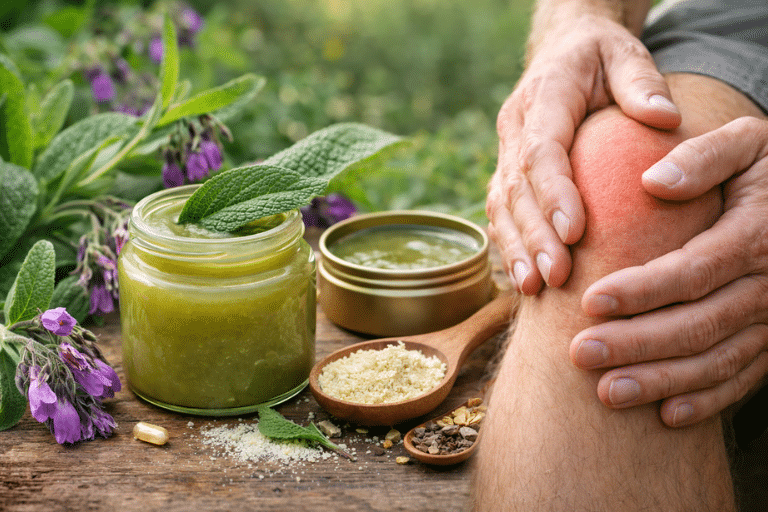
If you’re looking for natural ways to ease sore muscles and stiff joints, comfrey salve might be worth your attention. Traditionally used for pain, swelling, and injury recovery, it’s known for combining quick relief with deeper support for healing tissues. You’ll also find it can play a role in long-term joint comfort—when you use it correctly. Before you decide if it belongs in your routine, you’ll want to know exactly how it works…
Does Comfrey Salve Really Help Muscle and Joint Pain?
How well does comfrey salve really work for sore muscles and stiff joints? When you look at clinical trials, the results are striking.
In a double-blind study with 120 people suffering acute back pain, comfrey root ointment cut pain on movement by about 95% over 5 days, versus 38% with placebo, with relief starting within an hour. This trial found that comfrey was superior to placebo across all primary and secondary outcome measures, including pain at rest, movement pain, and functional impairment. Regular use of comfrey salve may complement anti-inflammatory foods for a more comprehensive approach to managing pain.
If you’ve twisted an ankle, comfrey cream performed as well as diclofenac gel and even scored higher global efficacy ratings from both doctors and patients.
In knee osteoarthritis, comfrey ointment outperformed placebo and matched or beat diclofenac in similar joint distortions.
For general muscle strains, about 10 controlled trials show clear benefits, with meaningful pain reductions and improved pressure tolerance.
How Comfrey Reduces Pain and Inflammation in Muscles and Joints
Beneath the soothing feel of comfrey salve, there’s a surprisingly powerful set of pain‑relieving and anti‑inflammatory actions at work. When you massage it into sore muscles or stiff joints, pain can drop quickly—studies show about a 33% reduction within an hour, far beyond placebo.
Over days, pain at rest, on movement, and on pressure often continues to fall, sometimes by more than 80–90%. Clinical trials have also shown that comfrey can be comparable or superior to diclofenac gel for relieving pain and improving function in sprains and joint problems.
Comfrey doesn’t just numb; it targets inflammation. Rosmarinic acid and other polyphenols neutralize reactive oxygen species that irritate joint tissues, while tannins’ astringent action helps calm swelling. Incorporating an anti-inflammatory diet can enhance the overall effectiveness of therapies like comfrey salve.
Mucilage coats irritated areas with a protective film, easing tenderness. At the same time, allantoin supports tissue repair, so improved comfort comes with steadily better function.
Comfrey Salve for Faster Healing of Sprains, Strains, and Bruises
When a twist, pull, or hard impact leaves you with a sprain, strain, or bruise, comfrey salve can help your tissues bounce back much faster than rest alone. Clinical trials on recent ankle sprains show high-comfrey creams cutting pain in half within three days and speeding recovery more than twice as fast as low-dose formulas or placebo.
In some studies, comfrey even matched or outperformed diclofenac gel. In traditional use, comfrey was so valued for its ability to knit bone and tissue that it was known by folk names like “knitbone” and “boneset.” You also see clear benefits for bruises. Ointments with comfrey reduce injection- and medication-related bruising in both size and discoloration.
In children aged 4–12 with sprains, strains, and bruises, comfrey creams lowered pain up to 86 percent and swelling 94 percent within eight days, with no reported adverse reactions. Incorporating comfrey into your routine can complement anti-inflammatory foods for enhanced healing.
How Comfrey Salve Supports Joint Mobility and Stability
Beyond speeding up recovery from sprains and bruises, comfrey salve also targets the joints themselves to help you move more freely and feel steadier on your feet.
Its strong anti-inflammatory action helps reduce swelling and oedema in arthritic joints, easing pressure so they can bend and bear weight more comfortably. Clinical research and safety guidelines emphasise that comfrey salve should be used externally only and for limited durations to avoid potential liver-related toxicity.
When you massage it into sore knees or stiff fingers, pain at rest and during movement can drop sharply, with studies showing superior relief compared to placebo and even diclofenac.
As pain eases, you’re more willing to move, and clinical trials in knee osteoarthritis show better mobility, muscle strength, and function.
Silica, allantoin, and tannins work together to firm and repair connective tissues, stabilizing ligaments and supporting long‑term joint stability.
Safe Ways to Use Comfrey Salve for Muscle and Joint Aches
Used correctly, comfrey salve can offer steady relief for sore muscles and stiff joints while keeping safety front and center. Start by washing the area with mild soap and water, then pat dry. Apply a thin layer with clean fingers or a sterile applicator, and massage it in gently.
A small amount’s enough—about 1 teaspoon to a local area, up to 3–4 times daily, for no longer than 10–14 days. Because comfrey contains pyrrolizidine alkaloids, it’s considered safe only for external use and should never be taken by mouth. Use it on bruises, strains, sprains, and general muscle or joint aches, but only on unbroken skin.
Don’t use it on open or puncture wounds, inside casts, or if you’re pregnant, breastfeeding, under 12, or have liver disease or very sensitive skin. Stop if redness or itching appears.
Frequently Asked Questions
Can Comfrey Salve Be Combined With Other Natural Remedies Like Arnica or Menthol?
Yes, you can combine comfrey salve with arnica or menthol. You’ll enhance pain relief, reduce inflammation, and improve mobility, but you should patch-test first and avoid broken skin or long-term use without professional guidance.
Is There a Difference Between Using Fresh Comfrey Salve and Dried-Root Formulations?
Yes, there’s a difference. You’ll get gentler, safer relief from leaf-based fresh salve, while dried-root salves act deeper and stronger but carry higher PA risk, so you shouldn’t use them frequently or on broken skin.
How Does Traditional Use of Comfrey Compare to Modern Clinical Research Findings?
You’ll see traditional uses largely confirmed: modern trials support comfrey’s topical benefits for pain, swelling, sprains, contusions, and osteoarthritis, showing relief comparable to some NSAIDs, while clarifying dosing, treatment duration, and important safety limits.
Can Athletes Safely Use Comfrey Salve for Recurring Sports Injuries During Training Seasons?
Yes, you can safely use PA‑free comfrey salve for recurring sports injuries if you apply it topically for short periods, avoid broken skin, don’t ingest it, and check with your physiotherapist during heavy training.
Are There Specific Comfrey Salve Formulations Better Suited for Elderly Joint Problems?
Yes. You’ll usually do best with lower‑to‑moderate strength root‑based or root/leaf blends, applied 2–3 times daily. Avoid high‑dose or “warming” combos, don’t use on broken skin, and always clear it with your doctor first.
Conclusion
When you use comfrey salve consistently and correctly, you give your muscles and joints real support—less pain, less swelling, and better movement. Its natural compounds help your tissues repair faster, so you bounce back more quickly from everyday strains and injuries. As long as you follow safe-use guidelines, you can make comfrey salve a reliable part of your routine for ongoing comfort, recovery, and long-term joint and muscle health.