7 Medicinal Benefits of Cloves for Digestion and Immunity
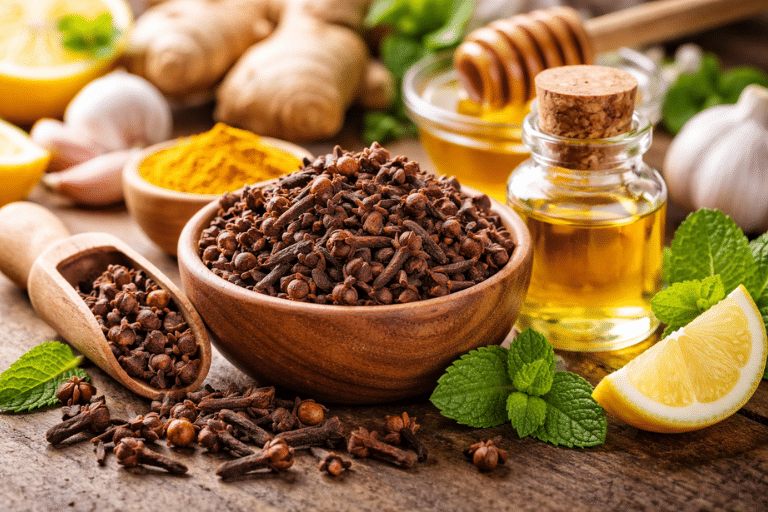
When you add cloves to your routine, you’re doing far more than flavoring food. These tiny buds can help your body break down meals, ease uncomfortable gas, and defend your gut from harmful microbes. They’re also packed with antioxidants that support your immune system and protect key organs like your liver. But to truly benefit, you’ll need to know which forms to use, how much is safe, and when cloves might work against you.
Key Digestive Benefits of Cloves
Although cloves are best known as a warm, aromatic spice, they also deliver powerful digestive support through several well-studied mechanisms. When you use cloves regularly, they stimulate digestive enzymes and juices so you break down proteins, fats, and carbohydrates more efficiently and absorb nutrients better. They even boost saliva, improving the very first step of digestion.
Cloves also help protect your stomach lining. They increase gastric mucus, thicken this protective barrier, and in studies perform similarly to some anti-ulcer drugs, lowering ulcer risk and supporting healing. In addition, their antimicrobial properties help reduce harmful microbes in the gut, supporting a healthier digestive environment.
Beyond the stomach, cloves support your liver, which manages fats, toxins, and nutrients. Eugenol in cloves reduces inflammation, oxidative stress, and fat buildup, while promoting liver cell protection and regeneration.
How Cloves Ease Bloating, Gas, and Indigestion
When gas, bloating, and indigestion slow you down, cloves step in as a fast-acting digestive ally with both tradition and research behind them. As a carminative herb, clove’s aromatic compounds relax your digestive tract, ease stagnation, and help trapped gas move along. You can also combine cloves with other digestive spices like cinnamon, allspice, or cardamom to enhance their carminative effect and create a more soothing blend for your gut. Additionally, home remedies like peppermint and yogurt can complement the effects of cloves for better digestive health.
Clove oil can also lower gas pressure in your stomach and calm inflammation that fuels cramping and discomfort.
By stimulating digestive enzymes, cloves help you break down food more completely, reducing post-meal bloating and improving nutrient absorption. Eugenol-rich clove extract also protects your stomach lining and eases IBS-like symptoms by lowering inflammatory markers.
You can sip clove water or clove tea with meals, use them in cooking, or massage diluted clove oil onto your abdomen to relieve gas and indigestion.
How Cloves Fight Bacteria in Gut, Mouth, and Airways
Long before modern antibiotics, people turned to cloves to keep infections at bay, and research now explains why they work so well across your gut, mouth, and airways. Their main active compound, eugenol, disrupts bacterial cell membranes, slowing or stopping growth of gut pathogens like *E. coli*, *S. aureus*, *Salmonella typhi*, *Campylobacter*, and *Pseudomonas aeruginosa*. It also works synergistically with antibiotics, lowering the doses you’d need against stubborn gut microbes. In ICU settings, clove-based mouthwash has even been shown to significantly reduce the incidence of ventilator-associated pneumonia compared with standard chlorhexidine rinses. Additionally, cloves contain potent antioxidants that further enhance their protective effects on the immune system.
In your mouth, clove-based rinses cut down plaque-forming bacteria such as *Streptococcus mutans* and *Lactobacillus*, while supporting gum health and helping manage oral infections.
In your airways, clove extracts inhibit respiratory bacteria and can even neutralize respiratory syncytial virus, reducing the infectious burden on your breathing passages.
Cloves for Immunity: Antioxidants and Infection Defense
Even in tiny amounts, cloves act like a concentrated shield for your immune system, thanks to their exceptional antioxidant power. Their main compound, eugenol, makes up most of clove oil and far outperforms vitamin E at neutralizing free radicals that weaken your defenses. By limiting oxidative damage, these compounds may also lower the risk of inflammation-driven diseases over time. Additionally, magnesium levels play a crucial role in enhancing immune function and reducing oxidative stress.
With an ORAC score over 290,000 µmol TE per 100g, cloves rank among the most potent antioxidant foods you can use.
When you add cloves regularly, you help your immune system:
- Reduce oxidative stress that exhausts immune cells
- Protect cell membranes and DNA from free radical damage
- Support key antioxidant enzymes like superoxide dismutase and catalase
- Maintain stronger surveillance against everyday pathogens
- Slow age-related immune decline by limiting cumulative cellular damage
How Clove Eugenol Calms Inflammation
Although cloves are tiny, their eugenol content gives them outsized power to calm inflammation right at its molecular roots. When you’re inflamed, the NF-κB pathway flips on and drives production of inflammatory genes. Eugenol blocks this switch, lowering key NF-κB proteins like p-IKK, p-IκBα, and p65, even after strong triggers such as TNF-α or bacterial LPS.
You also get quieter cytokine storms. At targeted concentrations, eugenol reduces TNF-α, IL-6, IL-8, IL-1β, and VEGF, curbing signals that sustain swelling, pain, and tissue irritation. In parallel, eugenol enhances antioxidant enzymes such as SOD, CAT, and GPx, adding another layer of protection against inflammation-related tissue damage.
At the same time, eugenol tackles oxidative stress: it cuts harmful TBARS, lowers ROS, and boosts glutathione and GST activity. Altogether, you’re slowing inflammatory ignition while strengthening intrinsic cellular defenses.
How Cloves Help Protect Your Liver
While your liver quietly filters, detoxifies, and processes almost everything you eat or breathe, cloves work behind the scenes to keep that overworked organ resilient. Their star compound, eugenol, acts as a powerful antioxidant, even outperforming vitamin E in some tests. It helps neutralize free radicals, lowers oxidative stress, and slows processes that can lead to fatty liver, cirrhosis, and fibrosis. Cloves also improve blood circulation, helping deliver oxygen and nutrients more efficiently to liver cells.
Cloves also calm inflammation within liver tissues and support enzyme systems that break down toxins. Manganese in cloves further boosts antioxidant defenses and repair mechanisms.
Cloves soothe inflamed liver tissues while fueling toxin-clearing enzymes and manganese-powered antioxidant repair systems
You benefit because cloves help your liver function more efficiently and recover from damage. Research in animals suggests clove extracts may reverse early fibrosis and enhance overall liver performance.
- Antioxidant protection
- Anti-inflammatory support
- Enhanced detoxification
- Improved liver function
- Cell regeneration and healing
How to Use Cloves Safely Every Day
Because cloves are so potent, you only need a little each day to tap into their benefits and stay on the safe side. Aim for 2–3 whole cloves or about ¼ teaspoon ground daily. You can chew one clove, stir ground cloves into curries, soups, baked goods, or smoothies, or steep 2–3 whole cloves in hot water for 5–10 minutes for tea. This modest amount still provides a rich source of antioxidants that help protect your cells from free radical damage.
Avoid daily use of clove oil or concentrated supplements unless a healthcare professional supervises you. Never give clove oil to children, and don’t take clove oil by mouth.
If you’re pregnant, breastfeeding, on blood thinners or diabetes medications, have a clotting disorder, or plan surgery, talk with your doctor first.
Stop cloves two weeks before surgery. Watch for gum irritation, stomach upset, or allergic reactions.
Frequently Asked Questions
Can Cloves Interact With Common Medications Like Blood Thinners or Diabetes Drugs?
Yes, cloves can interact with blood thinners and diabetes drugs. You increase bleeding risk with warfarin, aspirin, or Plavix and hypoglycemia with diabetes medications. You should avoid concentrated oils/supplements and always talk with your prescriber.
Are Cloves Safe During Pregnancy or Breastfeeding, and in What Amounts?
They’re generally safe in small food amounts during pregnancy and breastfeeding. Don’t drink daily clove water or use supplements. Use clove oil only externally after first trimester, very sparingly, and avoid all concentrated forms while breastfeeding.
Do Cloves Affect Hormone Levels or Fertility in Men or Women?
Yes, cloves can affect hormone levels and fertility in men and women, mainly at supplemental or high doses. You should use only culinary amounts, avoid self-medicating for fertility, and consult your clinician before any concentrated clove products.
Can Children Safely Consume Cloves, and What Dosage Is Appropriate?
Yes, children can safely consume tiny culinary amounts of ground cloves in food, but you must avoid clove oil. Don’t give oil to kids under 2. Always start low, watch reactions, and confirm amounts with your pediatrician.
Are There People Who Should Completely Avoid Clove Oil or Clove Supplements?
Yes. You should avoid them if you’re pregnant, breastfeeding, under 2, on blood thinners or MAOIs/SSRIs, have bleeding or liver disorders, recent surgery, or clove/eugenol allergy; always ask your doctor first.
Conclusion
By adding cloves to your daily routine, you’re giving your digestion and immunity a powerful, natural boost. They help you break down food, ease gas and bloating, calm inflammation, and protect your liver, while their antioxidants and antimicrobial effects support your body’s defenses. Use them in teas, meals, or spice blends, and stay within safe amounts so you can enjoy their benefits consistently and comfortably as part of a balanced, healthy lifestyle.