5 Iron-Rich Benefits of Blackstrap Molasses for Anemia and Energy Levels
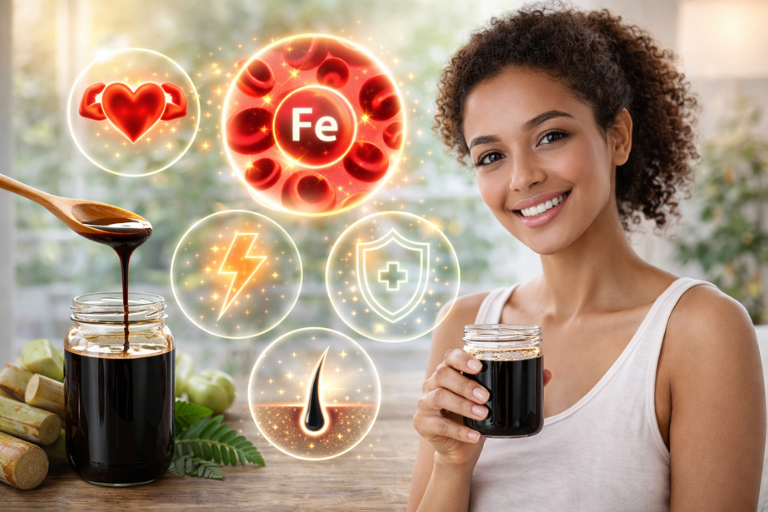
If you’re looking for a simple way to support low iron and steady energy, blackstrap molasses deserves a spot in your routine. Each tablespoon packs a notable dose of bioavailable non-heme iron, plus B6, magnesium, and potassium to back red blood cells, nerves, and muscles. You’ll learn how much to take, when it absorbs best, and what to pair it with—along with safety limits and who should skip it. Ready to see if it fits your day?
Blackstrap Molasses for Anemia: How Much Iron You Get
Even though it’s a sweetener, blackstrap molasses packs notable iron: one tablespoon delivers about 3.6–4.8 mg (roughly 20–25% of the daily value), and two tablespoons provide around 4.9 mg of non-heme iron.
That’s 2–3.5 times more iron than light or dark molasses and, ounce for ounce, more than eggs. For most adults, a tablespoon covers about 20% of daily needs. It also supplies minerals like calcium, magnesium, and potassium, reflecting its nutrient-rich profile.
Blackstrap molasses packs 2–3.5x more iron than lighter molasses—and ounce for ounce, more than eggs.
If you’re addressing iron deficiency anemia from low intake or malabsorption, taking a tablespoon daily can help raise levels and reduce fatigue, weakness, and shortness of breath.
Men generally need about 8.7 mg daily, while women and people who menstruate need 14.8 mg due to monthly losses; needs rise in adolescence.
You can also pair molasses with leafy greens, soy, or legumes to increase overall intake.
Why Blackstrap Iron Absorbs Better Than Plant Foods
While most plant foods offer non-heme iron that your body absorbs modestly, blackstrap molasses is a standout: its iron shows about 85% bioavailability—on par with, and sometimes exceeding, many animal sources.
Bioavailability means the proportion that actually enters your bloodstream and works. Blackstrap’s edge comes from its concentrated mineral matrix: iron appears alongside sulfur, copper, and fructose, which help convert and transport iron efficiently. It is also naturally rich in antioxidants, which may help reduce oxidative stress and support overall cellular health.
Calcium, magnesium, potassium, and manganese further support a favorable uptake environment.
You also get more iron per spoonful. Because blackstrap is the third boiling of sugarcane syrup, minerals concentrate, yielding 2–3.5 times more iron than light or dark molasses.
Two tablespoons provide about 4.9 mg of non-heme iron, and a single tablespoon delivers roughly 20% of your daily iron, calcium, magnesium, and manganese.
How Much to Take, When to Take It, and What to Pair
Because routine matters for iron status, aim for 1 tablespoon of blackstrap molasses daily (about 3.5 mg iron), ideally taken with 250 mg vitamin C or a vitamin C–rich food to boost absorption.
That tablespoon delivers roughly 20% of the daily iron target for adult women. For kids, use 1 teaspoon daily. If you prefer more, 2 tablespoons provide about 7.4 mg iron, but stay mindful of 60 calories and 14 g carbs per tablespoon. It also supplies valuable calcium that supports bone health.
1 Tbsp gives ~20% daily iron for women; kids take 1 tsp. Two Tbsp offers ~7.4 mg—mind 60 calories, 14 g carbs each.
Take it consistently—morning works well—or stir into meals to replace refined sugars. Avoid taking it with dairy or calcium supplements, which block absorption.
Pair with citrus, berries, or a 250 mg vitamin C tablet. Fold into oatmeal with leafy greens or lentils, or simmer into dandelion or yellow dock tea; refrigerate infusions for easy daily dosing.
Real Energy Benefits: Iron, B6, Magnesium, Potassium
Energy from the ground up—that’s what blackstrap molasses delivers with its iron, B6, magnesium, and potassium working in concert.
Each tablespoon packs about 2.3 mg of highly bioavailable non-heme iron—around 20% of your daily value—fueling hemoglobin and red blood cell formation to counter low-energy anemia. You also get B6 (about 8% DV) within a broader B-vitamin profile to keep energy metabolism humming and support mood and focus. Zinc, which is vital for protein metabolism, also plays a significant role in energy production.
Magnesium (about 10% DV) eases fatigue, supports muscle recovery, and calms inflammation—key when workouts or stress drain you.
Potassium (about 9% DV), concentrated from sugarcane, supports steady heart rhythm and healthy blood pressure, complementing iron’s oxygen delivery.
Together, these minerals provide sustained energy without the spikes of refined sugar, helping you feel steady, strong, and clear-headed. For best results, choose 100% organic blackstrap molasses and check labels to avoid added sugars or fillers.
Safety: Limits, Side Effects, and Who Should Skip It
Even with its nutrient perks, you need to treat blackstrap molasses like any sugar-dense sweetener. Start with 1 teaspoon daily and cap your intake at 6 teaspoons per day. One tablespoon delivers about 2.4 mg iron, 60 calories, 14 g carbs, and 10 g sugar, so moderation matters—especially if you’re watching blood sugar. It also provides notable antioxidants, which help neutralize free radicals and support overall cellular health. Including immune-boosting foods in your diet can further enhance your overall health and energy levels.
Expect a mild laxative effect. It’s historically used for constipation, but if you have IBS, loose stools, or diarrhea, skip it. Molasses can contain acrylamide formed during high-heat processing; human data are mixed, but reducing exposure is prudent. It may also carry trace lead (~0.3 ppm), triggering California Prop 65 warnings. Avoid if you’re allergic to sugarcane, intolerant to molasses, or have diabetes. Choose unsulfured varieties and consult your clinician first.
Frequently Asked Questions
Can Blackstrap Molasses Interact With Iron Supplements or Medications?
Yes—blackstrap molasses can complement iron supplements, potentially enhancing non-heme iron uptake, especially with vitamin C or probiotics. You should avoid inhibitors like tea or high-phytate foods near dosing. Always space doses and consult your clinician for personalized guidance.
Is Blackstrap Molasses Suitable for Vegans and People With Celiac Disease?
Yes. You can choose certified organic or beet-derived blackstrap molasses for vegan suitability, since they avoid bone char. For celiac safety, pick products labeled gluten-free; pure sugarcane molasses is inherently gluten-free and typically free from cross-contamination.
Does Heat or Cooking Reduce Its Iron or B-Vitamin Content?
Yes—cooking doesn’t meaningfully reduce its iron; non-heme iron stays highly bioavailable. You might lose some heat-sensitive B vitamins, but levels generally remain functional. Use it in baking or sauces; you’ll still get useful iron and B6.
How Does Blackstrap Molasses Compare to Heme-Iron Foods Like Meat?
It’s non-heme, so you absorb it less readily than meat’s heme iron, yet it’s unusually bioavailable and iron-dense. Pair it with vitamin C, avoid tea/coffee with it, and combine with legumes/greens to close gaps.
Can Children or Pregnant Individuals Safely Use Blackstrap Molasses?
Yes—used in moderation, you can safely give blackstrap molasses to children and consume it during pregnancy. Stick to food amounts: about 1 tablespoon daily for most, smaller for kids. Watch sugars, potassium, and choose unsulfured to avoid sulfites.
Conclusion
You’ve got a simple, iron-rich ally in blackstrap molasses. Each tablespoon delivers meaningful non-heme iron plus B6, magnesium, and potassium to support red blood cells, steady energy, muscles, and heart health. Take it consistently, pair it with vitamin C, and space it from calcium for better absorption. Start small, watch your total iron, and skip it if you’ve hemochromatosis or uncontrolled diabetes. Used wisely, it’s an easy, affordable boost to combat fatigue and support overall health.