Fresh vs. Dried: 6 Healing Benefits of Basil for Stress Relief and Inflammation
If you keep basil in your kitchen, you’ve got a simple tool for easing stress and quieting inflammation—whether it’s fresh leaves or the dried jar in your spice rack. You’ll get antioxidants either way, but the benefits aren’t identical. Fresh basil brings calming eugenol and heart-friendly omega‑3s, while dried offers concentrated anti-inflammatory support. Knowing when to use each can sharpen your wellness routine—and reveal six targeted ways to feel better next.
Basil Benefits at a Glance: Fresh vs. Dried
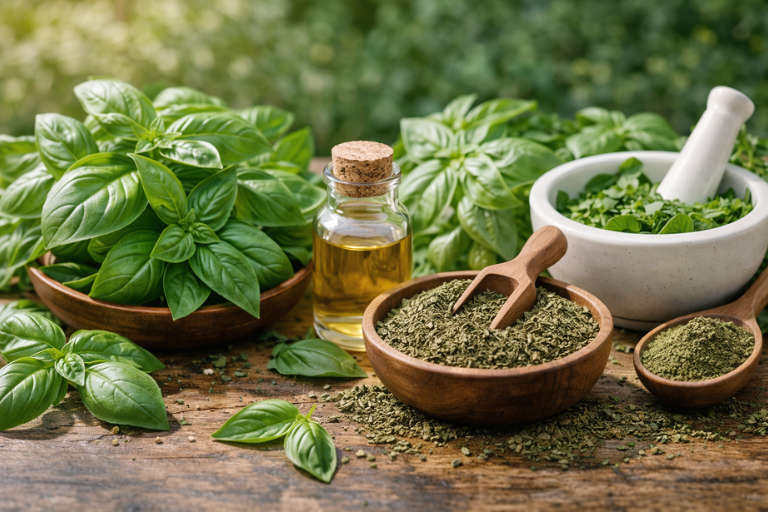
While both fresh and dried basil bring flavor and antioxidants to the table, they differ in punch and perks.
You’ll get more vitamins from fresh: about 8% DV vitamin C, 30% vitamin A, and a hefty 145% DV vitamin K per ounce. Dried drops to roughly 2%, 4%, and 43% respectively, yet still delivers meaningful vitamin K. For peak nutritional value, basil is best enjoyed soon after harvesting. Additionally, fresh basil can boost immune function, providing added health benefits.
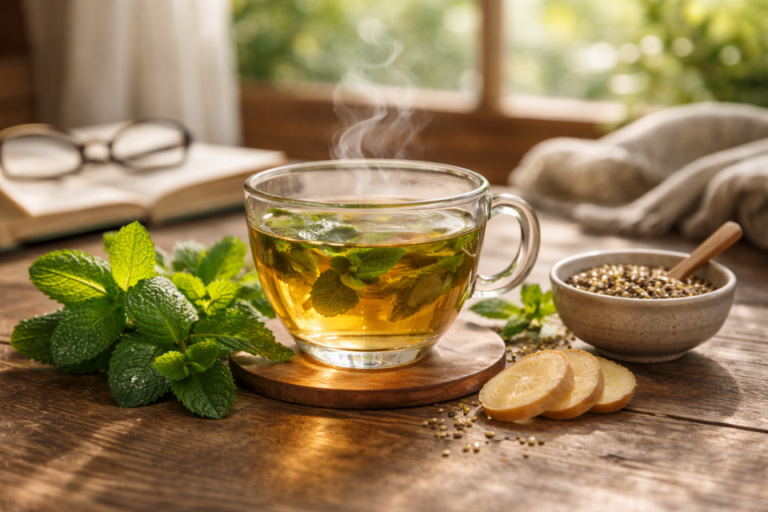
Choose fresh when you want bright, herbaceous aroma and visual appeal—think caprese, pesto, or a last-minute sprinkle.
Go dried for convenience and long cooking; it’s sharper and concentrated, so use about one-third the fresh amount. For vegetables per pound, use 1.5 tsp dried or 2 tbsp fresh; for meats, 2 tsp dried or 2.5 tbsp fresh.
Fresh fades fast; dried stays potent sealed for a year, with some nutrient decline over time.
Antioxidant Benefits of Basil for Stress Defense
Even before you taste it, basil’s chemistry goes to work, arming your cells with antioxidant defenses that blunt stress.
Basil’s chemistry primes your cells with antioxidant defenses the moment you inhale its aroma.
You tap into enzymes like catalase and ascorbate peroxidase that ramp up under stress signals, while phenylalanine ammonia-lyase and polyphenol oxidase prime your redox balance. Melatonin cues in basil help drive this response, boosting total phenols, flavonoids, and anthocyanins when water’s scarce.
Foliar melatonin can enhance drought tolerance, improving relative water content, photosynthetic pigments, and dry weight by strengthening antioxidant defenses. Additionally, basil’s rich antioxidant content can reduce oxidative inflammation, providing further support against cellular stress.
You also gain direct radical-scavenging support. Ethyl acetate and butanol extracts show strong DPPH activity, crude extracts excel with ABTS radicals, and essential oils mop up hydroxyl radicals, superoxide, and NO.
Linalool, eugenol, and cineole add extra free-radical control and protect lipids.
These defenses extend to your brain and immunity, elevating antioxidant shields, moderating caspase-3, and balancing cytokines under stress.
Basil for Inflammation: How COX-Blocking Oils Help
Because basil’s essential oils curb cyclooxygenase-2 (COX-2), they cut the prostaglandins that drive swelling, pain, and tissue damage. You benefit twice: fewer COX-2 signals and fewer upstream triggers that normally switch COX-2 on.
Holy basil downshifts NF-κB, the transcription hub that elevates COX-2 and pro-inflammatory cytokines during infection. In lung and immune models, basil extracts lower TNF-α, IL-1β, and IL-6 while moderating IL-2 and IL-10, trimming the cytokine surge that amplifies PGE2. O. basilicum’s polyphenols and terpenoids also suppress NF-kB, reinforcing its anti-inflammatory and immunomodulatory effects.
Additionally, integrating mindful meditation into your routine can further enhance your body’s natural ability to manage stress and inflammation.
You also gain cellular protection. Reduced NF-κB activity links to less apoptosis and better phagocytosis in infected cells, easing acute inflammation.
Flavonoids like luteolin and baicalein further quiet chemokines and NO, and nudge macrophages toward an M2 profile. Together, basil’s oils and polyphenols blunt inflammatory cascades at their source.
Basil for Stress and Blood Pressure: The Role of Eugenol
Though basil’s benefits span many compounds, eugenol stands out for calming your stress circuitry and easing blood pressure spikes. In holy basil, it works as a key adaptogenic molecule, modulating the HPA axis to smooth your cortisol curve and dampen sympathetic overdrive.
It’s abundant in basil essential oil and supports cortisol balance by inhibiting CRH receptor-1 and 11β-HSD1, reducing overall cortisol production.
You’ll feel the impact under pressure: clinical trials show lower salivary and hair cortisol, reduced alpha-amylase, and buffered blood pressure during acute stress.
In anxiety studies, eugenol-rich holy basil cut perceived stress by 37% over eight weeks and eased GAD symptoms. Holy basil also provides potent antioxidant and anti-inflammatory effects that help protect against stress-related cellular damage.
Basil Benefits for Blood Sugar Management
A handful of basil leaves might do more than flavor your meal—they can help steady your blood sugar.
Animal research shows basil extracts lower fasting and post‑meal glucose in diabetic rats, with effects seen 24–72 hours after dosing, while healthy rats don’t become hypoglycemic. In models of diabetes, 100–400 mg/kg ethanol extracts cut glucose considerably and raised liver glycogen. Basil also demonstrated significant hypoglycemic effects in streptozotocin‑induced diabetic rats and helped compensate for reduced testosterone levels in that model.
Basil extracts lowered glucose in diabetic rats within days, without hypoglycemia in healthy rats.
In some comparisons, basil wasn’t inferior to metformin for reducing glucose, advanced glycation end products, and triglycerides, and it improved insulin sensitivity.
Small human trials of holy basil also suggest lower blood glucose, but most evidence still comes from animals.
If you manage diabetes, treat basil as an adjunct—talk to your clinician, monitor glucose closely, and watch for additive effects with medications.
Fresh vs. Dried Nutrients: Vitamins, Omega‑3s, and When to Use Each
While both fresh and dried basil boost your dishes, they deliver different nutrient profiles and shine in different uses.
Fresh basil offers higher overall vitamins per bite, with robust vitamin C and rich vitamin A and K; it also delivers more omega‑3s per ounce (about 88 mg). Drying removes about 92% water, concentrating certain compounds but reducing volatile aromatics.
Drying concentrates nutrients by removing water, pushing vitamin K and A per teaspoon higher and quadrupling antioxidant density, but it considerably reduces omega‑3s.
Use fresh in raw dishes to maximize vitamin C, linalool, and eugenol; it’s best added at the end of cooking.
Choose dried for high heat (200°C+) and acidic sauces (pH <4.5), where it stays stable and flavorful.
For substitution, use one‑third dried for fresh.
As a guide, season vegetables with 1.5 tsp dried per pound or 2 tbsp fresh.
Frequently Asked Questions
Can Basil Interact With Common Medications Like Blood Thinners or NSAIDS?
Yes. You can experience interactions: basil may increase bleeding with blood thinners and NSAIDs, lower blood pressure and blood sugar alongside related drugs, and amplify sedatives. Monitor INR, BP, glucose, and stop supplements before surgery. Consult your clinician.
How Much Basil Daily Is Safe for Most Adults?
Aim for 1–2 tablespoons (5–10 g) fresh basil daily, or about 1–3 g dried. For supplements, you’d typically use 500–1,200 mg daily short-term. Avoid if pregnant, and check interactions with blood thinners, diabetes, or BP meds.
Are There Differences Between Sweet Basil and Holy Basil Benefits?
Yes. You’ll find holy basil acts as a stronger adaptogen, easing stress, supporting immunity, and aiding respiratory health. Sweet basil offers milder stress relief, notable anti-inflammatory and antibacterial effects, aromatherapy benefits, and potential blood sugar and skin-support advantages.
Does Cooking Basil Reduce Its Therapeutic Compounds Significantly?
No—you don’t lose everything, but cooking shifts what you keep. You’ll boost linalool and eugenol with sous‑vide, preserve limonene and estragole with traditional infusions, and alter flavonoids. Choose methods based on desired anti-inflammatory, antioxidant, or aromatic targets.
Can Basil Essential Oil Substitute for Culinary Basil in Health Benefits?
No. You shouldn’t substitute essential oil for culinary basil’s health benefits. You can diffuse or dilute it topically for mood and digestion support, but don’t ingest undiluted oil. Use fresh basil for dietary antioxidants, fiber, and micronutrients.
Conclusion
You’ve got a simple way to support your mind and body: use basil. Fresh basil helps you relax by taming cortisol, while dried basil delivers concentrated anti-inflammatory power. Both forms pack antioxidants that fight oxidative stress and support resilience. You’ll also benefit from eugenol’s blood-pressure support and steadier blood sugar. Choose fresh for bright flavor and omega‑3s, dried for convenient potency. Mix them into meals, teas, and dressings, and you’ll turn everyday dishes into healing, stress-soothing nourishment.