Brain Food: 8 Ways Blueberries Boost Memory and Protect Against Aging
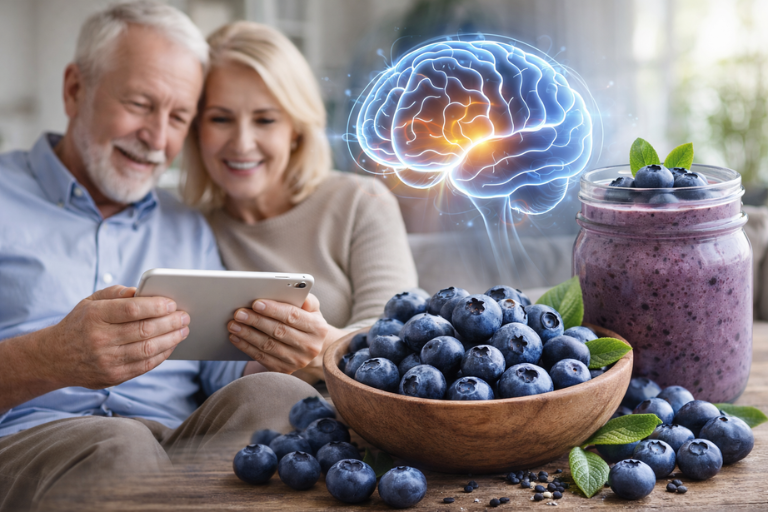
You want sharper memory and steadier focus as you age, and blueberries can help. Their anthocyanins support faster neural signaling, better blood flow, and lower inflammation—key drivers of clearer thinking and quicker reactions. With regular intake, you could see gains in attention, executive function, and recall, especially later in life. But how much should you eat, what form works best, and when do results show up? The answers might change your grocery list today.
Blueberry Brain Benefits at a Glance
Although the science is still growing, wild blueberries consistently show quick, measurable brain perks: they’ve restored slowed processing speed in adults with cognitive issues to match healthy peers, sharpened memory (especially hippocampal tasks) in as little as 12 weeks, boosted executive functions like mental flexibility, and improved attention accuracy and reaction time across ages.
You see gains across core domains. Processing speed—fundamental to word recall, decision-making, and memory retrieval—rebounds in rigorous double-blind, placebo-controlled trials monitored monthly and measured with CANTAB and ERP. In one such trial, older adults consumed wild blueberry powder daily for six months and showed processing speed restored to healthy reference levels.
Memory improves in older adults within 12 weeks, with bigger effects on hippocampal paired-associate learning and maintained benefits in ANCOVA analyses. Executive functions strengthen, supporting concentration, multitasking, and cognitive control of mood.
Attention gets more accurate, and reactions get faster, with links to better vascular function (flow-mediated dilation). Anthocyanins—blue pigments—likely drive these effects by enhancing neuronal signaling, protecting neurons, reducing inflammation, and interacting with gut microbes; they’re detected in the hippocampus and neocortex, and their metabolites rise after sustained intake.
How Much to Eat: and the Best Forms
If you want brain benefits, aim for a consistent daily dose and choose a form you’ll actually stick with. Go for 0.5–1 cup fresh blueberries daily (about 75–180 g), or a handful of wild berries. That’s enough to enhance memory, executive function, and reaction time.
Prefer powder? Use 26 g wild blueberry powder (roughly 178 g fresh; about 75–80 berries). It reliably delivers anthocyanins and supports attention, processing speed, and blood pressure. This dosage has also been linked to improved memory and faster reaction time in older adults over twelve weeks.
Juice works too, but it’s a higher dose: 444–621 mL daily (about 604–845 g fresh equivalent), yielding 428–598 mg anthocyanins that boost vascular and cerebral blood flow.
For long-term habits, hit at least 1–2 servings per week. Two to four berry servings weekly links to healthier aging and lower Parkinson’s risk.
When Results Show Up: and How to Track Them
Start looking for changes around the 12-week mark, when studies consistently show better memory, sharper attention, faster reaction times, and improved mental flexibility. Research in older adults found benefits using wild blueberries in a 12-week, randomized, double-blind, placebo-controlled trial.
Look for benefits by 12 weeks: better memory, sharper attention, faster reactions, greater mental flexibility.
Set a baseline before you begin, then repeat the same tests at 12 weeks: a word-list recall or short story test for memory, a digit-symbol or trail-making test for executive function, a simple reaction-time app, and a focused attention task.
Track biological markers to confirm adherence.
Ask your clinician about measuring urinary anthocyanin metabolites or broader polyphenol levels; both rise with regular blueberry intake.
Monitor cardiovascular markers that correlate with brain benefits: check blood pressure and consider a vascular assessment like flow-mediated dilation if available.
For long-term tracking, log weekly intake and repeat cognitive checks every 3–6 months to watch trends and sustain gains.
How Blueberries Speed Up Processing
Because processing speed underpins everything from recalling a name to making a quick decision, blueberries matter most where aging hits first: the brain’s timing circuits.
When you add flavonoid-rich wild blueberry powder daily, you feed those circuits polyphenols that interact with neural signaling and blood flow. In a double-blind, placebo-controlled trial, older adults with MoCA-defined issues improved processing speed over six months versus placebo, restoring performance to a reference group without decline. Dr. Carol L. Cheatham’s UNC Chapel Hill study highlights that daily consumption of wild blueberries may help maintain cognitive health over time.
You see the payoff where it counts—faster word retrieval, crisper decisions, and smoother phone number recall—without sacrificing accuracy.
Effects were strongest in people 70–74 on behavioral tests, and ERP measures showed even faster brain responses in adults 75–80, confirming neural-level acceleration. Supporting studies echo this: children showed a 9% reaction-speed gain after a wild blueberry drink.
Memory Gains You Can Expect (Short and Long Term)
Expect measurable memory gains on both timelines. In the short term, you can see faster recall and better accuracy within weeks. In a 12-week trial, paired-associate learning rose from 9.3 to 13.2 (t=3.42, p=0.009; d=1.78), and blueberry groups outperformed placebo (p=0.03; f=0.48). Blueberry anthocyanins can enter the brain and may promote neuroprotection and signaling, potentially contributing to these memory benefits.
Volunteers showed sharper memory accuracy and attention after 12 weeks, and even a single daily handful was linked to quicker reaction time and improved memory. Animal data back this up: aging rats reversed short-term memory loss in 8 weeks.
Just 12 weeks to sharper memory and attention—one daily handful boosts speed and recall
For the long term, consistent intake supports recall and real-world cognition. Over 24 weeks, episodic memory improved 3.99% and processing speed advanced (p=0.020), with visuospatial learning gains (p=0.012).
Six-month supplementation restored memory-related processing speed to non-declining levels. Meta-analyses report improved short- and long-term memory, with good tolerability.
Cognitive Gains by Age: Kids, Adults, Older Adults
While your exact gains vary by age, blueberries deliver measurable cognitive boosts across the lifespan.
In kids, a single wild blueberry drink speeds reaction time by about 9% without sacrificing accuracy, sharpens information processing, and bolsters executive function and positive affect—key during rapid cognitive development. Evidence from randomized controlled trials indicates a low risk of bias, supporting the reliability of these findings.
In young adults, blueberry products can lift mood, enhance executive function, and produce small but real upticks in cognitive performance.
Polyphenols likely contribute to improved affect and cognitive control.
In older adults without impairment, daily blueberry powder (about a cup fresh) over 3 months reduces repetition errors on verbal memory tests, improves task switching, and enhances attention accuracy and mental flexibility.
With mild impairment, six months of wild blueberries speeds processing—especially ages 70–74—boosts working memory, and strengthens neural activity.
Epidemiology echoes slower decline and modest memory gains.
Blood Flow, Blood Pressure, and Brain Gains
Even before you notice sharper recall or quicker reactions, blueberries get to work on your circulation—boosting blood flow, easing blood pressure, and priming the brain for better performance.
After a single serving, imaging studies show immediate increases in cerebral blood flow, especially in cognition-related regions. With weeks of intake, perfusion rises in parietal and occipital lobes, and peripheral vascular function improves through greater flow-mediated dilation. In healthy older adults, a 12-week double-blind trial found that daily wild blueberries improved episodic memory and executive function alongside better vascular measures. Incorporating citrus foods into your diet can further enhance these benefits by providing essential vitamin C that supports overall immune function.
One serving boosts brain blood flow; weeks improve perfusion and flow-mediated dilation
Those vascular shifts pay off. You’ll see faster reaction times and better accuracy on attention-switching tasks as blood pressure drops and oxygen delivery improves.
In trials, daily wild blueberries or concentrates lowered systolic blood pressure over 12 weeks and enhanced FMD, reducing cardiovascular risk. Improved vessel function supports episodic memory—like immediate word recall—and bolsters executive function.
Anthocyanin-rich berries help protect cognition by keeping your brain better perfused.
Who Benefits Most: and Daily Safety Tips
Because blueberries boost blood flow and deliver anthocyanins to the brain, they’re a smart daily add-on for people across ages—especially if you’re noticing early memory slips or managing cardiovascular risk. Berries may prevent age-related neurodegenerative diseases, supporting long-term brain health as part of a balanced diet.
If you’re an older adult with early decline, wild blueberry juice for 12 weeks improved paired-associate learning and word recall versus placebo, with moderate-to-large effects.
Healthy adults 65–80 saw better accuracy, faster reactions, lower blood pressure, and improved vessel dilation after 12 weeks of freeze-dried wild blueberry powder.
If you’ve got cognitive issues, six months of daily powder restored processing speed to non-declined levels in a double-blind trial.
Daily safety tips: Aim for a handful of wild blueberries or equivalent powder (about 178 g berries). Juice or powder up to six months looks safe.
Stay consistent; anthocyanin content varies.
Frequently Asked Questions
Do Frozen and Fresh Blueberries Differ in Environmental Impact or Sustainability?
Yes, impacts can differ. You influence them most via origin and practices: irrigation source, pesticide use, buffer zones, transport, and packaging. Frozen often ships efficiently and reduces waste; fresh can avoid freezing energy. Choose certified, locally grown, pollinator-friendly farms.
Can Blueberry Compounds Interact With Common Medications or Supplements?
Yes. You could see minor interactions: generally minimal CYP3A/2C9 effects, possible warfarin interference (vitamin K), hypoglycemia with diabetes meds or leaves, and pterostilbene overlaps with cholesterol/blood pressure drugs. Monitor levels, keep intake consistent, and consult your clinician before changes.
Are There Genetic Differences Affecting Response to Blueberry Polyphenols?
Yes. You’ll respond differently based on your genes and the blueberry genotype. Variations in polyphenol composition, bioaccessibility, and metabolism (anthocyanin pathways, transporters, microbiome–gene interactions) mean you’ll absorb, circulate, and benefit from blueberry compounds to differing degrees.
How Do Blueberries Compare Cost-Effectively to Other Brain-Healthy Foods?
They’re moderately cost-effective: you’ll pay $3–6/pint, about $50–100 yearly for 1–2 servings/week. Strawberries cost less ($40–80) but need more servings. Walnuts/flax are cheaper per serving; salmon’s pricier. Mixed berries perform similarly; supplements cost more per antioxidant.
What Storage Methods Best Preserve Anthocyanins Over Weeks or Months?
Freeze blueberries at −20°C; you’ll preserve anthocyanins for months. For jams, store at 4°C in darkness; sugar-free formulas retain more. Avoid heat and light—room temperature and sunlight rapidly degrade pigments. Blanching pre-processing can aid shelf stability.
Conclusion
Blueberries give your brain a daily edge. When you eat them consistently, you’ll boost blood flow, calm inflammation, and sharpen signaling—leading to faster processing, steadier focus, and stronger short- and long-term memory. Track your wins with simple checks: reaction-time apps, recall lists, or weekly blood pressure notes. Kids, adults, and especially older adults can benefit. Aim for a cup a day—fresh, frozen, or powder—and pair with balanced meals. Enjoy the habit, feel the lift, and protect your brain as you age.