7 Athletic Performance Benefits of Beetroot: Why Runners Swear By It
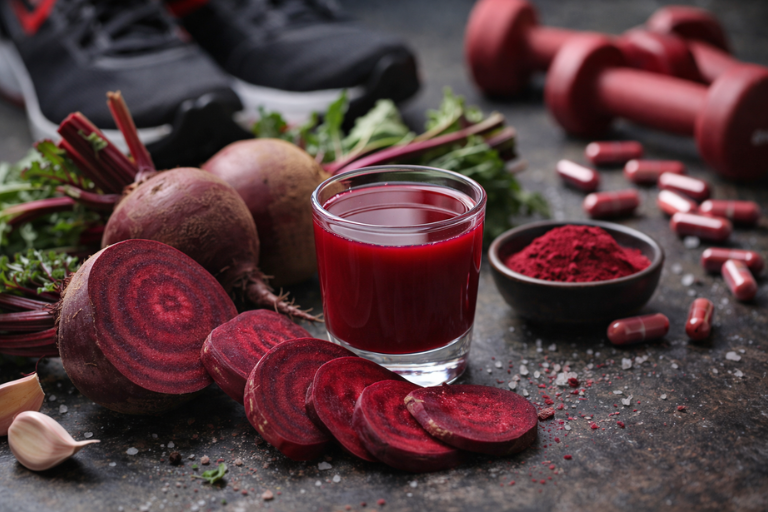
You’ve probably heard runners rave about beetroot, but you might not know why it works. It boosts nitric oxide, improves blood flow, and can make hard efforts feel easier. Some athletes see better endurance, running economy, and recovery with consistent use. The trick is timing, dose, and whether you’re the type who benefits most. If you want practical guidance—and what to avoid—you’ll want to see how each benefit plays out in real training.
How Beetroot Boosts Nitric Oxide for Runners
Even before you start running, beetroot sets the stage for better oxygen delivery by converting its rich nitrates into nitric oxide through the entero-salivary pathway.
Oral bacteria reduce nitrates to nitrites, which your stomach and bloodstream further convert to nitric oxide—without relying on nitric oxide synthase. That NO signals your blood vessels to relax and widen, boosting flow to working muscles and elevating oxygen partial pressure where you need it most.
Oral bacteria transform nitrates into NO, widening vessels and elevating oxygen where muscles need it most
With stronger endothelial function and smoother vasodilation, you deliver more oxygen and nutrients while clearing byproducts more efficiently.
Your muscles extract less oxygen for the same workload, improving mechanical efficiency. Mitochondria ramp up energy production, glucose processing accelerates, and type II fibers enhance force via better calcium handling. In one study, climbers who consumed beetroot juice experienced a notable decrease in DOMS in the gastrocnemius 24 hours post-exercise, suggesting better recovery for runners too.
The result: steadier pacing, reduced fatigue signals, and greater cardiovascular economy.
How Much Beetroot Juice to Take: and When
To get real performance benefits, aim for 300–500 ml of beetroot juice per day, delivering roughly 300–600 mg nitrate (about 6–8 mmol), with stronger effects at 8–16 mmol (≈515–1017 mg).
Take it consistently, not just on race day. For acute use, drink your dose 2–3 hours before running; that’s when nitrate-to-nitrite conversion peaks. Daily intake helps sustain elevated nitrate levels, supporting enhanced endurance and efficiency over time.
For loading, start ≥3 days out. Many runners use 500 ml daily for 3–6 days; elites may extend to 15 days.
Periodize across training blocks, and you can continue up to 4 weeks for adaptation.
Prefer standardized shots if you need precision—some deliver ~400 mg nitrate in 70 ml.
Mix with smoothies for taste. Combine with caffeine cautiously. If you have health conditions or medications, consult a healthcare professional first.
Endurance Gains: Time-to-Exhaustion and VO2 in Runners
With dosing and timing sorted, the next question is what beetroot actually buys you on the run.
In elite distance runners, 15 days of nitrate-rich beetroot juice substantially extended time to exhaustion on incremental treadmill tests versus placebo. You’ll hold target intensities longer, report lower perceived exertion at given paces, and delay fatigue as muscle oxygen saturation in the vastus lateralis stays higher.
Beetroot juice helps elites hold pace longer with lower RPE and better muscle oxygenation.
VO2 tells a similar story. While average adults show negligible VO2 max gains, five of six elite-athlete studies report increases after supplementation. You likely get more oxygen delivered and used, improving glucose-to-energy conversion and helping you last deeper into efforts. The nitric oxide produced from dietary nitrates relaxes and widens blood vessels, enhancing oxygen delivery and supporting these endurance gains.
At higher intensities, you can maintain 60–100% of peak power longer. Individual responses vary, but consistent use often yields small, meaningful endurance improvements.
Running Economy: Lower Oxygen Cost, Higher Power
Although VO2 max grabs headlines, running economy often decides race day—and beetroot can tilt it in your favor. By boosting nitric oxide via the nitrate–nitrite–NO pathway, beetroot widens blood vessels and improves oxygen and nutrient delivery to working muscles. That means you can hold pace at a lower oxygen cost and shift more power per liter of VO2.
Beetroot juice, not isolated nitrate alone, consistently lowers submaximal oxygen consumption during intense but submaximal efforts, with intermediate doses performing best. Studies show a higher power-to-VO2 ratio in time trials, plus enhanced muscle oxygenation beyond simple blood flow changes. Importantly for elite runners, 15 days of beetroot juice has been shown to improve time to exhaustion without clear changes in running economy.
You also get supportive carbohydrates, minerals like potassium and magnesium, and antioxidants such as betalains that curb oxidative stress. Some runners note lower RPE, slight leg-stiffness gains, and reduced vascular stiffness at rest.
Strength and Sprint Performance in Race Conditions
Even when peak power itself barely budges, beetroot can make you faster where it counts—during the surges, accelerations, and final kicks that decide races.
You’ll hit top power sooner, accelerate harder, and produce force faster thanks to improved muscle shortening velocity and rapid kinetics. That means sharper snaps out of corners, over crests, and into finish chutes.
In repeated sprint situations, you’ll sustain more power and slow the fade. Studies show roughly a 5% bump in mean power across bouts, with better phosphocreatine resynthesis helping you reload between efforts.
Expect stronger late-race surges, improved watts on hilly time trial kicks, and benefits even in hypoxic simulations. Beetroot juice increases nitric oxide levels to improve blood flow and muscle contraction, which can support these race-phase gains.
The gains show up in trained athletes and sub-elites alike, particularly in 10–40 minute events. Chronic intake over several weeks amplifies these sprint-phase advantages.
Lactate, Soreness, and Faster Post-Run Recovery
Because recovery drives your next performance, beetroot helps you clear the hurt faster by easing lactate buildup, trimming oxygen cost, and smoothing post-run strain.
With beetroot juice (BRJ), you accumulate less muscle and blood lactate during hard efforts than with nitrate alone, lowering acidosis and delaying fatigue. Maximum lactate drops (for example, 10.4 ± 0.7 vs 11.8 ± 0.4 mmol/L), translating to better time-to-exhaustion.
BRJ also reduces VO₂ in high-intensity work while boosting SpO₂ and lowering deoxyhemoglobin, so you spare oxygen and move more efficiently.
You’ll often see lower max heart rates under supplemented conditions, and RPE can follow. Over weeks, BRJ paired with sprint interval training expands type IIa fibers and training capacity, supporting quicker rebound without altering ATP or PCr stores.
In some high-intensity mixed-modal settings like HIFT, studies report no significant improvement in performance after acute beetroot supplementation.
Who Benefits From Beetroot for Running: and Who Won’T
While beetroot won’t turn every runner into a responder, the biggest wins show up in non-elite and less-fit athletes, who see small-but-real bumps in endurance, lactate tolerance, and time-to-exhaustion.
If you’re recreational or untrained, you’re more likely to notice improvements in VO2max (modest but real), better YO-YOIR1 performance, and longer efforts before fatigue. Incorporating natural immune boosters like beetroot into your diet may also support overall health during training.
Elite runners? You’ll likely see trivial changes in running economy, even after consistent nitrate intake, though some strength gains may appear in gym-based work.
Men generally respond more than women across studies, but sex isn’t destiny—individual variability is real, and mechanisms aren’t fully understood.
If you focus on endurance, the evidence’s stronger. If you’re a pure sprinter or lifter, benefits look limited, with sprint cycling a possible exception.
Both beetroot juice and nitrate salts can improve exercise economy, but beetroot juice may offer added benefits due to its phytonutrients.
Frequently Asked Questions
Does Mouthwash Reduce Beetroot’s Performance Benefits by Killing Oral Bacteria?
Yes. Antibacterial mouthwash kills nitrate-reducing oral bacteria, cutting salivary nitrite and nitric oxide. You’ll lose vasodilation, efficiency, and 1–3% performance. Avoid antiseptic rinses 3 hours before and after beetroot; use non-antibacterial rinses or water instead.
Are There Interactions With Blood Pressure Medications or Erectile Dysfunction Drugs?
Yes. You’ll get additive blood‑pressure lowering with ARBs/ACE inhibitors, beta‑blockers, and calcium‑channel blockers, risking dizziness or fainting. PDE5 inhibitors plus beetroot can drop pressure further. Start low, monitor readings and symptoms, rise slowly, and ask your clinician about dose adjustments.
Is Whole Beetroot as Effective as Juice or Concentrated Shots?
Yes—whole beets can match juice or shots for performance. You’ll need about 1.5 cups baked 60–90 minutes before. Juice or concentrates work faster, need smaller volumes, and may slightly outperform for VO2 peak and recovery.
How Long Do Benefits Persist After Stopping Supplementation?
They likely fade within a few days. You’ll feel peak effects 2–3 hours post-dose, with benefits clearest when you keep dosing. After stopping, performance gains diminish quickly, and persistence beyond several days isn’t well documented and probably minimal.
Are There Side Effects Like GI Upset or Beeturia That Affect Training?
Yes. You might experience GI upset—nausea, cramps, diarrhea—and harmless beeturia or red stools. Test doses in training, not race week. Avoid if hypotensive or high kidney stone risk. Don’t megadose; limit short-term use and consult your clinician.
Conclusion
You’ve seen how beetroot can elevate your running: more nitric oxide, better blood flow, and improved endurance with less perceived effort. With smart dosing and timing, you’ll boost running economy, sharpen power for sprints, and recover faster as lactate clears. Its antioxidants support overall health, too. If you’re consistent, the gains add up meaningfully. Test it in training, track how you feel and perform, and adjust. For many runners, beetroot’s a simple, natural edge worth keeping.