15 Winter Skin Care Tips to Keep Your Skin Soft, Hydrated, and Glowing
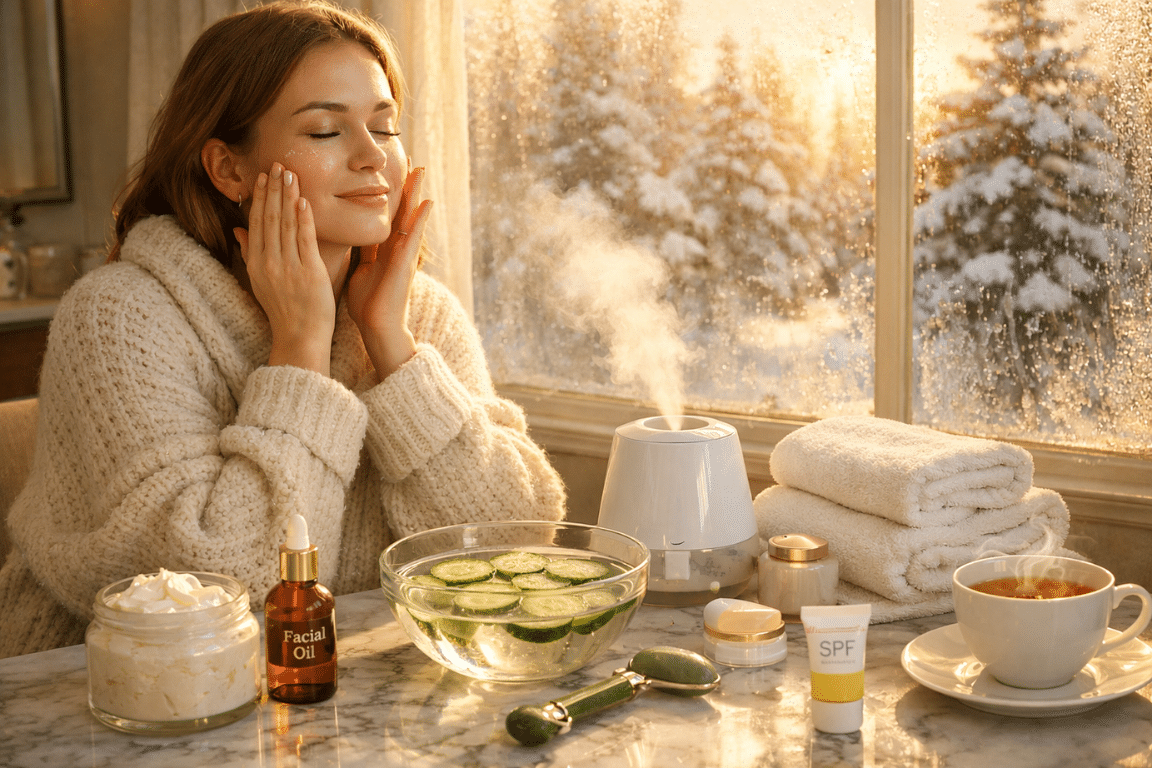
Winter’s dry air and harsh winds can strip your skin’s moisture barrier, but a few strategic changes keep it soft, hydrated, and glowing. You’ll swap hot showers for lukewarm, switch to gentle cleansers, and lock in moisture within minutes of towel-drying. Rich creams, a humidifier, and daily SPF play bigger roles now. You’ll also learn how to layer products, soothe flare-ups, and avoid hidden irritants—plus the one habit that quietly sabotages your winter glow.
Why Winter Skincare Needs a Switch-Up
Even if your routine works the rest of the year, winter’s cold, dry air and indoor heating rapidly dehydrate skin and weaken its lipid barrier.
Low humidity outdoors and recirculated air indoors increase transepidermal water loss, so your skin holds less water. Sebum and sweat production drop, reducing natural moisturizing factors, which raises roughness, flaking, and reactivity. Prioritizing restful sleep is also crucial, as it allows your skin to repair and recover effectively.
As the barrier struggles, irritants and allergens penetrate more easily, triggering itch, redness, and inflammation, and aggravating eczema, rosacea, and atopic dermatitis.
Your microbiome shifts too—diversity dips while Cutibacterium can dominate—raising the risk of sensitivity and breakouts. In winter, microbial diversity often declines as Cutibacterium can exceed 60% of the population, increasing vulnerability to pathogens.
Because products behave differently in dry, cold conditions, lighter, warm-weather formulas underperform. You need hydration-centric, barrier-repairing choices and gentler cleansing to meet winter’s “microbial minimalism and barrier stress.”
Take Short, Lukewarm Showers
Although a hot shower feels tempting on cold days, keep yours short and lukewarm to protect your skin barrier. Aim for 5–15 minutes to minimize transepidermal water loss and limit lipid and protein removal from the stratum corneum. Shorter, milder showers help prevent “winter itch,” flaking, and irritation common in cold, dry air.
Choose lukewarm water instead of hot. Hot water strips natural oils, disrupts the microbiome, and can worsen redness and inflammation, especially if you’re prone to eczema or sensitivity. Lukewarm water cleans effectively without the same oil-stripping effect and better preserves barrier integrity. Using a humidifier at home can add moisture back into dry indoor air, helping your skin stay hydrated and reducing winter dryness. Additionally, maintaining proper care and hydration is essential for supporting your skin’s health during the winter months.
Right after you towel off, moisturize within three minutes. Lock in hydration with a rich cream, oil, or ointment so humectants and occlusives work harder and winter roughness stays in check.
Swap In a Gentle, Non-Drying Cleanser
After shorter, lukewarm showers, your cleanser choice matters just as much.
Swap harsh, foaming washes for cream, balm, or oil-based formulas that lift debris without stripping your barrier. If your face feels tight, dry, or “pulled” after rinsing, your cleanser’s too strong. In winter, higher pH cleansers can irritate and foaming formulas may over-strip, so choose options that keep your skin’s acid mantle balanced. Additionally, maintaining a healthy gut through a fiber-rich diet can positively influence your skin’s hydration and overall appearance.
In winter, a single, gentle cleanse usually suffices; double cleanse only when you’ve worn heavy makeup or stubborn sunscreen. Look for sulfate-free options with a skin-friendly pH around 5.5–6.5 to respect your acid mantle and microbiome.
- Choose textures: cream for dry or mature skin; hydrating gel if sensitive; oil/balm to dissolve makeup without disruption.
- Prioritize humectants: hyaluronic acid and glycerin to attract water.
- Support barrier: ceramides, fatty acids, squalane, vitamin E.
- Avoid irritants: SLS/SLES, fragrance, essential oils, high alcohol, strong acids, “deep-clean” or oil-control washes.
Pat Dry, Then Moisturize on Damp Skin
Instead of rubbing yourself raw with a towel, pat skin dry and leave it slightly damp, then seal in that water with moisturizer right away.
Patting reduces friction that can disrupt corneocytes, strip intercellular lipids, and create micro‑tears—problems that spike in cold, low‑humidity air. Gentle pressure preserves your barrier, calms irritation, and helps prevent eczema flares.
Pat, don’t rub: protect corneocytes, preserve lipids, and prevent micro‑tears—especially in cold, dry air.
Timing matters. Apply within minutes of bathing to curb rapid evaporation, boost stratum corneum water content, and keep transepidermal water loss in check. Applying to damp skin can enhance product absorption, helping active ingredients work more effectively.
Twice‑daily use, especially right after bathing, improves dryness scores and barrier markers over time.
Aim for damp, not dripping, skin so products don’t dilute or run off.
On damp skin, humectants pull surface water inward while occlusives and emollients lock it in, smoothing texture and enhancing winter glow.
Choose Creams or Ointments Over Lotions
When winter air wicks moisture from your skin, reach for creams or ointments—not lotions. Their higher oil content forms a sturdier barrier that slows transepidermal water loss, keeps firmness, and resists wind, cold, and drying indoor heat. Creams are easily spreadable and absorb more quickly than ointments due to higher water content.
Lotions feel light and absorb fast, but their water-heavy formulas evaporate quickly, so you’ll reapply more and still feel tight.
- Choose rich creams for daily face and body. They’re thicker, linger longer, and outperform lotions on dry or sensitive winter skin and rough spots like elbows, heels, and hands.
- Use ointments on very dry, chapped, or cracked areas. Petrolatum-based formulas give maximum occlusion and repair.
- Reserve ointments for targeted zones; they’re greasy for full-body daytime wear.
- Keep lotions for quick post-shower coverage on normal skin.
Use Ceramides, Glycerin, and Hyaluronic Acid
Though winter air strips moisture fast, you can keep skin hydrated by pairing humectants with barrier lipids: use glycerin and hyaluronic acid to pull water into the stratum corneum, then seal it in with ceramides.
Glycerin draws and holds water even when humidity is low, easing tightness and flakiness while improving elasticity. Hyaluronic acid, especially in multiple molecular weights, binds abundant water to plump and smooth, helping offset winter’s reduced cutaneous hydration.
Glycerin and multi-weight hyaluronic acid deeply hydrate, easing tightness, smoothing flakiness, and restoring winter-plumped elasticity.
Ceramides make up about half of your barrier lipids and drop in cold, dry weather, raising TEWL. Replacing them rebuilds the intercellular matrix, regulates pH, and calms inflammation—key for dry, sensitive, or eczema‑prone skin. In winter, low humidity increases transepidermal water loss, making ceramide-rich moisturizers especially helpful for preventing dryness.
Combine glycerin or HA with ceramides to secure immediate hydration and long‑term barrier repair, reducing irritant reactivity and visible roughness.
Layer Richer Creams on Hands, Legs, and Feet
As temperatures drop and air dries out, treat your extremities to richer layers that actually stay put.
Light lotions won’t cut it in cold, dry air—opt for thick creams, balms, or ointments that curb transepidermal water loss.
Occlusives like petrolatum, dimethicone, mineral oil, and shea butter create a semi-occlusive film, while emollients such as squalane and plant oils smooth rough patches.
Barrier-repair blends with essential fatty acids and cholesterol support overwashed hands and chapped feet, helping prevent fissures. In addition, daily use of a humidifier helps maintain indoor moisture levels and reduces skin dehydration during winter.
- Layer smart: apply a humectant first, then seal with a richer cream or ointment on hands, legs, and feet.
- Timing matters: moisturize within 3 minutes of bathing or washing.
- Go heavy at night; absorption rises as you sleep.
- Reapply twice daily; use gloves or socks for extra occlusion.
Dial Back Acids/Retinoids to 2–3 Nights Weekly
Even if you love potent actives, winter’s dry, windy air makes skin more reactive, so dial acids and retinoids back to 2–3 nights a week.
Lower frequency preserves anti-aging and acne benefits while reducing barrier damage, flaking, and sting. In winter, lower UV exposure also means less sun sensitivity from retinol use.
Fewer active nights maintain results while minimizing barrier damage, flaking, and sting.
Adopt a winter skin-cycling rhythm: one retinoid night, then two recovery nights.
On active nights, apply a pea-sized retinol only at night, 2–3 times weekly. Buffer by layering moisturizer before and after, and skip strong acids the same night.
Consider milder options like lactic acid or PHAs, and choose lower retinol concentrations as needed.
Use recovery nights to repair: hydrate with hyaluronic acid, then seal with ceramides, niacinamide, squalane, and occlusives.
Watch for persistent dryness, redness, or sensitivity—signs to cut back further.
Finish with daily broad-spectrum SPF 30+.
Add a Humidifier to Counter Indoor Heating
When indoor heat kicks on and humidity plunges, a cool‑mist humidifier becomes your skin’s quiet workhorse.
Dry air below 30% pulls water from your skin, spikes transepidermal water loss, and leaves you tight, flaky, and irritated.
Aim for 40–50% relative humidity—comfortable for skin and safer for indoor air quality. Maintaining this range supports overall well-being by helping prevent dryness-related discomfort.
Running a cool‑mist unit overnight in your bedroom supports repair, boosts humectants like hyaluronic acid and glycerin, and helps moisturizers seal in more water.
You’ll notice softer hands, lips, neck, and chest, and makeup sits smoother with fewer flakes.
- Place a small cool‑mist humidifier near your bed for a localized boost.
- Keep RH around 40–50%.
- Use nightly in dry climates or heated homes.
- 4)Clean and replace filters regularly.
Dress Smart: Gloves, Scarves, and Breathable Layers
Though rich creams matter, smart clothing choices keep your skin calm in the cold. Choose soft, hypoallergenic fabrics—cotton or silk—for base layers and scarves to minimize friction on dry, sensitive skin. Avoid rough wool directly on skin; it rubs and worsens itch and rashes.
Layer breathable pieces so air circulates, preventing sweat buildup that later cools and triggers the itch–scratch cycle. Add a small portable humidifier in your bedroom to counter Colorado’s dry air and help maintain skin hydration overnight.
Protect your hands first. Wear insulated gloves outdoors to shield thin skin from wind and moisture loss. If your hands are very dry or eczematous, add cotton liner gloves beneath waterproof, insulated gloves to reduce friction and keep dampness away.
Cover vulnerable areas. Use soft scarves and hats to protect your face, neck, and ears, creating a warmer, slightly humid microclimate that curbs windburn and transepidermal water loss.
Skip Fragranced Detergents and Fabric Softeners
Clothing choices help, but what touches your skin after laundry matters just as much. Fragranced detergents and fabric softeners leave residue that sits against your skin all day, pulling moisture out and provoking irritation—especially in cold, dry air.
Fragrance is a top allergen and can trigger eczema flare-ups, psoriasis irritation, rosacea, acne, itch, and burning. “Fragrance” on a label can mask dozens of undisclosed chemicals, dyes, and VOCs linked to headaches and sensitization. If your skin’s already dry or reactive, skip scents.
- Choose fragrance-free (“free & clear”) detergents; avoid “unscented” with masking scents.
- Ditch fabric softeners and dryer sheets, common sources of quats and fragrance.
- Prefer hypoallergenic formulas that minimize residue and barrier stress.
- Monitor symptoms; fewer reactions usually follow a scent-free switch.
Keep Linens Clean and Scent-Free for Sensitive Skin
Even in the dead of winter, keeping sheets and pillowcases clean and scent‑free can calm reactive skin and prevent flare‑ups. Wash sheets weekly to clear sweat, sebum, dust, and residues; launder pillowcases every 2–3 days if you’re acne‑prone. Use warm or hot cycles to remove oils, dead skin, and leftover detergent that irritate skin and disrupt the barrier.
Wash bedding hot and often to clear residue, calm reactive skin, and prevent winter flare-ups.
Choose hypoallergenic, dye‑free, fragrance‑free detergents. Look for sensitive‑skin formulas without optical brighteners, harsh surfactants, or common preservatives; enzyme‑free options can help if you react to residues.
Run an extra‑rinse cycle and dose the minimum detergent needed, especially with soft water and high‑efficiency machines. Don’t overload the washer.
Select breathable, smooth fabrics like cotton, bamboo viscose, or linen. Favor tightly woven, low‑friction sheets and use hypoallergenic pillow and mattress protectors.
Wear Winter Sunscreen Daily (SPF 30+)
While the air feels cold and the sky looks gray, UV rays still hit your skin hard in winter—often more than you realize.
Cold doesn’t weaken UV radiation; it’s constant year-round, and a thinner winter ozone layer means less natural protection. Up to 90% of UV penetrates clouds, so you can’t rely on overcast skies. Even without warmth, UV causes DNA damage, sunburn, and photoaging.
- Choose a broad-spectrum sunscreen SPF 30+ to block about 97% of UV; go higher for intense exposure days.
- Use water- or sweat-resistant formulas if you’re active, and cover face, ears, neck, hands, and lips.
- Apply 15–30 minutes before going outside; make it part of your morning routine.
- Pair sunscreen with protective clothing and UV-rated sunglasses for added defense.
Reapply SPF for Snow Glare and High Altitudes
You’ve got daily SPF on; now keep it working when snow and altitude ramp up UV. Fresh snow reflects about 80–90% of UV, so direct rays plus glare can effectively double facial exposure.
UV also intensifies roughly 10% per 1,000 m, and up to 80% penetrates clouds—so overcast runs aren’t safer than sunny ones.
UV intensifies 10% per 1,000 m, and up to 80% penetrates clouds—overcast isn’t safer.
Apply a broad-spectrum sunscreen 15–30 minutes before you head out, then reapply at least every 2 hours—and sooner if you’re sweating, wiping with gloves, or rubbing from goggles and helmets.
Use about two adult finger-lengths for face and neck each time. Hit high-risk zones: nose, cheekbones, ears, lips, under-chin, and neck.
Reapply after driving or lodge breaks. Pair SPF with UV-protective goggles, helmets, and face coverings for full coverage.
Soothe Winter Itch and Eczema Flare-Ups
As temperatures drop and heaters kick on, your skin loses water faster and the barrier weakens—setting the stage for winter itch and eczema flares.
Cold, dry air and indoor heat boost transepidermal water loss, triggering more frequent, severe flares—especially in children. If you’re part of the 31.6 million Americans with eczema, tighten your routine now to calm itch and protect your barrier.
- Bathe smart: take 10–15 minute lukewarm showers, use mild, fragrance‑free, soap‑free cleansers, and pat dry—leave skin slightly damp.
- Seal moisture: apply a ceramide‑rich cream or ointment within 3 minutes; reapply on prone spots through the day.
- Reduce triggers: skip wool, fragrances, harsh detergents; use gentle, non‑foaming cleansers.
- Treat flares: use appropriate topical steroids; consider calcineurin inhibitors, topical JAKs for rapid itch relief, or biologics for moderate–severe disease.
Frequently Asked Questions
How Should I Store Moisturizers to Prevent Contamination in Winter?
Store moisturizers in cool, dark spots (50–70°F), 40–60% humidity. Use pumps or clean spatulas, not fingers. Wash hands, cap tightly, avoid bathrooms and sunlight. Don’t freeze or overheat. Minimize opening, prevent dropper contact, and seal immediately.
Can I Share Skincare Products With Family During Colder Months?
No. Don’t share, especially in winter. Skin’s drier, infection risk climbs. Reserve separate products. If unavoidable, stick to pumps/airless dispensers, never jars, wands, or eye/lip items. Use clean spatulas, label ownership, disinfect tools weekly, and monitor for irritation.
Do Alcohol-Based Hand Sanitizers Worsen Winter Dryness, and How to Offset It?
Yes—they can worsen dryness by stripping lipids and upping water loss. Choose ethanol-based or hypochlorous options, apply moisturizer on damp skin, use warm water, avoid hot water, and moisturize after sanitizing. Look for glycerin, aloe, ceramides.
Are There Specific Laundry Routines for Acne-Prone Skin in Winter?
Yes. Wash pillowcases and face towels twice weekly in warm water, separately. Use hypoallergenic, fragrance-free detergent, skip softeners, and extra-rinse. Choose soft natural fibers, avoid heat-trapping synthetics, and air- or low-heat dry. Don’t overfill machines; residue lingers.
When Should I See a Dermatologist for Persistent Winter Dryness?
See a dermatologist when dryness persists over two weeks, flakes despite heavy moisturizers, or disrupts sleep from itching. Seek urgent care for painful cracks, bleeding, infection signs, or red, scaly patches suggesting eczema or psoriasis. Uncertainty warrants evaluation.
Conclusion
Winter doesn’t have to spell dry, dull skin. Switch to gentle cleansing, keep showers short and lukewarm, and seal in moisture within minutes of towel-drying. Choose rich creams or ointments, layer thoughtfully, and run a humidifier to fight indoor dryness. Stick to soft fabrics, keep linens clean and fragrance-free, and wear (and reapply) broad-spectrum SPF daily—even in snow and at altitude. Adjust actives, watch for triggers, and soothe flare-ups fast. Do this, and you’ll stay soft, hydrated, and glowing.