12 Milk Thistle Benefits for Liver Health & Detox
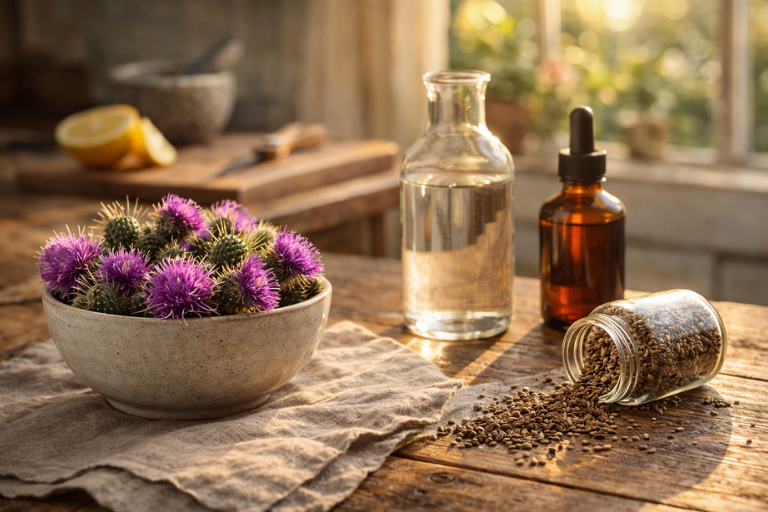
If you’re curious about how to support your liver, milk thistle deserves a closer look. Its star compound, silymarin, helps protect liver cells, stabilize enzymes, and support bile flow—key for digestion and detox. You’ll also find research pointing to benefits for alcohol metabolism, inflammation, blood sugar, and lipids. It’s not a cure-all, but it offers compelling support. Wondering how to use it safely—and who should skip it?
Milk Thistle Benefits at a Glance
Think of milk thistle as a liver’s bodyguard. You’re looking for quick, clear benefits, so here’s what counts. It supports healthy liver enzyme levels, helps your liver handle everyday metabolic demands, and backs normal bile flow for smoother digestion.
Milk thistle: your liver’s bodyguard—supports enzymes, eases digestion, and smooths everyday metabolic demands.
You may notice less heaviness after rich meals and better regularity.
You’ll also appreciate its role in routine detox processes—helping your liver process and clear everyday byproducts—from diet, lifestyle, and the environment.
It pairs well with balanced nutrition, hydration, sleep, and movement. If you take medications or have liver concerns, check with your clinician. Choose standardized extracts from reputable brands.
Silymarin’s Antioxidant Protection for the Liver
While milk thistle gets its fame from liver support, silymarin—the plant’s active flavonoid complex—is the real antioxidant workhorse.
You benefit because silymarin scavenges reactive oxygen species and helps neutralize toxins before they trigger oxidative cascades. It also preserves glutathione, your liver’s master antioxidant, keeping detox enzymes humming.
By stabilizing cell membranes and modulating inflammatory signals, silymarin helps your liver handle everyday stressors from diet, alcohol, and pollutants without drifting into oxidative overload.
1) It quenches free radicals and curbs lipid peroxidation.
2) It sustains glutathione and supports phase II detox pathways.
3) It tempers inflammatory signaling that amplifies oxidative damage.
Milk Thistle and Liver Cell Repair
Beyond antioxidant defense, milk thistle actively supports liver cell repair by fostering regeneration and protecting hepatocytes from further injury.
You benefit from enhanced protein synthesis signaling that encourages new hepatocyte formation and stabilization of cell membranes. Silymarin helps normalize inflammatory cascades that otherwise disrupt tissue architecture.
You also get mitochondrial support, which preserves cellular energy needed for repair.
By moderating fibrotic pathways, milk thistle helps limit scar tissue that can impede healthy regeneration. It promotes bile flow balance within normal ranges, easing cellular stress.
When you pair consistent dosing with routine health habits, you create conditions where damaged liver cells rebound and function more resiliently.
Milk Thistle for Toxin and Alcohol Metabolism
As liver cells regain structure and energy, they’re better equipped to handle toxins, and milk thistle supports that workload.
You help your detox pathways by giving hepatocytes what they need to process alcohol and chemicals efficiently. Silymarin, milk thistle’s active complex, modulates enzymes that transform fat‑soluble toxins into water‑soluble forms your body can excrete.
1) You upregulate phase II conjugation, aiding glutathione use and speeding toxin clearance.
2) You support alcohol metabolism by stabilizing enzymes that handle acetaldehyde, reducing hangover‑related burden.
3) You protect cellular membranes from reactive byproducts so transporters keep moving waste out.
Use it consistently, alongside hydration and balanced nutrition.
Milk Thistle to Calm Liver Inflammation
Even when your liver’s irritated, milk thistle can dial down the fire.
Its standout compound, silymarin, stabilizes cell membranes and limits inflammatory signals that keep tissue on edge.
You get antioxidant backup, too, which helps neutralize free radicals that stoke irritation.
Milk Thistle and Fatty Liver: Enzymes and Markers
While fatty liver often hides in lab results before symptoms show, milk thistle can nudge key numbers in the right direction. You’re watching enzymes and metabolic markers: that’s where silymarin, milk thistle’s active extract, stands out.
Milk thistle’s silymarin can quietly improve liver enzymes and metabolic markers before symptoms appear.
It helps stabilize hepatocytes, limit oxidative stress, and support healthier readings over time when paired with diet and exercise.
1) ALT/AST: You may see modest drops, signaling less hepatocellular injury.
2) GGT: Often elevated in fatty liver; it can trend down with consistent use.
3) Lipids and insulin markers: Triglycerides and fasting insulin may improve, reflecting better metabolic balance—key for nonalcoholic fatty liver tracking.
Milk Thistle for Bile Flow and Fat Digestion
Though it’s best known for protecting liver cells, milk thistle may also support bile flow—the digestive “soap” your liver makes and your gallbladder stores—to help you break down dietary fats.
When bile moves well, you emulsify lipids, absorb fat‑soluble vitamins, and keep cholesterol balanced in the bile.
Silymarin, milk thistle’s active complex, appears to stimulate bile synthesis and promote its secretion.
If your bile gets sluggish, fats pass through poorly, leaving you feeling heavy after rich meals.
By nudging bile production and flow, milk thistle helps your enzymes access fats more efficiently.
Consider timing doses with meals containing fats for practical support.
Milk Thistle for Gentler Digestion and Less Bloating
As your digestion settles into a steadier rhythm, milk thistle can help ease that tight, gassy feeling after meals. Its silymarin complex supports your liver’s processing of byproducts that can trigger bloating, while its gentle antioxidant action calms irritated gut tissues.
You’ll likely feel less pressure, smoother transit, and less post-meal heaviness.
1) Choose timing: take milk thistle with food or shortly after to support comfort.
2) Start low: 100–150 mg silymarin daily, then adjust as needed.
3) Pair smartly: hydrate, chew thoroughly, and limit gas-formers.
If you’re pregnant, on medications, or sensitive to daisies/ragweed, check with your clinician first.
Milk Thistle and Metabolism: Blood Sugar and Lipids
You’ll see milk thistle linked to steadier blood sugar, which can support daily energy and appetite control.
It may also improve lipid profiles by nudging LDL down and supporting HDL.
Supports Healthy Blood Sugar
While milk thistle is best known for liver support, its active complex silymarin may also help steady blood sugar by improving insulin sensitivity and reducing oxidative stress that disrupts glucose metabolism.
You support healthy glucose control when your liver manages glycogen effectively, and silymarin appears to bolster that balance. Pair it with routine monitoring, movement, and a nutrient-dense diet for best results.
1) Promote insulin sensitivity by supporting cellular glucose uptake and reducing reactive oxygen species that impair signaling.
2) Assist post-meal glucose handling by moderating hepatic glucose output during periods of metabolic stress.
3) Complement your regimen—start low, check interactions, and track fasting and postprandial readings.
Improves Lipid Profiles
Even beyond blood sugar balance, milk thistle shows promise for healthier cholesterol and triglycerides. You may see modest reductions in LDL and triglycerides, alongside small HDL increases, especially when your baseline lipids are elevated.
Silymarin’s antioxidant actions help curb lipid peroxidation, while its influence on liver enzymes supports cholesterol transport and bile acid synthesis. That combination can improve how you process and clear fats.
You’ll get the best results by pairing milk thistle with diet and activity. Choose standardized extracts, typically 70–80% silymarin.
Work with your clinician if you’re on statins or fibrates, since milk thistle can alter drug metabolism and dosing.
Enhances Insulin Sensitivity
Although best known for liver support, milk thistle may also sharpen insulin sensitivity, particularly if you have insulin resistance or type 2 diabetes.
Silymarin’s antioxidants can reduce oxidative stress and inflammatory signals that blunt insulin action, helping your cells take up glucose more efficiently.
Here’s how you might benefit:
1) Improves insulin signaling by modulating pathways like AMPK, supporting better glucose uptake.
2) Lowers fasting glucose and A1C in some studies, especially when combined with lifestyle changes and standard care.
3) Protects pancreatic beta cells from oxidative damage, potentially preserving insulin output.
Choose standardized silymarin, monitor glucose, and consult your clinician.
Milk Thistle’s Possible Skin and Immune Benefits
Beyond liver support, could milk thistle also help your skin and immune system? You’ll often see silymarin, its active complex, linked to antioxidant and anti-inflammatory effects. Those actions may reduce oxidative stress in skin, supporting a clearer, calmer complexion and a healthier barrier.
By neutralizing free radicals, it could also help limit photoaging alongside sunscreen and smart habits.
By neutralizing free radicals, silymarin may help curb photoaging alongside sunscreen and smart daily habits.
On the immune side, research suggests silymarin may modulate cytokines and support balanced immune activity. You might notice fewer flare-ups tied to inflammation.
Consider pairing milk thistle with a nutrient-dense diet, hydration, sleep, and sun protection to compound benefits and maintain resilient skin and immunity. To further support anti-inflammatory effects, emphasize antioxidant-rich foods like berries, leafy greens, and colorful vegetables in your daily meals.
Milk Thistle Safety: Who Should Avoid It
While milk thistle is generally well tolerated, it isn’t right for everyone. You should skip it if you’re allergic to ragweed, chrysanthemums, marigolds, or daisies, since cross-reactivity can trigger hives or swelling. It may also interact with certain medications by affecting liver enzymes that metabolize drugs.
1) If you’re pregnant or breastfeeding, avoid it due to limited safety data.
2) If you have hormone-sensitive conditions (e.g., breast, uterine, or ovarian cancer, endometriosis), be cautious because milk thistle may have mild estrogenic effects.
3) If you take anticoagulants, antidiabetics, immunosuppressants, or seizure meds, consult your clinician to prevent adverse interactions.
How to Choose, Dose, and Pair Milk Thistle
You’ll want a high-quality extract standardized to silymarin so you know what you’re getting.
Then set your dose based on evidence-backed ranges and product-specific guidance.
For extra support, pair milk thistle smartly with allies like NAC, artichoke, or turmeric, watching for interactions.
Quality And Standardization
Although milk thistle is common on supplement shelves, quality varies widely, so focus on standardized extracts and clear labeling.
Look for products specifying silymarin content and third-party testing. Standardization (typically 70–80% silymarin) helps guarantee consistency. Favor brands disclosing extraction method and contaminant screening.
1) Choose: Pick a USP, NSF, or ISO/IEC 17025–tested extract with 70–80% silymarin, full label transparency, and batch/lot traceability.
2) Dose form: Opt for capsules or softgels with bioavailability enhancers (e.g., phospholipid complexes) rather than teas.
3) Pair: Combine with choline or phosphatidylcholine for absorption; avoid overlapping herb blends that obscure active amounts.
Effective Dosage Guidelines
With quality and standardization squared away, it’s time to match the extract to the right dose and pairing strategy.
Choose a product standardized to 70–80% silymarin. For general liver support, start with 150–200 mg silymarin daily. For targeted support, use 300–420 mg daily in divided doses.
If using silybin-phosphatidylcholine (phytosome), lower totals—about 100–240 mg silybin—often achieve similar effects.
Take with food to improve tolerance. Titrate every 1–2 weeks based on response. Allow 4–8 weeks to evaluate benefits.
If you’re on medications, especially hepatically cleared drugs, confirm safety with your clinician. Pause during acute illness unless advised otherwise.
Smart Synergy Pairings
Because milk thistle isn’t a cure‑all, pair it strategically to match your goal—detox enzyme balance, inflammation control, bile flow, or metabolic support.
Choose standardized silymarin (70–80%) and keep your previous dose consistent when adding partners. Start low, titrate weekly, and monitor digestion, energy, and labs with your clinician.
1) Detox enzyme balance: pair with N‑acetylcysteine (600 mg, 1–2x/day) and selenium (100–200 mcg/day).
2) Inflammation control: add curcumin (500–1000 mg/day with fat/pepper) and omega‑3s (1–2 g EPA+DHA/day).
3) Bile flow/metabolic: use artichoke extract (300–600 mg/day) and berberine (500 mg, 2–3x/day).
Avoid alcohol; cycle breaks. Add medicinal mushrooms like shiitake or maitake for additional antioxidants and vitamin D that support immune and inflammatory balance.
Frequently Asked Questions
Can Milk Thistle Interact With Common Prescription or Over-The-Counter Supplements?
Yes, it can. You might see interactions with warfarin, clopidogrel, statins, benzodiazepines, some antidepressants, diabetes drugs, and estrogen therapies. It may alter liver enzyme metabolism. Don’t mix with St. John’s wort. Always check with your clinician.
Is There a Best Time of Day to Take Milk Thistle?
Yes—take milk thistle with food, ideally a consistent meal, to improve absorption and reduce stomach upset. Split doses morning and evening if needed. Avoid taking it alongside new medications; check interactions and consult your clinician if pregnant or on therapy.
Does Milk Thistle Affect Results of Liver Function Blood Tests?
Yes, it can. You might see mild enzyme changes or antioxidant effects that mask inflammation. Stop supplements 1–2 weeks before testing, tell your clinician you’re taking it, and don’t self-interpret results. Prioritize underlying causes and evidence-based treatment.
Are There Food or Drink Pairings That Enhance Milk Thistle Absorption?
Yes. You absorb it better with dietary fats. Take standardized silymarin alongside meals containing olive oil, avocado, nuts, or fatty fish. Avoid alcohol. Consider phospholipid/lecithin or liposomal formulations, or pair with piperine, but watch for medication interactions.
Can Athletes Use Milk Thistle Under Anti-Doping Regulations?
Yes, you can, but check your sport’s rules. Milk thistle isn’t on WADA’s prohibited list, yet supplements risk contamination. Choose third-party tested products, verify ingredients, keep receipts, and document use. When uncertain, consult your team doctor.
Conclusion
You’ve seen how milk thistle supports your liver from multiple angles—antioxidant protection, cell repair, healthy enzyme balance, and smoother bile flow for digestion. It helps your body handle toxins and alcohol, steadies blood sugar, supports lipids, and may benefit skin and immunity. If you’re a good candidate, choose a standardized silymarin extract, dose consistently, and pair it with a balanced diet and smart lifestyle. Always check for interactions and talk to your healthcare provider before starting.