High Blood Pressure? 5 Ways Beetroot Juice Can Lower It Naturally
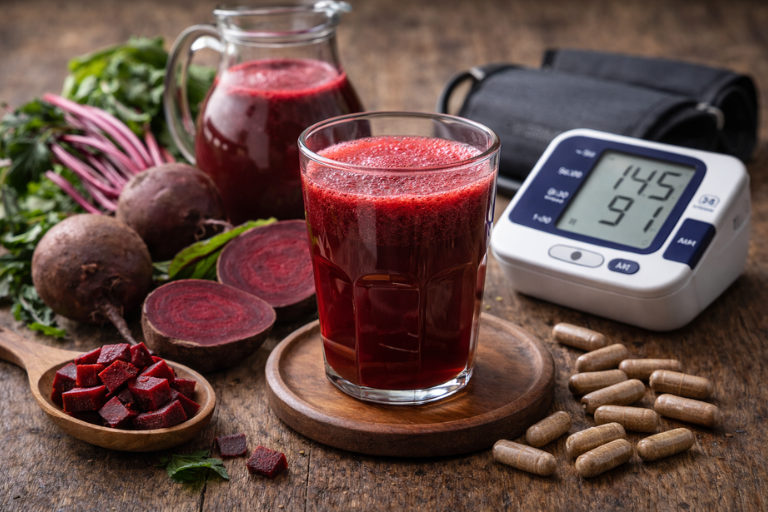
If your blood pressure’s creeping up, beetroot juice might give you a quiet edge. You’ll get natural nitrates that turn into nitric oxide, helping blood vessels relax and flow better. A modest daily glass can trim a few points off your systolic number, with effects you can time around your day. But dose, timing, and who benefits most all matter—and there are caveats you shouldn’t ignore before you pour.
Beetroot Juice and Blood Pressure: What to Expect
Although individual responses vary, you can expect beetroot juice to lower blood pressure modestly and quickly. Its nitrates convert to nitric oxide via the NO3−/NO2−/NO pathway, relaxing and widening blood vessels. Foods high in nitrate can enhance nitric oxide formation and support blood pressure management.
You’ll typically see systolic drops of about 4–5 mmHg and diastolic drops near 2 mmHg, with stronger systolic than diastolic changes. Aortic systolic pressure often falls by roughly 5 mmHg versus placebo. Consuming antioxidant-rich foods alongside beetroot juice may further support vascular health.
You may notice effects within 30 minutes, peaking around then, remaining lower at 60 minutes, and sometimes showing stronger systolic reductions at 6 hours.
Benefits appear in healthy people, pre-hypertensives, and hypertensives, with larger average drops in men than women and notable effects in older adults.
Secondary metabolites like betalains might add support. Results vary by age, sex, baseline BP, and study limitations.
How Much to Drink for the Best Blood-Pressure Drop
For most people aiming to lower blood pressure, 250 mL (about 1 cup) of beetroot juice daily is the sweet spot. Studies show this amount reliably lowers systolic and diastolic readings, often bringing elevated numbers into the normal range. Daily dosing in HFPEF patients improved aerobic endurance by 24% after one week, suggesting consistent intake supports cardiovascular function beyond blood pressure alone. It’s also the dose a meta-analysis flagged as ideal for maximum reduction. If you prefer a range, stick to 1–2 cups (about 240–480 mL) daily for sustained results. Higher baseline pressure usually means a bigger drop.
About 1 cup (250 mL) of beetroot juice daily reliably lowers blood pressure.
Daily dosing outperforms one-off use for blood-pressure benefits and endurance. The nitrate content drives the effect: nitrates convert to nitric oxide, relaxing blood vessels.
Raw beet juice tends to lower pressure more than cooked beets. If you’re on blood-pressure medication or have kidney issues, talk with your doctor before adding daily beet juice.
How Fast It Works and How Long Effects Last
Within 30 minutes of drinking beetroot juice, your aortic systolic pressure typically starts to fall by about 5 mmHg, with the strongest drop often appearing around 30 minutes to 3 hours.
Studies show a 5.2 mmHg decrease at 30 minutes and a maximum reduction around 3 hours, sometimes reaching about 10/4.8 mmHg. The effect usually remains at 60 minutes (about 3 mmHg) and can persist up to 6 hours.
You’ll feel the acute impact quickly because plasma nitrate and nitrite rise for roughly 3 hours. Expect greater changes in aortic than brachial systolic pressure. In a double-blind, randomized, placebo-controlled crossover trial, beetroot juice lowered aortic BP by about 5 mmHg at 30 minutes compared with placebo.
After a single dose, 24-hour ambulatory effects are minimal, especially in normotensive settings. However, with regular use over 2–56 days, average systolic reductions near 3–4 mmHg emerge, with stronger, more consistent benefits beyond two weeks.
Who Benefits Most (and Who Likely Won’t)
If you’re aiming for the biggest blood pressure drop, people with hypertension benefit the most, with average systolic reductions around 3–5 mmHg that improve with at least two weeks of daily nitrate-rich beetroot juice. Most studies reported significant reductions in systolic and diastolic blood pressure with BRJ, highlighting its cost-effective role across populations.]
You’ll likely see meaningful diastolic decreases too, and benefits appear whether or not you’re on medication.
If you’re pre-hypertensive, you still stand to gain. Expect noticeable post-meal effects within 3 hours, sometimes lasting up to 24 hours, as the nitrate–nitrite–NO pathway kicks in.
Pre-hypertensive? Expect effects within 3 hours, lasting up to 24, via the nitrate–nitrite–NO pathway.
If you’re an older adult with higher baseline readings, you may respond particularly well, especially with twice-daily concentrated juice; microbiome shifts often accompany drops.
If you’re young and normotensive, you might notice smaller or inconsistent changes.
Some studies show aortic, not brachial, improvements—so cuff readings can miss benefits.
Safety, Side Effects, and Nitrate-Rich Alternatives
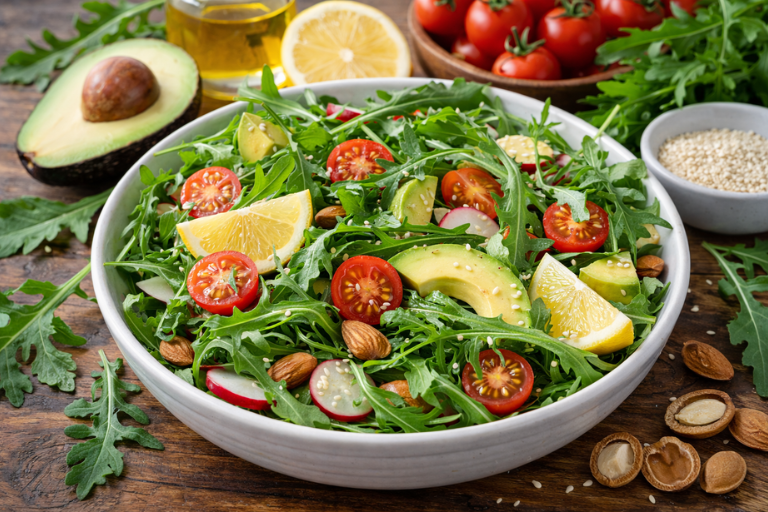
Although beetroot juice is generally safe in studied doses, you should know its blood-pressure effects are short-lived and most pronounced in the first 3–24 hours after a dose. In older adults, dietary nitrate from beetroot juice can lower blood pressure partly by reshaping the oral microbiome and enhancing nitric oxide bioavailability. Expect modest average reductions (about 3–5 mmHg systolic, ~1 mmHg diastolic), stronger centrally (aortic) than at the arm, and minimal 24-hour change. Trials up to 6 weeks report good tolerability. Watch for interactions if you’re on antihypertensive drugs—additive drops can cause dizziness. Avoid use or get medical guidance if you have kidney or liver impairment, heart failure, symptomatic coronary disease, stroke history, poorly controlled diabetes, significant inflammation, acute infection, or recent major blood donation. Typical studied amounts: ~250 mL daily or ~7 mmol nitrate acutely. If you want alternatives, consider other nitrate-rich vegetables (e.g., leafy greens) prepared regularly.
Frequently Asked Questions
Does Mouthwash Use Reduce Beetroot Juice’s Blood-Pressure Benefits?
Yes. When you use antibacterial mouthwash, you kill oral bacteria that convert nitrate to nitrite, reducing nitric oxide production. Skip mouthwash around beetroot intake; wait 12–24 hours or use non‑antibacterial rinses to preserve blood‑pressure benefits.
Can Exercise Timing Enhance Beetroot Juice’s Nitric Oxide Boost?
Yes. You’ll amplify nitric oxide by drinking beetroot juice 1–3 hours pre-workout. Time it 2–3 hours for peak effects, avoid mouthwash, eat with it, and maintain daily 5–9 mmol nitrate for sustained high-intensity and endurance gains.
Is Organic Beetroot Juice More Effective Than Conventional?
No, you won’t see superior effects from organic. Conventional typically contains more nitrates, driving stronger nitric-oxide benefits. Prioritize nitrate content and dose (about 300–500 mg). Choose whichever you tolerate, verify labels, and monitor your blood pressure response.
How Does Beetroot Juice Interact With Erectile Dysfunction Medications?
It can complement ED meds by boosting nitric oxide, potentially enhancing blood flow. Don’t combine with nitrate heart drugs. Monitor blood pressure, avoid if hypotensive, and consult your clinician, especially with antihypertensives, blood thinners, kidney stones, or dosing concerns. Evidence remains limited.
Does Cooking Beets Provide Similar Nitrate Benefits as Juice?
No. You’ll get fewer nitrate benefits from cooked beets than juice. Cooking lowers nitrate bioavailability, while juicing raw beets concentrates it. Pair raw juice with leafy greens, skip antiseptic mouthwash, and consider whole foods for fiber and polyphenol synergy.
Conclusion
You’ve got a simple, natural tool in beetroot juice to nudge blood pressure down. Drink about 250 mL daily, and you can expect a modest 3–5 mmHg systolic drop, peaking around three hours and lasting up to six. Stick with it consistently if you’re hypertensive to see the best results. Watch for side effects, check meds with your clinician, and consider other nitrate-rich veggies if needed. Start small, track your readings, and let your vessels breathe easier.