Fresh vs. Capsules: 5 Benefits of Beef Liver Supplements for Anemia and Fatigue
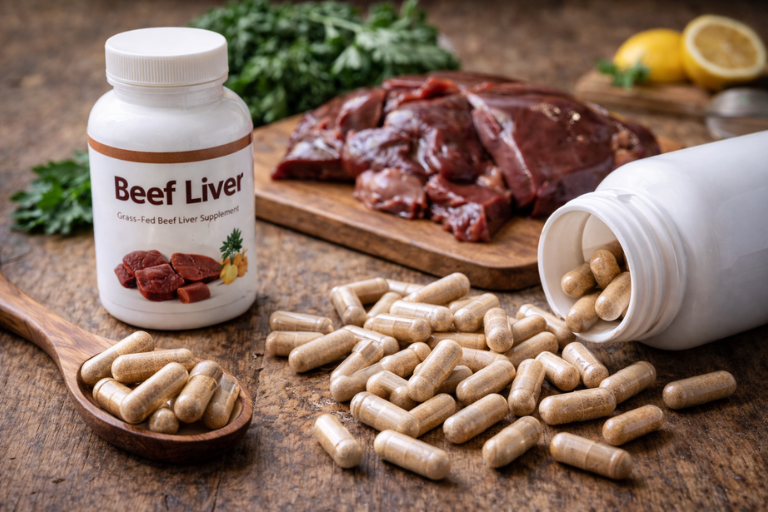
If you’re weighing fresh liver against capsules to tackle anemia and fatigue, you’ve got solid options—but they’re not equal. Supplements offer precise dosing, better convenience, and consistent nutrient retention, especially for heme iron and B12 that drive energy and red blood cell production. They can also help you avoid excess vitamin A and off-putting flavors. But there’s more to evaluate—absorption, safety limits, and who should steer clear may surprise you.
Supplements vs Fresh Liver: What’s Best for Anemia?
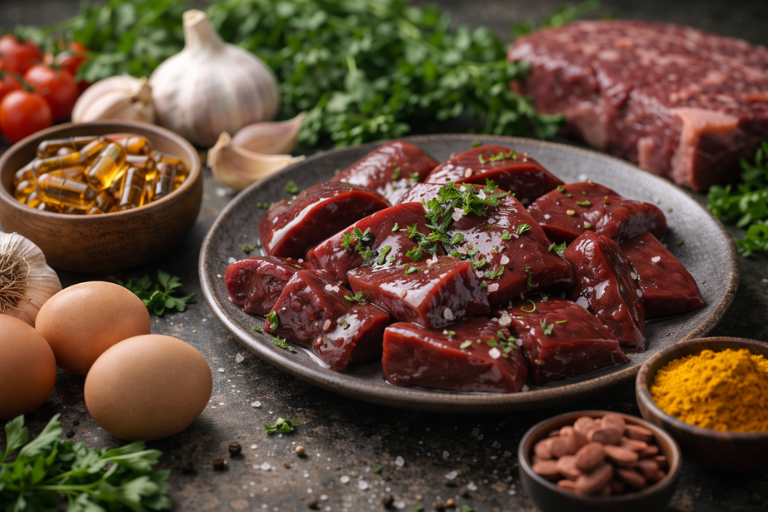
While both beef liver supplements and fresh liver can help with anemia, fresh, grass‑fed liver generally wins for potency and absorption.
You get 2–5x more vitamin A, E, omega‑3s, and higher B‑vitamins, minerals, and protein than grain‑fed or processed forms. A single 4–5 oz serving can exceed a typical month’s bottle of dried capsules. Its heme iron absorbs up to 35% better than non‑heme forms, and nutrients arrive in natural, synergistic complexes for efficient use. Grass‑fed liver also supports sustainable and regenerative farming practices when sourced from ethically raised cattle.
Supplements still have advantages. Freeze‑dried capsules retain much of the biological activity, travel well, avoid taste, and stay shelf‑stable. They’re convenient if you won’t cook liver.
But capsules vary in quality, sometimes include fillers, and the supplement market’s lightly regulated—label accuracy isn’t guaranteed. Fresh liver also costs less per nutrient.
Beef Liver Supplement Dosing: Safety, Vitamin A Limits, Who Should Avoid
Before you add beef liver capsules for anemia or fatigue, get your dose and safety basics straight.
Start with 2–3 capsules daily with food to assess tolerance; sensitive folks can begin with 1 capsule and increase slowly.
Start with 2–3 capsules with food; if sensitive, begin with 1 and increase slowly.
Standard adult dosing is 3–6 capsules per day (about 1 ounce fresh liver). Some brands suggest 6 capsules (3000 mg) or up to 8 daily—follow the label. Freeze-dried products labeled “desiccated” help preserve nutrients and avoid fillers, making them a cleaner choice for quality supplements.
Take on an empty stomach in the morning for best absorption, or with food, juice, or a smoothie if you feel queasy.
You can split doses or take them at once, ideally 10 minutes before meals. Pair with vitamin C foods.
For children, use one-quarter the adult dose; open capsules and mix into yogurt or soup.
Vitamin A stays below 3000 mcg; avoid if pregnant or already supplementing heavily.
Consult your doctor.
How Heme Iron, B12, and Folate in Liver Fight Anemia
Iron, B12, and folate in beef liver work together to rebuild healthy red blood cells and reverse anemia-driven fatigue. You absorb heme iron from liver 2–4 times better than non‑heme iron, so it quickly supports hemoglobin and oxygen transport. A 3‑ounce serving delivers about 5.6 mg heme iron, and 100 grams supplies roughly 63% of your daily iron needs. Grass-fed liver also provides higher levels of antioxidants that support overall well-being.
Additionally, zinc, which is vital for enzymatic processes, is present in liver, further enhancing its health benefits. You also get extraordinary B12—up to 200 times more than muscle meats. B12 partners with iron to form red cells, fuels cellular energy, and supports neurological health, directly combating tiredness. If you avoid animal foods, liver offers what plants lack: true B12.
Folate from liver is fully usable even with MTHFR variants. Alongside B12 and iron, folate drives DNA synthesis, cell renewal, and steady energy, thoroughly correcting anemia.
Evidence-Backed Benefits of Beef Liver Capsules for Energy and Iron Status
Although capsules can’t replace a balanced diet, beef liver supplements deliver heme iron and B12 in forms your body absorbs and uses efficiently—key for reversing fatigue tied to low iron.
You get superior absorption versus plant or synthetic non‑heme iron, with 80% of absorbed heme iron entering red blood cells. Beef liver is also rich in bioavailable nutrients like vitamin A and copper, supporting overall energy and immune function.
Studies show animal heme outperforms ferrous sulfate in both pregnant and nonpregnant women, and liver tissue itself enhances bioavailability.
How to Choose a Quality Grass‑Fed Beef Liver Supplement
When you’re choosing a grass‑fed beef liver supplement, focus on verifiable sourcing, clean processing, and transparent testing.
Look for grass-fed, grass-finished, pasture-raised cattle. New Zealand liver is prized for strict bans on antibiotics and synthetic hormones; regeneratively raised U.S. herds are also excellent. Prefer products with organic or Non‑GMO verification, understanding some superior pasture systems aren’t formally organic.
Choose freeze‑dried, non‑defatted liver in beef gelatin capsules. Gelatin protects actives and supports gut, skin, hair, nails, and joints, while vegetable cellulose can hide unwanted additives. Choose brands manufactured in a cGMP‑certified facility to support product quality and purity.
Seek pure powdered liver with no fillers, binders, or excipients.
Demand third‑party, batch‑specific testing for heavy metals, microbes, pesticides, allergens, and accurate labels—NSF certification helps.
Verify public test results. Scrutinize labels: substantiate “grass‑fed,” nutrient claims, and absence statements with testing.
Frequently Asked Questions
Can Beef Liver Supplements Interact With Common Medications or Thyroid Therapy?
Yes. You risk interactions: vitamin K can alter INR on warfarin; separate thyroid meds by 4 hours; watch liver enzymes with statins/ACE inhibitors; avoid extra vitamin A and iron; limit NSAIDs/acetaminophen. Always tell your clinician and monitor.
Are There Vegetarian-Friendly Alternatives That Mimic Liver’s Nutrient Profile?
Yes. You can mimic liver’s profile with spirulina, chlorella, moringa, brewer’s yeast, nori, lentils, chickpeas, spinach, kale, pumpkin seeds, dairy or fortified foods, plus vegan B12, iron bisglycinate, plant ferritin, algae-derived vitamin A, and vitamin C pairing.
How Soon Do People Typically Notice Improvements in Fatigue?
You typically notice more energy in 2–4 weeks with consistent daily use. You might feel subtle improvements sooner, but timelines vary. Take it each morning on an empty stomach, monitor symptoms, and confirm progress with follow-up blood tests.
Do Liver Capsules Need Refrigeration or Special Storage Conditions?
No, you don’t need refrigeration. You should store liver capsules sealed in a cool, dry, dark place, away from sunlight and moisture. Use a desiccant in humid environments. Don’t freeze. Keep a daily jar separate from long-term storage.
What Lab Tests Track Response to Beef Liver Supplementation?
You track response with CBC/hemoglobin, ferritin, transferrin saturation, and vitamin B12. Monitor ALT/AST, glucose, BUN, triglycerides, and total cholesterol. Consider homocysteine and methylmalonic acid for B12 function. Repeat tests after 6–8 weeks; adjust dose accordingly.
Conclusion
You’ve seen how beef liver capsules can simplify anemia support and fight fatigue. They deliver heme iron, B12, and folate in highly absorbable forms, helping you rebuild red blood cells and energy. If you can’t stomach fresh liver or need consistent dosing, supplements are a smart, practical choice—just mind vitamin A limits and avoid them if contraindicated. Choose a reputable, grass‑fed product with third‑party testing. With the right supplement, you’ll feel stronger, clearer, and more resilient.