21 Face Skin Care Tips for Clear, Glowing Skin (All Skin Types)
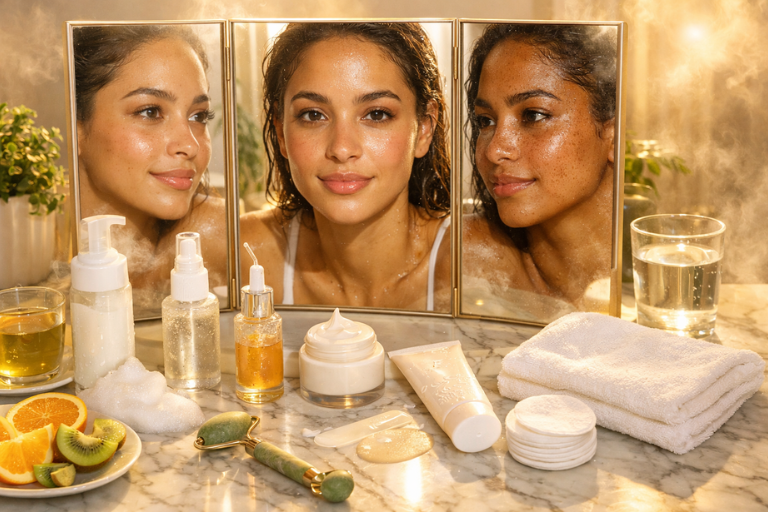
You want clear, glowing skin, but the right routine depends on your skin type and habits. Start with a simple, consistent plan: cleanse gently, balance with toner, layer targeted serums, moisturize smartly, and protect with sunscreen. Avoid harsh scrubs, remove makeup nightly, and tweak products with the seasons. Small changes can prevent breakouts, dryness, and dullness. Ready to spot the mistakes sabotaging your results—and the fixes that work for all skin types?
Identify Your Face Skin Type First
Wondering where to start? Identify your face skin type first, because care only works when it matches your biology.
Genetics sets your baseline, but hormones, climate, and products can shift how your skin behaves over time. Recognizing your Fitzpatrick Skin Phototype can also guide sun protection choices and treatment expectations. Stress can also influence your skin condition and lead to acne formation.
Genetics set your baseline, but hormones, climate, and products can shift your skin over time.
Use simple at‑home tests. Try the bare-face test: cleanse, wait 30 minutes, then note sensations and shine.
Or use blotting sheets on your T‑zone and cheeks to compare oil patterns under light.
Assess the signs:
- Oily: glossy T‑zone, enlarged pores, frequent blackheads/whiteheads, thicker look, slower visible aging.
- Dry: little to no shine, tight or uncomfortable feel, poor moisture retention, easily irritated barrier.
- Combination: oily T‑zone with normal-to-dry cheeks, mixed shine and tightness.
Remember: sebum production, pore visibility, and barrier reactivity determine your classification.
Your 5-Step Daily Face Skincare Routine at a Glance
Five smart steps keep your routine simple and effective: cleanse, tone, treat with serums, moisturize, and protect with sunscreen.
After cleansing, sweep on toner with a cotton pad using light dabs to rebalance pH, restore hydration, gently refine texture, and visibly minimize pores. Choose salicylic acid toners for acne-prone skin or hydrating formulas for dry or sensitive types. Apply toner twice daily if your skin tolerates it to help maintain balance between morning and night, as niacinamide benefits can enhance overall skin texture and hydration.
Next, apply a serum—just a few water-based drops—to target dark spots, fine lines, or breakouts. Gently rub over face and neck, then let it fully absorb. Use twice daily, or skip if your skin’s reactive.
Follow with moisturizer to lock in hydration and strengthen your barrier. Pick gel, non-comedogenic textures for oily skin; richer creams with peptides for dryness.
Finish mornings with broad-spectrum SPF 30+. Reapply as needed.
Cleanse Your Face Gently Twice a Day
Even if your routine stays simple, cleanse your face gently morning and night to keep skin clear and comfortable.
Twice-daily washing with a mild cleanser supports a healthy barrier and microbiome, helping prevent breakouts and irritation. In studies, consistent AM/PM cleansing plus moisturizer improved redness, scaling, texture, and dryness within weeks, and aided acne reduction over six weeks. Double cleansing is recommended at night to remove impurities, starting with an oil-based cleanser followed by a gentle cleanser, which can enhance absorption of treatments and help combat pollution effects. Additionally, using gentle, hydrating cleansers can further protect your skin from winter dryness.
Choose a non-stripping formula that removes sweat, sebum, and pollutants without leaving tightness or burning.
Skip harsh scrubs, hot water, and abrasive tools; they can trigger dryness, sensitivity, or flares in conditions like rosacea. Adapt frequency to your skin: oily skin may tolerate up to two or three gentle washes, while dry or sensitive skin often needs milder formulas.
Pair cleansing with moisturizer, and consult a professional if you have eczema or psoriasis.
Remove All Makeup Before Bed, Every Night
After cleansing morning and night, make a firm habit of removing every trace of makeup before bed to keep your skin clear and responsive to treatment.
Daytime makeup binds oil, sweat, pollution, and dead cells, creating a pore‑blocking film if you sleep in it. Foundation mixed with sebum overnight drives clogged pores, blackheads, comedones, and inflammatory acne. Residue also traps oil during nocturnal regeneration, fueling congestion and breakouts. Regular cleansing helps maintain a radiant look by preventing the buildup that leads to a dull complexion.
Sleeping in makeup accelerates visible aging. Leftover pigments and pollutants generate oxidative stress that degrades collagen and elastin, and powders settle into fine lines, dulling skin. It also blocks actives from penetrating.
Be thorough around eyes and lips. Mascara and liner can clog follicles and glands, causing irritation and styes; lipstick overnight dehydrates and flakes lips.
Hydrate With a Face Moisturizer That Fits Your Type
While cleansers and treatments set the stage, the right face moisturizer locks hydration in and keeps your barrier resilient day to day.
Moisturizer reduces transepidermal water loss—think of it as a lid that seals in water—so skin stays smooth, soft, and flexible, with fewer dry-looking lines. For daytime, choose a moisturizer with broad-spectrum sunscreen of SPF 30 or higher to protect against sun-induced damage.
Moisturizer seals in water, reducing TEWL for smoother, softer, more flexible skin with fewer dry lines.
Choose facial formulas over body lotions; they’re balanced for facial skin and less likely to clog pores.
Match texture to your type:
- Dry: richer, oil-based creams with ceramides, squalane, and glycerin; include occlusives for lasting comfort.
- Oily: lightweight gels or lotions with humectants and niacinamide to hydrate without heaviness.
- Combination/normal: balanced, non-greasy options; spot-apply richer cream to dry areas.
- Mature: lipid-replenishing, emollient-occlusive blends.
- Sensitive: fragrance-free, simple formulas with soothing agents and barrier lipids.
Apply daily for stronger, clearer-looking skin.
Layer a Hyaluronic Acid Serum for Extra Glow
Because glow starts with water, a hyaluronic acid (HA) serum is your quick route to plump, light-reflecting skin.
As a strong humectant, HA pulls water into upper and deeper layers, instantly boosting radiance, softening fine lines, and smoothing texture so light bounces evenly. It also supports collagen and elastin, improving elasticity for firmer, bouncier glow over time. Consistent hydration with HA helps prevent TEWL, strengthening the skin barrier and maintaining a dewy, healthy look.
Apply HA on damp skin after cleansing: cleanse → optional hydrating toner/essence → HA serum → other treatment serums → moisturizer → sunscreen (AM).
Press a few drops over face and neck, then seal immediately with moisturizer to lock in water. Use 1–2 times daily.
Layer under vitamin C, retinoids, peptides, and antioxidants to enhance glow and comfort. Choose 1–2% multi-weight HA; opt fragrance- and alcohol-free if sensitive.
Support Your Skin Barrier With Ceramides and Glycerin
Even when your routine is packed with glow-getters, your results hinge on a steady, intact barrier—and ceramides plus glycerin do the heavy lifting.
Ceramides make up about 50% of stratum corneum lipids, acting like mortar between corneocyte bricks to limit transepidermal water loss. They fill micro-gaps, resist disruption from cleansing and friction, and help all skin types feel less dry, tight, and reactive. As ceramides deplete with age or damage, dryness and fine lines show up faster. They also provide anti-inflammatory benefits that can reduce rashes, redness, and flare-ups.
Pair them with glycerin, a powerhouse humectant that binds water even in low humidity and boosts aquaporin activity for even moisture flow.
Glycerin hydrates; ceramides seal—delivering plumper, smoother, more comfortable skin. Apply ceramide- and glycerin-rich serums or moisturizers to damp skin and use consistently.
Use Niacinamide to Calm Redness and Refine Pores
One multitasker worth adding to your routine is niacinamide, a 2–5% vitamin B3 derivative that calms redness and tightens the look of pores. It downregulates pro‑inflammatory cytokines like IL‑8, decreases mast cell degranulation, and counters UV- and pollution‑induced oxidative stress, so skin looks less blotchy over 8–12 weeks.
You’ll also see benefits if you’re acne‑ or rosacea‑prone, with reduced visible irritation. Clinical studies show niacinamide improves wrinkles, reduces yellowing, and enhances elasticity over about 12 weeks.
To refine pores, stick with around 4%. Niacinamide helps normalize sebum, smooths photoaged texture, and eases perifollicular inflammation, making enlarged pores look smaller.
Aim for ~4% niacinamide to normalize sebum and calm inflammation so pores appear tighter and smoother.
It also strengthens your barrier by boosting ceramides, free fatty acids, and cholesterol, cutting TEWL and sensitivity.
Bonus: it inhibits melanosome transfer, softening hyperpigmented spots and post‑inflammatory redness for clearer, more even tone.
Apply once or twice daily.
Exfoliate Your Face 1–2 Times per Week (AHA/BHA)
Two smart acids can keep your skin clear and smooth when you exfoliate just 1–2 times a week.
AHAs are water‑soluble (glycolic, lactic, mandelic). They loosen bonds between dead surface cells to reveal a softer texture, brighten dullness, and refine tone and fine lines.
BHAs are oil‑soluble (salicylic acid). They travel through sebum to dissolve debris inside pores, helping reduce blackheads and congestion.
Start with a gentle leave‑on: about 5–10% AHA or a low‑dose BHA. Most skin handles 1–2 weekly sessions; dry or sensitive types may need once weekly. Always follow with sunscreen because exfoliation can increase sun sensitivity.
Watch for redness, stinging, tightness, or flaking and cut back if they appear. Consistent use boosts turnover, radiance, firmness, and product penetration.
Skip combining strong acids or harsh scrubs in the same routine.
Treat Acne and Texture With Salicylic Acid
After gentle weekly exfoliation, target breakouts and rough patches with salicylic acid.
This beta-hydroxy acid is oil-soluble, so it slips into pores and follicles, loosens the intercellular “glue,” and sheds dead cells for smoother texture. Its comedolytic action dissolves plugs of sebum and debris, clears blackheads and whiteheads, and helps prevent new ones.
It also tempers sebum, cuts shine, and calms redness with anti-inflammatory and modest antibacterial effects. Recent observational evidence shows that salicylic acid-based products are effective and well-tolerated over about eight weeks for improving acne lesions.
Choose a format that fits your routine: cleansers, gels, lotions, pads, or spot treatments.
Start with 0.5–2% once daily, then adjust to 1–3 times daily as tolerated; higher strengths (up to 7%) suit targeted use.
Expect early improvements in days, with clearer, smoother skin over several weeks.
Don’t overlayer strong exfoliants; increase frequency gradually.
Start a Retinoid Slowly for Clearer, Smoother Skin
Even if you’re enthusiastic for fast results, easing into a retinoid prevents the irritation that makes many people quit. Start with a low-strength option like 0.25–0.3% retinol or adapalene 0.1%.
Ease into retinoids: start low (0.25–0.3% retinol or adapalene 0.1%) to avoid irritation.
Apply a pea-sized amount to clean, dry skin only at night, then moisturize. Begin once weekly, move to twice weekly, then three times weekly, and progress to every other night as your skin tolerates it. Most people won’t see extra benefits beyond 3–4 uses per week.
- Buffer if needed: sandwich with moisturizer or mix a small amount to reduce sting and peeling.
- Stagger strong exfoliants on non‑retinoid nights during the first weeks.
- Expect transient dryness, flaking, or purging; avoid picking and use bland, fragrance‑free moisturizers.
With steady use, smoother texture often appears by 4–6 weeks, with clearer, firmer skin over months.
Brighten in the Morning With Vitamin C Under SPF
While sunscreen does the heavy lifting against UV, pairing it with a morning vitamin C serum strengthens your defense and brightens skin over time. Sunscreen filters block most UV but only about 55% of UV‑induced free radicals.
Vitamin C mops up the rest, reducing sunburn cells and redness. Together, they deliver synergistic photoprotection—think 1 + 1 ≈ 3—helping prevent photoaging, collagen breakdown, and texture changes.
You’ll also see clearer tone. Vitamin C inhibits tyrosinase to curb excess melanin, softening hyperpigmentation from UV, post‑blemish marks, and past sun damage.
Consistent morning use under broad‑spectrum SPF 30+ both prevents new spots and gradually fades existing ones.
Choose a stabilized 10–20% vitamin C serum. Let it absorb fully before SPF.
How to Layer Your Face Skincare Products Correctly
Think of layering as a simple rule: go from thinnest to thickest.
After cleansing, apply water-based products first so they penetrate quickly and set the stage for everything else. Let each layer absorb before moving on—this prevents heavier textures from blocking lighter ones and maximizes results.
Apply water-based layers first; let each absorb to prevent heavier textures from blocking results.
- Start with toner, then up to three water-based serums, prioritizing your top skin concern first. Keep it light and let each layer sink in.
- Follow with anhydrous treatments, then facial oils. These don’t hydrate; they seal. Apply them after water-based layers but before creams so they don’t interfere with absorption.
- Finish with moisturizer to lock everything in. Use a lightweight gel by day and a richer cream at night. In the morning, end with SPF 30+—nothing goes on top.
Pair Actives Wisely and Patch Test
Because powerful ingredients can clash, pair your actives with intention and test before you commit.
Don’t layer retinol with AHAs or BHAs; the combo spikes cell turnover and irritation. Skip benzoyl peroxide with retinoids (they deactivate each other and over-dry), and avoid vitamin C with acids or retinoids due to pH conflicts and compounded potency.
Use timing to keep benefits: alternate retinol and acids between morning and night, or split days. Apply vitamin C in the morning and retinoids at night. If you must stack tricky formulas, leave 30 minutes between them.
Adapalene can pair with benzoyl peroxide; tretinoin can’t. Hyaluronic acid plays well with almost everything, and modern niacinamide can sit with vitamin C.
Patch test every new active. Trial on a discreet spot, document reactions, and introduce slowly.
Daily SPF 30+ for Your Face, Every Single Day
You’ve matched your actives thoughtfully; now lock in those gains with daily broad‑spectrum SPF 30 or higher on your face. Make this your non‑negotiable habit.
SPF 30 filters about 97% of UVB and compensates for under‑application better than lower SPFs, while protecting against UVA that drives wrinkles, sagging, and sunspots. Consistent use doesn’t just prevent damage—it can visibly improve texture, clarity, and pigmentation within a year.
- Choose “broad spectrum” SPF 30+ in a lightweight lotion, gel, or fluid; moisturizers with built‑in SPF simplify mornings.
- Pick mineral or chemical filters that suit your skin and wear comfortably every day, year‑round.
- Apply generously to face, ears, and neck; daily use reduces melanoma risk by ~50% and squamous cell carcinoma by ~40%, and supports UV‑sensitive conditions.
Reapply Sunscreen to High-Exposure Spots
Even when you apply enough in the morning, high‑exposure spots burn through protection fastest, so make reapplication a habit.
Hit UV hot spots: ears (tops, rims, behind), nose, cheekbones, forehead, scalp and part line, hairline, neck (back and sides), upper chest, and the backs of hands and tops of feet.
Reapply every 2 hours outdoors, and immediately after swimming, sweating, or toweling. Be extra strict from 10 a.m.–2 p.m.
Apply 10–15 minutes before renewed exposure. Near windows, UVA still reaches you, so don’t skip high‑risk areas.
Use enough product—about 2 mg/cm²—by doing a careful second pass. Targeted layering reduces misses.
Sticks, gels, and sprays grip ears, hairline, and parts without running. Blot sweat or oil first. Reapply after friction from masks, collars, or hats.
Choose broad‑spectrum SPF 30+, water‑resistant, non‑comedogenic, or mineral when needed.
Match Products to Oily, Dry, Combo, or Sensitive Skin
While every face needs cleansing, moisturizing, and sun protection, the products you choose should match your skin’s behavior—oily, dry, combination, or sensitive—to avoid flare-ups and get results.
Match skincare to your skin’s behavior to prevent flare-ups and see real results.
For oily skin, use gel or foaming cleansers; look for salicylic acid or tea tree to unclog pores. Hydrate with oil-free, non-comedogenic gels or serums featuring niacinamide, zinc, or hyaluronic acid.
For dry skin, choose non-stripping cleansers and ceramide-rich, emollient moisturizers; add hyaluronic acid for lasting hydration.
If you’re combination, pick lightweight, non-greasy, non-comedogenic formulas and spot-treat oily zones with salicylic acid while cushioning dry patches.
- Check labels: non-comedogenic, oil-free, and dermatologist-formulated.
- Prioritize barrier-supporting ceramides for dryness and sensitivity.
- Use gentle options (mandelic acid washes, medical-grade basics) for reactive skin.
Adjust Your Routine for Seasons and Climate
As temperatures, humidity, and sun exposure shift, your skin’s needs shift too—so your routine should flex with the climate.
In winter, cleanse with creamy, non-foaming formulas—ideally with hyaluronic acid—and skip hot water to protect your acid mantle. Cleanse first, then layer treatments and moisturizer.
In spring, gently resurface dullness with moderate AHA/BHA use, swap heavy creams for lightweight hydrators, add antioxidant serums, and keep SPF daily.
In summer, prioritize sunscreen, choose lightweight, non-comedogenic, water-based products, minimize layers, and manage shine with gel or liquid moisturizers.
In fall, repair with aloe, barrier-strengthening moisturizers, and ingredients like retinol and peptides; begin richer night creams as temps drop, using humectants like hyaluronic acid or glycerin.
Year-round, apply SPF, adjust moisturizer thickness, and consider a humidifier in dry air.
Avoid Over-Washing and Over-Exfoliating
Because your skin’s barrier thrives on balance, resist the urge to over-wash or over-exfoliate. Excessive cleansing strips stratum corneum lipids and proteins, spikes transepidermal water loss, and leaves you tight and parched once water evaporates. High‑pH cleansers swell the barrier, then cause dryness and stinging as it collapses.
After a wash, your skin may need about eight hours to restore lipids—don’t keep resetting the clock.
- Choose a gentle, low‑pH cleanser and wash no more than 2 times daily; skip harsh soaps and strong surfactants.
- Exfoliate modestly: AHAs/BHAs 1–3 nights weekly or a very gentle scrub rarely; avoid tools that add friction and microtears.
- Watch for warning signs—tightness, burning, redness, flaking, sudden sensitivity, or oilier skin from rebound sebum—and scale back immediately.
Keep Skin Clean After Sweat and Workouts
You protected your barrier by easing up on washing; now make those cleanses count after you sweat. Cleanse ASAP after workouts to clear sweat, oil, bacteria, and debris before they clog pores or trigger irritation on heat-flushed skin.
If there’s no shower, at least wash your face—or swipe with micellar water. Choose gentle, sulfate-free, gel or cooling cleansers and rinse with lukewarm or cool water. Skip hot water, which heightens redness and barrier damage.
Remove makeup and heavy, occlusive products before exercising so sweat can escape and cleansing works better. Go lighter with non-comedogenic formulas around workout times.
After cleansing, rehydrate: apply a lightweight, non-comedogenic moisturizer or hydrating serum with humectants like hyaluronic acid or glycerin.
Consistent post-workout cleansing and hydration help keep your complexion clear and calm.
When to See a Board-Certified Dermatologist
Wondering when a skin issue needs expert eyes? See a board‑certified dermatologist promptly if you notice warning signs or if home care isn’t working.
Urgent visits matter for early cancer detection, controlling infections, and preventing scarring or chronic flares.
- New or changing moles with asymmetry, irregular borders, multiple colors, size over 6 mm, or any evolution; non‑healing, crusting, or bleeding spots; rapidly spreading rashes, fever with rash, oozing lesions, or sudden dramatic hair loss.
- Persistent acne over 3 months, scarring or dark marks, chronic rashes or hives unresponsive to OTC care, intense itching, thick/scaly patches, recurring flares in the same areas, or lasting color/texture changes.
- Schedule routine full‑body skin checks yearly (more often if high‑risk), consider mole mapping, assess sun damage, and learn self‑exam and UV protection.
Frequently Asked Questions
Can I Use Skincare During Pregnancy or Breastfeeding, and What Should I Avoid?
Yes—you can use skincare while pregnant or breastfeeding. Choose gentle, fragrance‑free basics, sunscreen, hyaluronic acid, niacinamide, and vitamin C. Avoid retinoids, hydroquinone, Botox, high‑dose salicylic acid, and strong peels. Use ≤2% salicylic acid sparingly; avoid nipple areas.
How Do I Prevent Maskne or Irritation From Face Masks?
Prevent maskne by choosing soft cotton or silk liners, ensuring a snug, comfy fit, and limiting continuous wear. Cleanse gently, moisturize non‑comedogenically, minimize makeup, and change or wash masks daily. Protect pressure points; treat early breakouts and seek dermatology care if persistent.
Do At-Home Devices Like LED Masks Actually Help With Clarity and Glow?
Yes. You can see subtle-to-noticeable improvements in texture, elasticity, fine lines, and radiance with red/near‑infrared LED masks. Use FDA‑cleared devices, follow directions consistently for 8–12+ weeks, protect eyes, and expect modest gains versus in‑office treatments.
Are Fragrance-Free Products Always Better for Sensitive or Reactive Skin?
No, not always—but they’re usually safer. You’ll reduce common irritants and support your barrier by choosing fragrance-free. Still, patch test, avoid harsh actives, and check labels for hidden fragrance terms; prioritize soothing ingredients like bisabolol, ceramides, glycerin.
How Does Hard Water Affect My Skin, and What Can I Do?
Hard water leaves mineral-soap residue that disrupts your skin barrier, causing dryness, irritation, breakouts, and eczema flares. Install a softener, use gentle pH-balanced syndet cleansers, rinse well, keep showers lukewarm and short, then moisturize immediately with fragrance-free, non-comedogenic emollients.
Conclusion
You’ve got everything you need to build clear, glowing skin—start by knowing your skin type and stick to a simple, consistent routine. Cleanse gently, use targeted serums, moisturize wisely, and never skip sunscreen. Exfoliate regularly but don’t overdo it, hydrate inside and out, and tweak products with the seasons. Wash after workouts, remove makeup nightly, and listen to your skin. If issues persist or worsen, see a board-certified dermatologist. Stay patient—your glow comes with consistency.