Cordyceps Mushrooms for Stamina: 5 Energy-Boosting Benefits
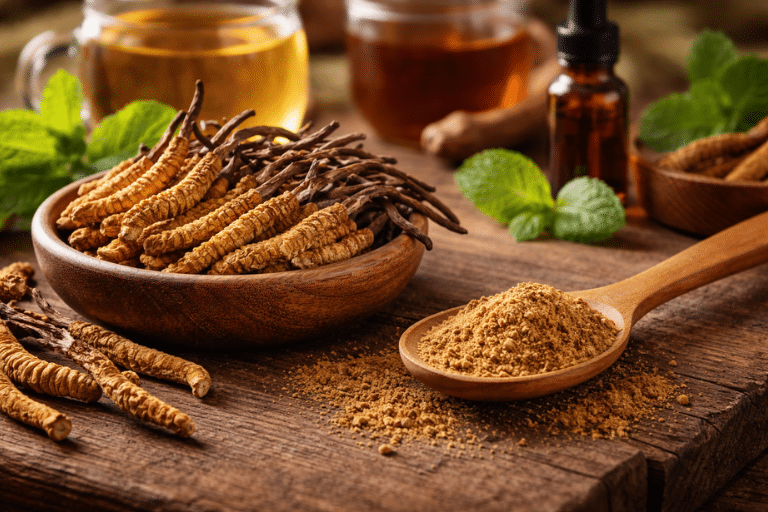
If you’re looking for a natural way to push a little harder in your workouts, cordyceps mushrooms might be worth your attention. Research suggests they can support ATP production, improve VO₂ max, and even help you bounce back faster between sessions. They’ve also been linked to better oxygen use and less fatigue, especially as you age. But to actually see these benefits, you’ll need to know how they work—and how to use them wisely.
Does Cordyceps Really Boost Stamina and Energy?
So, can cordyceps actually give you more stamina and energy, or is it mostly hype? When you take cordyceps, its bioactive compounds—especially cordycepin, adenosine, and specific polysaccharides—help your cells make and manage more ATP, your body’s primary energy currency. In research using cordyceps militaris, several weeks of supplementation led to measurable improvements in VO₂ max and time to exhaustion during high-intensity exercise.]
As ATP breaks down, it releases usable energy inside your muscle cells, so everyday efforts and hard workouts can feel easier.
You also get anti-fatigue support. As an adaptogen with anti-inflammatory properties, cordyceps helps your body cope with physical stress and may reduce the drained, heavy feeling that follows challenging activity.
Traditionally, practitioners used it in older adults and fatigued patients to restore energy, often pairing it with ginseng or Rhodiola.
Consistent, multi-week intake seems more effective than brief use.
Cordyceps and VO₂ Max: Aerobic Performance Benefits
When you zoom in on aerobic performance, cordyceps doesn’t just make workouts feel easier—it’s been shown to measurably improve how much oxygen your body can use.
In several trials with Cordyceps militaris, VO₂ max rose by about 1–5 ml·kg⁻¹·min⁻¹ over a few weeks, while placebo groups barely moved. Some mushroom blends showed jumps from roughly 44.0 to 48.8 ml·kg⁻¹·min⁻¹. Cordyceps sinensis, another well‑studied species, has also been linked to increased ventilation and exercise capacity in human research.
Older adults taking 3 g per day saw VO₂ max climb about 6.7%, and high-dose PeakO2 formulas boosted VO₂ peak in young adults.
Older adults saw VO₂ max jump ~6.7% on 3 g daily, with PeakO2 further elevating VO₂ peak in young adults
Cordyceps also improves ventilatory and metabolic thresholds—markers of how hard you can work before breathing and metabolism become strained—with increases around 8–10%.
Mechanistically, it supports vasodilation, oxygen delivery, and more efficient oxygen utilization.
Cordyceps for Endurance and Fatigue Resistance
Beyond increasing VO₂ max, cordyceps also shows clear benefits for how long you can actually keep going and how resistant you’re to hitting the wall. By boosting ATP production—the cellular “energy currency”—it helps you hold higher intensities longer instead of fading early. These antioxidant-rich mushrooms also help reduce exercise-induced inflammation, which further supports sustained performance and quicker recovery between hard efforts.
Research even suggests ATP ratios may rise by roughly 45–55%, translating into more usable power during demanding efforts.
Traditional use and modern studies both point to strong anti-fatigue effects. In older adults, cordyceps supplementation led to about a 30% endurance increase, and animal studies support its role as a fatigue-fighting agent.
You’ll notice the strongest gains with consistent use over 3–4 weeks, especially when you train near your threshold:
- Longer time to exhaustion
- Better tolerance to high-intensity work
- Reduced perception of tiredness
Cordyceps for Recovery and Respiratory Support
Although cordyceps is often praised for its performance-boosting edge, its real long-game value may lie in how well it supports recovery and your lungs between efforts.
After hard training, its antioxidants help dial down inflammation and oxidative stress, so you experience less muscle damage and soreness. One study in sedentary young men found that taking cordyceps before HIIT led to an earlier resolution of muscle damage, likely by speeding stem-cell–driven repair.
Cordyceps’ antioxidants tame post‑training inflammation and oxidative stress, easing muscle damage and soreness so you rebound faster
Human studies suggest cordyceps sinensis can accelerate repair by recruiting bone-derived stem cells into muscle, expanding the pool of cells ready to regenerate tissue, even if fiber-level changes aren’t always detectable yet.
You’re not just bouncing back faster; you’re recovering on a deeper cellular level.
Cordyceps also supports your breathing.
Traditional use and modern data link it with reduced cough, phlegm, asthma symptoms, and better oxygen use, helping you feel stronger, especially under respiratory stress or altitude.
How to Use Cordyceps Safely (Dosage and Side Effects)
Cordyceps can be a powerful stamina ally, but it works best—and safest—when you match the dose to your goals and the form you’re taking.
For everyday energy, you’ll usually stay between 1,000–3,000 mg daily; athletes often use 3,000–4,000 mg for several weeks. For immune support, 500–1,500 mg per day is common. Because of their adaptogenic properties, cordyceps may also help your body better handle physical and mental stress over time, potentially enhancing your body’s ability to manage oxidative stress over prolonged periods.
Follow product labels and adjust for extracts, which are stronger (often ≤500 mg daily). With powders, start low—about ¼–½ teaspoon—and increase slowly, ideally split with meals.
- Stop or lower your dose if you notice diarrhea, constipation, or stomach discomfort.
- Avoid cordyceps if you’re pregnant or breastfeeding; the data’s not there yet.
- Talk to your healthcare provider, especially if you have medical conditions or take medications.
Frequently Asked Questions
Can Cordyceps Be Combined With Caffeine or Pre-Workout Supplements Safely?
You can usually combine Cordyceps with caffeine or pre-workout, but you should start low, watch for jitters, blood sugar changes, or GI issues, avoid it if you’re pregnant, immunosuppressed, or on blood thinners, and always ask your provider.
Are There Differences Between Cordyceps Militaris and Sinensis for Stamina Benefits?
Yes. You’ll get stronger stamina benefits from Cordyceps militaris: higher cordycepin, better ATP production, improved VO2max, and more reliable dosing. Sinensis still helps endurance and recovery, but it’s weaker, rarer, pricier, and often adulterated.
How Long Does It Take to Feel Energy Effects From Cordyceps Supplementation?
You’ll usually feel noticeable energy effects in 2–4 weeks, with subtle changes possible in a few days. Take 1,000–3,000 mg daily, ideally 3–4 g for three weeks, consistently, before expecting clear stamina and fatigue benefits.
Can Vegetarians and Vegans Use Cordyceps, and Are There Plant-Based Sources?
You can absolutely use cordyceps as a vegetarian or vegan if you choose cultivated, non-caterpillar sources. Look for labels stating vegan or plant-based, using cultivated C. militaris or fermented mycelium on rice or soy substrates.
Will Stopping Cordyceps Suddenly Reduce My Endurance or Cause Withdrawal Symptoms?
Stopping cordyceps suddenly won’t cause withdrawal or drop your endurance below normal. You’ll just lose its temporary energy boost, gradually returning to your baseline. Keep training and eating well, and you’ll maintain your fitness.
Conclusion
When you add cordyceps to your routine, you give your body extra support for energy, stamina, and recovery. By boosting ATP, improving VO₂ max, and helping your lungs and muscles perform better, these mushrooms can help you train harder and bounce back faster. Start with a conservative dose, watch how you feel, and choose quality supplements. Used wisely, cordyceps can be a natural ally in your long-term performance and endurance goals.