15 Celery Juice Benefits for Gut Health, Skin & Inflammation
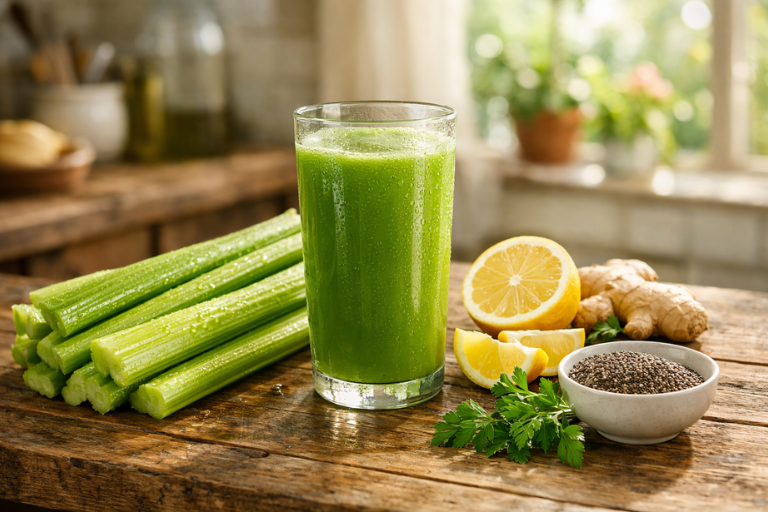
You’ve heard celery juice is a wellness staple, but you might wonder what it actually does for your gut, skin, and inflammation. From easing bloat and supporting stomach acid to feeding your microbiome, its compounds work on multiple fronts. Antioxidants like apigenin and luteolin may calm irritated skin and support recovery after workouts. You’ll also find tips on timing, dosing, and who should skip it—plus pitfalls to avoid if you want real results.
How Celery Juice Works in Your Body
Although it’s mostly water, celery juice delivers electrolytes, fiber’s soluble compounds, and phytonutrients that interact with your gut and cells.
As you sip, sodium, potassium, and magnesium support fluid balance and nerve signaling. Soluble fiber fragments form gels that slow glucose absorption and feed beneficial microbes, generating short-chain fatty acids that help maintain your intestinal barrier.
Phenolic antioxidants, like apigenin and luteolin, help neutralize reactive oxygen species and modulate signaling pathways linked to immune tone. Nitrates convert to nitric oxide, aiding microcirculation.
You hydrate efficiently, support enzyme function, and provide co-factors your cells use to manage stress and maintain homeostasis. To further support digestion, staying adequately hydrated helps dissolve soluble fiber, easing waste movement and promoting regularity.
Celery Juice for Bloating Relief
With those gut-friendly actions in mind, celery juice can help ease bloating for some people by supporting motility, fluid balance, and microbial harmony.
Celery juice may ease bloating by supporting motility, fluid balance, and microbial harmony.
Its natural sodium and potassium encourage gentle water movement in the gut, helping you debloat without harsh laxatives. Polyphenols may calm gas-producing microbes, while fiber-free juice gives your GI tract a brief rest.
Drink it on an otherwise balanced day: pair with protein, vegetables, and adequate water. Start with 4–6 ounces and assess tolerance.
If you’re sensitive to FODMAPs or have IBS, test slowly. Track timing, portion, and triggers. Persistent bloating warrants medical evaluation.
Stomach Acid Support for Better Digestion
Because digestion starts in your stomach, supporting healthy acid levels can make celery juice work smarter, not harder. You need adequate stomach acid to break down protein, activate enzymes, and signal your gallbladder and pancreas.
Celery’s natural salts and minerals may help stimulate gastric secretions, especially when you drink it on an empty stomach.
Sip 8–12 ounces 15–30 minutes before breakfast. Chew food thoroughly, sit upright, and avoid chugging water with meals, which can dilute acid.
If you feel burning, scale back and monitor. Low acid can mimic reflux, so discuss persistent symptoms with your clinician.
Pair habits consistently for steady results.
For added comfort and immune support during cold season, try warm herbal teas like ginger or chamomile alongside your routine.
Prebiotic Fibers That Feed Your Microbiome
Even before you feel the benefits, celery’s prebiotic fibers quietly nourish the good bacteria in your gut.
Celery’s prebiotic fibers quietly feed your gut’s good bacteria, supporting balance before you feel it
These fibers resist digestion, arrive intact in your colon, and become fuel for beneficial microbes. As they ferment, microbes produce short‑chain fatty acids like butyrate that support the gut lining, help regulate immune signaling, and maintain a healthy pH.
You can boost this effect by drinking celery juice alongside fiber-rich meals or blending whole celery to retain more fiber.
Aim for consistency: small daily amounts beat sporadic large servings. Pair with hydration and diverse plant foods to promote microbial balance, regularity, and resilient digestion.
For added anti-inflammatory support, pair celery with antioxidant-rich foods like berries and leafy greens to help counter free radicals.
Celery Juice for IBS: Easing Gut Inflammation
Those same microbe‑friendly fibers set the stage for calmer digestion when you’re managing IBS.
Celery juice delivers gentle prebiotics and polyphenols that may help modulate gut microbes and quiet low‑grade inflammation. You’ll also get soothing plant compounds that support mucosal integrity, which can reduce trigger sensitivity.
Start small: 2–4 ounces on an empty stomach, assess symptoms, then increase if tolerated. Strain if fiber aggravates you; keep pulp if you handle it well.
Pair with balanced meals and consistent sleep. Track bloating, urgency, and pain for two weeks. If you’re on FODMAP restrictions or medications, check with your clinician first.
Natural Electrolytes for Hydration
While you might reach for sports drinks, celery juice offers a cleaner way to replenish natural electrolytes. It naturally supplies potassium, sodium, magnesium, and small amounts of calcium, helping you maintain fluid balance, nerve function, and steady energy.
Celery juice replenishes natural electrolytes for fluid balance, nerve support, and steady, clean energy.
You’ll also get hydration-supporting water and polyphenols without added sugars or dyes. Sip it post-workout or on busy mornings to rehydrate efficiently. Pair with a pinch of sea salt when you’ve sweated heavily, and rotate with water to match your needs. Keep portions moderate and fresh.
- Drink 8–12 ounces on an empty stomach
- Add lemon for flavor
- Use chilled celery
- Pair with protein
- Store up to 24 hours
Gentle Diuretic Effect to Curb Puffiness
You’ll notice celery juice’s gentle diuretic effect can ease morning puffiness without leaving you depleted.
It supports lymphatic drainage, helping your body move excess fluids more efficiently.
Over time, it can help balance fluid retention so you feel lighter and look less swollen.
Reduces Morning Puffiness
Even after a solid night’s sleep, waking up puffy can feel stubborn, but celery juice may help take the edge off.
Its gentle diuretic effect encourages your body to release extra fluid and sodium, easing under-eye and facial swelling. You’ll also get potassium and hydration, which support a balanced fluid shift without harsh crash.
Sip it on an empty stomach for a quick, light start that doesn’t weigh you down or spike sugar.
- Drink 8–12 ounces within 30 minutes of waking.
- Chill it for a crisp, invigorating taste.
- Pair with protein later.
- Avoid excess salty dinners.
- Track how your face feels.
Supports Lymphatic Drainage
Beyond easing morning puffiness, celery juice can support your lymphatic system, which helps clear cellular waste and manage fluid balance.
Its gentle diuretic effect encourages movement of lymph, which relies on hydration and regular circulation to function well. You’ll also get electrolytes like potassium and sodium that help maintain fluid shifts as lymph flows.
Aim for a small glass on an empty stomach, then hydrate with water.
Pair it with light movement—walking, stretching, or deep breathing—to stimulate lymphatic vessels. If you’re sensitive to FODMAPs, start with a smaller serving.
Consistency matters more than volume, so keep portions moderate and steady.
Balances Fluid Retention
While puffiness can stem from many causes, celery juice’s mild diuretic action helps your body shed excess fluid without harsh swings.
Its natural potassium and sodium balance support healthy hydration, easing bloat and under‑eye swelling. You’ll notice a lighter feel without the crash stronger diuretics can cause.
Pair it with minerals and steady water intake to keep electrolytes stable and circulation smooth.
- Drink 8–12 ounces on an empty stomach in the morning.
- Add a pinch of sea salt to support electrolytes.
- Alternate with water or herbal tea through the day.
- Limit ultra‑salty snacks.
- Track reactions and adjust your portion.
Antioxidants That Strengthen the Skin Barrier
Because your skin’s outer layer faces daily oxidative stress, the antioxidants in celery—like vitamin C, vitamin E, luteolin, and apigenin—help neutralize free radicals and preserve the lipid matrix that keeps moisture in and irritants out.
Celery’s antioxidants shield your skin’s barrier, neutralizing free radicals and preserving moisture-locking lipids.
You support ceramide integrity, reduce transepidermal water loss, and keep texture resilient. Vitamin C backs collagen cross-linking, while vitamin E stabilizes cell membranes.
Flavones like luteolin and apigenin guard against UV-induced lipid peroxidation, helping your barrier stay flexible.
You can blend celery with citrus to enhance vitamin C uptake, or pair it with healthy fats to aid vitamin E absorption, maximizing your skin’s barrier protection.
Clearer Skin by Calming Inflammation
Even as breakouts flare, celery juice can help dial down the signals that keep skin inflamed. You get soothing electrolytes, hydrating sodium, and polyphenols that interrupt cascades driving redness and swelling.
By easing oxidative stress, you support calmer pores and a more even tone. Drink it consistently and pair with gentle skincare, and you’ll notice less tenderness around blemishes and quicker recovery after irritation.
- Drink 8–12 ounces on an empty stomach.
- Choose fresh stalks; juice and sip immediately.
- Rinse face after workouts to curb pore stress.
- Use non-comedogenic sunscreen daily.
- Track triggers (harsh products, stress) alongside your routine.
Celery Juice and Blood Sugar Control
Clearer skin isn’t the only perk—celery juice can also fit into a blood sugar–friendly routine. It’s low in natural sugars and calories, hydrating, and offers potassium and polyphenols that may support insulin sensitivity.
Still, it isn’t magic. To steady glucose, pair celery juice with protein, fiber, or healthy fat—think eggs, Greek yogurt, chia pudding, or a handful of nuts. Don’t drink it on an empty stomach if you’re prone to spikes or crashes.
Track your response: monitor energy, cravings, and a glucose meter if you use one. Start with 4–8 ounces, then assess.
Prioritize whole meals; let juice complement, not replace them.
Blood Pressure and Lipids: Heart-Healthy Angles
While it won’t replace medication or a balanced diet, celery juice can play a small supporting role in heart health. You’ll get potassium that helps balance sodium, nudging blood pressure downward. Natural nitrates may support vessel relaxation. Its polyphenols and phthalides could modestly aid lipid balance, while hydration helps circulation.
Pair it with fiber-rich meals; juicing removes fiber, so don’t ditch whole celery.
- Choose low-sodium meals to amplify celery’s potassium effect
- Sip 6–8 ounces alongside a balanced breakfast
- Keep whole vegetables for fiber at other meals
- Monitor home blood pressure and lipid labs regularly
- Discuss changes with your healthcare provider
Joint Comfort and Post-Workout Recovery
You care about how your joints feel after a tough workout, and celery juice may help.
Its natural anti-inflammatory compounds can support joint comfort when training ramps up.
Plus, the potassium and sodium electrolytes help replenish losses and support muscle repair.
Natural Anti-Inflammatory Support
Even if you’re just easing back into movement, celery juice can offer gentle, natural anti-inflammatory support that helps joints feel more comfortable after daily wear or tough workouts.
You’ll get plant compounds like apigenin and luteolin that help calm overactive pathways, while hydration and potassium-rich greens support fluid balance and ease stiffness. Sip it on an empty stomach for quicker absorption, then notice how less morning creakiness can add up to more motion.
- Choose organic stalks, rinse well
- Juice fresh; avoid added sugars
- Start with 6–8 ounces, increase as tolerated
- Pair with protein-rich meals
- Track joint comfort and mobility daily
Electrolytes For Muscle Repair
After tough sessions, electrolytes from celery juice help restore what muscles and joints burn through. You sweat out sodium, potassium, magnesium, and chloride; celery juice supplies these in a light, hydrating package.
Potassium supports nerve signals and muscle contractions, reducing cramping. Sodium aids fluid balance so nutrients reach stressed fibers. Magnesium helps relax tight tissue and supports protein synthesis, guiding repair.
Drink it within an hour post-workout to replenish losses and pair it with protein and carbs for complete recovery. If you’re salt-sensitive, start small and adjust.
Hydrate consistently, and use celery juice as a clean, invigorating boost for joint comfort.
Liver Support: Antioxidants and Detox Enzymes
While the liver already handles detox like a pro, celery juice may offer modest support through its antioxidants and polyphenols.
You’ll get compounds like apigenin and luteolin, which can neutralize free radicals and help protect liver cells. Natural nitrate content may support blood flow, while vitamin C and folate assist cellular repair.
Some phytochemicals can upregulate phase II detox enzymes, aiding conjugation pathways that clear metabolites. It’s not a cure-all, but it can complement a balanced diet to keep hepatic defenses resilient.
- Choose fresh, crisp stalks
- Pair with fiber-rich meals
- Rotate with other green juices
- Watch added sodium sources
- Track how you feel over time
How to Drink Celery Juice for Best Results
You’ve seen how celery’s antioxidants can support your liver; now here’s how to drink it for real-world results.
Juice fresh celery, avoiding added salt, sugar, or citrus. Aim for 8–16 ounces on an empty stomach in the morning. Sip slowly. Wait 15–30 minutes before coffee or breakfast to minimize interference with absorption.
Choose crisp, bright stalks; wash well; juice immediately for peak polyphenols. If you must prep ahead, refrigerate in an airtight container for up to 24 hours.
Don’t strain out all pulp—some fiber helps satiety. Start with smaller servings, then increase as tolerated. Stay hydrated, and track how you feel.
Who Should Skip or Limit Celery Juice
You should consider skipping or limiting celery juice if you take medications that interact with high potassium or affect blood clotting.
Check with your clinician if you’re on blood thinners, thyroid meds, diuretics, or sedatives, as celery can amplify or reduce their effects.
If you have a celery allergy, oral allergy syndrome, or experience itching, hives, or stomach upset, avoid it and seek alternatives.
Medication Interactions Risk
Concerned about how celery juice might mix with your meds? You should know celery’s natural sodium, potassium, and furanocoumarins can affect certain drugs.
It may enhance diuretic effects, alter blood pressure control, and increase photosensitivity with some medications. It can also influence how anticoagulants, thyroid meds, and sedatives work.
If you take prescriptions, don’t assume it’s harmless—timing and dose matter. Space celery juice at least 2–4 hours from meds and start small. When in doubt, ask your clinician or pharmacist.
- On diuretics or ACE inhibitors
- On warfarin or other blood thinners
- On levothyroxine
- On benzodiazepines
- On photosensitizing drugs
Allergies And Sensitivities
Although celery juice seems simple, it can trigger real reactions if you’re sensitive to celery or related plants. If you’ve had itching, hives, swelling, wheezing, or throat tightness after celery, parsley, carrots, birch pollen, or mugwort, skip it and carry epinephrine if prescribed.
Even mild oral itching means caution. You might also react to psoralens in celery, which can boost sun sensitivity and rash risk. If you have oral allergy syndrome, cook celery or avoid juicing.
Start with tiny sips, monitor symptoms, and stop if you react. Confirm allergies with an allergist. Pregnant, breastfeeding, or on photosensitizing meds? Limit or avoid.
Frequently Asked Questions
Does Cooking Celery Provide Similar Benefits to Juicing?
Yes, but not identical. You’ll retain fiber when you cook whole celery, losing some heat-sensitive vitamins and phytonutrients. You’ll gain easier digestion and satiety. You won’t match juice’s concentration, but you’ll still get minerals, antioxidants, and hydration.
How Does Celery Juice Interact With Common Medications?
It can interact by enhancing diuretic effects, lowering blood pressure, and increasing sun sensitivity. You should consult your clinician if you take diuretics, ACE inhibitors, calcium‑channel blockers, warfarin, levothyroxine, lithium, or sedatives; separate doses and monitor closely.
Are Nitrates in Celery Juice Safe for Daily Consumption?
Yes, they’re generally safe. You convert plant nitrates to nitric oxide, supporting blood flow. You should watch portions if you have kidney issues, use nitrate medications, or low-salt diets. Rotate greens, rinse thoroughly, and monitor blood pressure.
What Are Sustainable, Budget-Friendly Ways to Source Celery?
Buy in-season celery at farmers markets, join a CSA, choose imperfect produce, compare unit prices, store stalks in water to extend life, regrow bases in a jar, freeze trimmings for stock, and plan meals to reduce waste.
Can I Freeze Celery Juice Without Losing Nutrients?
Yes, you can freeze celery juice with minimal nutrient loss. Freeze immediately in airtight containers, leaving headspace. Use within 1–3 months. Thaw in the fridge, shake well, and drink promptly. Avoid repeated refreezing and prolonged room-temperature thawing.
Conclusion
You’ve seen how celery juice can support your gut, skin, and inflammation from multiple angles. When you sip it regularly, you feed your microbiome, calm bloating, and back healthy stomach acid. You also give your skin antioxidants that fight oxidative stress while easing joint discomfort after workouts. If it fits your routine and you tolerate it, start simple, stay consistent, and listen to your body. And if you have specific conditions, check with your healthcare provider first.