7 Bitter Melon Benefits for Diabetics: How It Naturally Regulates Blood Sugar
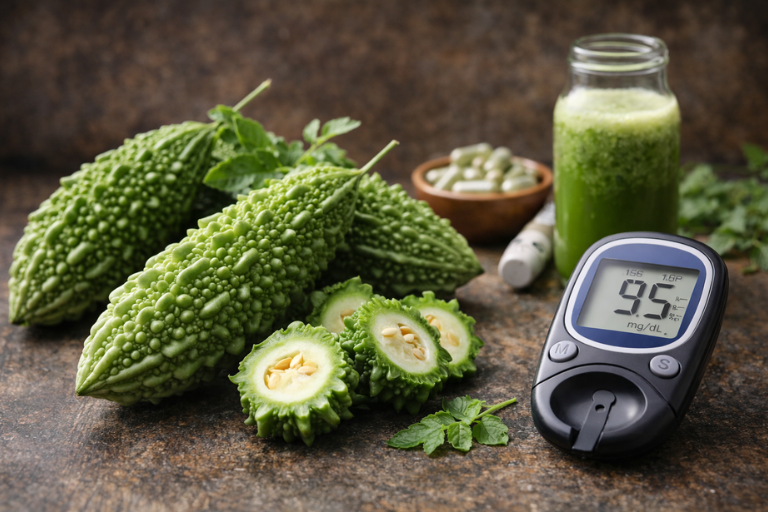
If you’re looking for a natural way to steady your blood sugar, bitter melon deserves a closer look. You’ll find evidence-backed benefits—from improving insulin sensitivity to easing post-meal spikes—without hype. Its compounds may even act a bit like insulin and temper glucagon, offering support when it counts most. But who gains the most, and how should you use it safely and effectively? The answers might change how you manage your next meal.
Bitter Melon for Diabetes: Does It Work?
Curious whether bitter melon actually helps with diabetes? You’ve got mixed but intriguing evidence.
In a 12-week randomized study of prediabetes, 2.4 g/day of bitter melon extract lowered 30-minute glucose during a 75 g OGTT and reduced 120-minute glucagon, pointing to improved post-meal control via glucagon suppression. Participants took two tablets three times daily, totaling 2.4 g/day, under an IRB-approved protocol. Zinc, an essential micronutrient, plays a vital role in immune system function which may further support the body’s ability to manage blood sugar levels.
Reviews of nine RCTs report promising glycemic effects in type 2 diabetes, and a 2015 trial confirmed hypoglycemia, though it didn’t match glibenclamide’s efficacy.
Mechanistically, bitter melon seems to enhance insulin sensitivity and suppress glucagon rather than boost beta-cell output, which may steady glycemic variability.
Safety looks good across trials, with few adverse events.
Still, earlier reviews found no A1C or glucose benefits, highlighting inconsistent results and a need for standardized, rigorous studies.
Who Benefits Most: Prediabetes vs. Type 2 Diabetes
While both groups can see some benefit, bitter melon appears more promising for prediabetes than for established type 2 diabetes.
If you’re prediabetic, trials show consistent fasting glucose improvements and smaller post-OGTT spikes, with significant glucagon reductions at 120 minutes after 12 weeks. Doses of 300–600 mg/day blunt glucose rises versus control, and adults 56 or older on 600 mg/day saw a modest HbA1c drop. In a 12‑week randomized, placebo‑controlled study of adults with prediabetes, the high-dose group had a markedly smaller increase in fasting glucose than placebo (about 1% vs 11%).
Still, HbA1c generally doesn’t change, effects don’t normalize glucose, and studies are short.
If you have type 2 diabetes, evidence is mixed. Some trials using about 2000 mg/day lowered HbA1c, but reductions often fell short of standard drugs.
Head-to-head studies showed inferior control to metformin or glibenclamide. Results vary by preparation, and larger, higher-quality trials are needed.
How Bitter Melon Lowers Blood Sugar After Meals
Even before it changes your A1c, bitter melon can blunt the after-meal surge by slowing carb breakdown and nudging cells to use glucose. Its saponins and related compounds inhibit α-glucosidase and α-amylase in your gut, so fewer carbohydrates turn into absorbable sugars.
With less glucose entering your bloodstream, postprandial spikes drop; trehal even suppresses α-glucosidase activity by about 40%.
Bitter melon also acts on the uptake side. Polypeptide-p and mcIRBP-19 mimic insulin, while vicine promotes insulin secretion, helping glucose move into muscle, liver, and fat for processing and storage.
Polypeptide-p and mcIRBP-19 mimic insulin; vicine spurs secretion, shuttling glucose into muscle, liver, and fat.
It boosts GLUT4 expression and improves insulin sensitivity, enhancing clearance without raising insulin levels excessively. Some studies indicate reduced blood sugar and A1c levels in type 2 diabetes patients, though results are mixed and research remains ongoing.
Clinical signals back this up: bitter melon extract suppressed glucose within 15–30 minutes during OGTTs and reduced mean PPG by about 1.43 mmol/L.
How Bitter Melon for Diabetes Suppresses Glucagon
Beyond slowing carb absorption and improving uptake, bitter melon also tamps down glucagon—the hormone that tells your liver to release glucose.
When glucagon drops after you eat, your post-meal spikes ease. That’s what human data show: in prediabetes, 12 weeks of bitter melon extract lowered glucagon 120 minutes after a 75 g OGTT and reduced maximal glucagon concentration, while placebo didn’t change. Glucose at 30 minutes also fell.
Animal studies back this up: oral extract cut glucagon and suppressed glucose within 15 minutes of an OGTT, without boosting insulin in normal mice.
Likely drivers include GLP-1 release via gut bitter-taste receptors, which dampens glucagon, plus trehal’s α‑glucosidase inhibition and antioxidant compounds protecting islets.
Together, you get smaller postprandial surges and steadier control. Bitter melon contains active compounds like charantin, polypeptide‑p, and vicine that can enhance insulin sensitivity and support glucose metabolism through multiple pathways.
How Bitter Melon Acts a Bit Like Insulin
Because some of its compounds can tap into your cells’ glucose-handling machinery, bitter melon can act a bit like insulin. One protein, mcIRBP, binds to and activates the insulin receptor, kicking off the same signaling cascade that moves glucose into muscle and fat cells.
In diabetic mice, mcIRBP improved glucose metabolism and cut blood glucose by 10.8% after a glucose load. Capsules containing 300 mg bitter melon peptides twice daily have also helped regulate blood glucose in people with diabetes.
Bitter melon extract (BME) adds two angles: it substitutes for insulin and sensitizes your tissues to it. BME boosts glucose uptake even in insulin‑resistant cells, sometimes independent of Akt, yet can also activate IRS‑1/Akt and enhance GLP‑1–linked sensitivity. Polypeptide‑p, a “plant insulin,” lowers fasting glucose when injected.
In addition, BME can stimulate GLP-1 secretion from enteroendocrine cells in the gut, further supporting post‑meal insulin responses and glycemic control.
Safety and Interactions: Who Should Avoid Bitter Melon
Bitter melon’s insulin‑like actions can help with glucose control, but they also raise safety flags for certain people.
If you’re pregnant, avoid it entirely—animal studies link it to birth defects, miscarriage risk, potential abortifacient effects, and uterine abnormalities.
Children shouldn’t use it due to reports of hypoglycemic coma and convulsions and a higher risk of severe lows; safe dosing data are lacking.
If you use insulin, bitter melon can stack effects and drive glucose dangerously low. Monitor closely and talk with your physician first.
The same caution applies if you take any antidiabetic medication—additive hypoglycemia and altered drug effectiveness are possible, and bitter melon isn’t FDA‑approved for diabetes treatment. Supplements are not regulated by the FDA, so product quality and potency can vary widely.
With G6PD deficiency, avoid it; favism‑like hemolysis and anemia have been reported.
How to Use Bitter Melon for Diabetes (Forms, Doses, Timing)
If you’d like to try bitter melon for glucose control, choose a form you can use consistently—fresh fruit (as food or juice), dried powder, or standardized capsules/extracts.
Fresh juice without seeds has lowered plasma glucose in NIDDM, and juice or fried fruit has reduced glucose in studies. Powder and extracts have the most dose-controlled data. Bitter melon contains active compounds like charanti, vicine, and polypeptide-p that help reduce blood sugar, and its lectin may suppress appetite, contributing to its hypoglycemic effect. Additionally, incorporating ginger’s antioxidant properties can further aid in reducing inflammation, which is beneficial for overall metabolic health.
For capsules/extracts, common ranges are 1,000–2,000 mg daily; 2,000 mg daily for four weeks has reduced glucose versus metformin.
Some protocols use 2,400 mg daily for 12 weeks in prediabetes. Split doses after meals: one to two capsules, two to three times daily.
Another option: 300 mg before lunch and dinner, or 300 mg peptide twice daily.
Powder: 2–4 g daily, sometimes combined with glibenclamide.
Effects may appear within minutes during OGTT.
Frequently Asked Questions
Can Bitter Melon Be Combined With Other Supplements for Better Glucose Control?
Yes. You can pair bitter melon with metformin, glibenclamide, or exercise; studies show added fasting glucose benefits. Evidence for chromium’s synergy is limited. Start low doses, monitor sugars, watch for hypoglycemia, and coordinate with your clinician and pharmacist.
Does Cooking Method Change Bitter Melon’s Blood Sugar Effects?
Yes. You’ll see hypoglycemic effects across raw, cooked, and powdered forms. Blanching or salting reduces bitterness without proven efficacy loss. Stir-fries, soups, and stuffed dishes retain activity. Powders show consistent reductions in fasting glucose and HbA1c with sustained use.
Are There Regional Varieties of Bitter Melon With Different Potencies?
Yes. You’ll find Chinese types longer, smoother, often milder; Indian types shorter, ridged, more bitter. Unripe fruits show higher phenolics and antioxidant capacity, so you’ll likely get stronger bioactivity from unripe, Indian cultivars like Indian White.
How Long Do Benefits Persist After Stopping Bitter Melon?
Benefits may persist roughly 2–4 weeks after stopping, sometimes longer anecdotally. You’ll likely see diminishing effects by one month. Evidence’s short-term and mixed; monitor glucose closely, don’t stop prescribed meds, and discuss tapering or maintenance dosing with your clinician.
Can Athletes Use Bitter Melon Without Affecting Performance?
Yes—you can. Studies report no performance detriment; you’ll maintain glucose stability, improve balance, flexibility, and cardiorespiratory capacity, and reduce cortisol, ACTH, and prolactin. You may gain fatigue resistance, better recovery markers, and greater glycogen stores when dosed appropriately during training.
Conclusion
You’ve learned how bitter melon can help you manage blood sugar by enhancing insulin sensitivity, curbing glucagon, slowing carb breakdown, and supporting post-meal control. If you’ve got prediabetes or type 2 diabetes, it may offer quick, practical support—especially around meals. Still, don’t replace prescribed treatments. Check for interactions, avoid it in pregnancy, and monitor for hypoglycemia if you’re on glucose-lowering meds. Consider capsules, juice, or cooked fruit, and start low, time around meals, and track your response.