Beetroot Powder vs. Fresh Beets: 6 Convenience Benefits for Smoothies and Baking
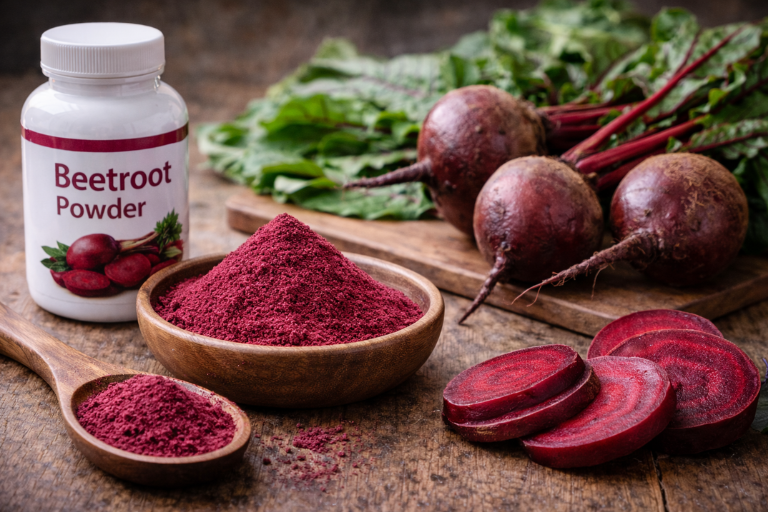
If you love the benefits of beets but hate the prep, you’ve got options. Beetroot powder skips peeling, chopping, and cleanup, and it blends smooth without a high-powered blender. You’ll get consistent color and flavor in batters, stable nutrition per scoop, and a longer shelf life that cuts waste. It’s portable for gym bags and travel, too. But how does it stack up on nitrates, cost per serving, and everyday convenience?
Quick Prep: Beetroot Powder vs Fresh Beets
Even if you love cooking, beetroot powder wins on speed and simplicity. You skip peeling, washing, and roasting that fresh beets demand. Instead of 35–50 minutes in the oven—or even the 30 seconds of chopping for a blender—you just scoop and mix. No knives, no food processor, no waiting.
Skip peeling, chopping, and roasting—just scoop beetroot powder. No knives, no mess, no waiting.
You also avoid the mess. Fresh beets stain hands, boards, towels, and containers, and splatter red juice during prep. Powder mixes cleanly, leaving no residue or discoloration to scrub. Plus, beetroot powder offers longer shelf life, lasting far longer than fresh beets without spoiling.
Storage favors powder, too. Fresh beets last 1–2 weeks in the fridge, while powder keeps up to two years in a cool, dry pantry, sidestepping wilted greens and forgotten roots.
For portability and spontaneity, powder fits your gym bag or desk and slips into smoothies, pancakes, muffins, or yogurt instantly.
Nutrition and Nitrates per Serving: Powder vs Fresh
Speed and convenience are great, but what you actually get per serving matters just as much. Fresh beets deliver about 250–300 mg nitrates per 100 g cooked, plus a broad spectrum of nutrients: roughly 20% DV folate and 9% DV potassium.
Beetroot powder concentrates those benefits. A teaspoon often equals one small beet with higher nitrate density, giving you efficient nitrate delivery that supports blood flow, oxygen use, and athletic performance.
You’ll keep about 90% of fresh-beet nutrition in powder form, with a slight vitamin C drop. Both forms are rich in betalains. For those managing digestion, fresh beets offer more dietary fiber, which can support gut health and regularity.
Powder retains vitamins A, C, B-complex, and minerals like iron, magnesium, and potassium—about 85 mg potassium per teaspoon. For macros, powder is leaner: ~20 calories per 2 teaspoons and fewer carbs and sugars, though it has less fiber.
Shelf Life and Waste: Beetroot Powder vs Fresh
While fresh beets can sit in your fridge for 3–5 months before losing quality, beetroot powder wins on longevity and waste.
Whole beets lose moisture (beyond 5–7% weight loss) and nutrients as storage stretches, so you may trim, discard, or rush to use them. Powder doesn’t face that dehydration issue and stays potent much longer. For best results, store beetroot powder away from light and heat to protect light-sensitive compounds.
Whole beets shed moisture and nutrients over time; beet powder skips dehydration and stays potent longer.
Unopened, well-packaged beetroot powder typically holds quality 18–24 months, especially freeze-dried and stored below 25°C with humidity under 30%.
Once opened, you’ll get 6–12 months of very good quality if you exclude oxygen. Fill containers to the top, guarantee perfect lid seals, and use oxygen barriers; pantry jars with air lead to color and potency decline within 3–6 months.
Net result: fewer toss-outs, steadier color, flavor, nitrates, and betalains.
Portable Convenience for Gym and Travel
Although fresh beets are nutritious, beetroot powder is the portable choice for gym and travel. You skip heavy produce, refrigeration, and careful handling. A teaspoon equals roughly one small beet, so you pack less and still hit your targets. No coolers or special containers—just scoop into a shaker or bottle.
Before workouts, you get fast nitrate delivery. Mix it with water or your usual drink and sip within seconds—no peeling, cooking, or juicing. Precise serving sizes let you time intake, and elevated blood nitrate can last about six hours to support training and recovery. Nitrates boost blood flow, enhancing vasodilation to support performance and endurance.
You also control dosage consistently. Standardized servings help manage blood pressure and performance goals. It’s cost-effective, resists spoilage, and fits active routines—smoothly blending into shakes without mess or delays.
Smoother Smoothies and Better Baking, No Mess
Your shaker isn’t the only place beetroot powder shines—it makes smoothies silkier and baking easier, with zero mess. You skip peeling, chopping, and juicing; the powder dissolves instantly for a uniform, grit-free sip. No high-powered blender needed. It blends cleanly with fruit, yogurt, or milk without changing mouthfeel, and you won’t deal with red splatters or stained hands, boards, or towels. It also retains beneficial nitrates that can support blood pressure, offering a simple way to add heart-healthy nutrients without extra sugar.
In batters, powder folds into dry mixes for even distribution, adding consistent color and mild sweetness. Fresh beets can skew moisture and texture; powder won’t. You can add up to 10% by weight without overpowering flavor, making pancakes, muffins, and brownies predictable.
Storage’s simple, too—no short shelf life. Dose exactly, pour directly into recipes, and enjoy smoother results with zero cleanup.
Cost per Serving and Nitrate Value for Daily Use
Two things matter for daily beet intake: what each serving costs and how much nitrate you actually get.
Fresh beets are cheap per serving, especially in season and from local sources, but costs add up if you’re juicing or cooking daily. They deliver 250–300 mg nitrates per 100 g cooked, and beet juice can reach 230–1,000 mg per serving, though nitrates drop if left at room temperature. Freeze-dried powders made from whole beet retain more fiber and phytonutrients than juice powders and avoid the concentrated sugars found in juice-only products.
Fresh beets are thrifty nitrate powerhouses, but prep, juicing, and spoilage can raise costs
Beetroot powder costs more upfront, yet one jar yields many servings and avoids spoilage.
Quality freeze‑dried powders provide about 164 mg per 5.3 g, with superior nitrate retention versus air‑dried options.
For daily use, powder often gives better nitrate efficiency per dollar and consistency, while fresh beets are cheaper for high-volume intake if you’ll handle prep and waste.
Frequently Asked Questions
Is Beetroot Powder Safe During Pregnancy or for Certain Medications?
Yes, it’s generally safe when used appropriately. Avoid raw or unpasteurized products. Consult your clinician, especially if you have hypertension, hypotension, gestational diabetes, or take blood pressure meds. Monitor blood sugar, watch for stomach upset, and discontinue if symptomatic.
How Does Beetroot Powder Taste Compared to Roasted Fresh Beets?
It tastes milder and slightly sweet, with less earthy intensity than roasted beets. You’ll notice smoother integration into recipes, subtler aroma, and consistent flavor. Roasting fresh beets caramelizes sugars, giving you richer, deeper sweetness and a fuller, earthier profile.
Can Beetroot Powder Stain Teeth or Dental Appliances?
Yes. Beetroot powder can stain teeth and appliances because concentrated betalain pigments and mild acidity adhere to porous enamel. You can limit staining by drinking through a straw, rinsing with water, brushing after 30 minutes, and whitening if needed.
What Certifications or Third-Party Testing Should I Look For?
Look for USDA Organic with a verifiable NOP certificate, Non-GMO Project Verified, published third-party CoAs showing batch-specific heavy metal results under FDA/Prop 65 limits, and potency testing guaranteeing nitrate and betalain levels. Don’t accept unverified claims.
Are There Allergen or Contamination Risks in Beetroot Powders?
Yes. You face risks of bacterial contamination, heavy metals (notably cadmium), variable nitrates, and potential allergens/irritants causing respiratory, skin, or GI symptoms. Check COAs, heavy‑metal testing, nitrate levels, lot dates, and avoid raw, poorly labeled, or unverified products.
Conclusion
You want convenience without sacrificing nutrition, and beetroot powder delivers. You’ll skip peeling, chopping, and cleanup while still getting reliable nitrates, color, and flavor. It dissolves smoothly for lump-free smoothies and blends evenly into batters, no high-powered blender required. You’ll waste less, store it longer, and take it anywhere—from your kitchen to the gym or travel bag. For daily use, it’s consistent, portable, and often more cost-effective. Choose beetroot powder when you need speed, simplicity, and performance.