Beef Tallow for Skincare: 5 Reasons It’s Better Than Your Expensive Moisturizer
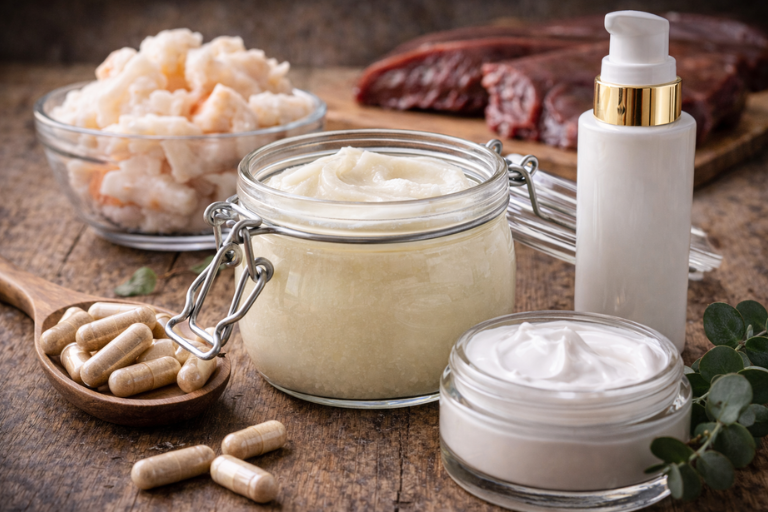
You want skincare that actually works, not hype. Beef tallow might outperform your pricey moisturizer because it mimics your skin’s natural oils, locks in hydration, and delivers vitamins A, D, E, and K. It can reinforce your barrier and may calm irritation thanks to its antimicrobial and anti-inflammatory properties. But it’s not perfect for everyone, and there are real considerations—like comedogenicity and sourcing—you shouldn’t ignore. Here’s what to weigh before you swap your routine.
Beef Tallow for Skin: Does It Work and Who Should Use It?
Curious whether beef tallow actually works on skin? You’ll see quick softness because tallow acts as an occlusive, sealing in moisture and reducing transepidermal water loss.
In short-term testing with tallow-derived esters, skin hydration rose progressively up to about 47% by 180 minutes. You may also notice a smoother feel since linoleic-rich fats behave like emollients. It also contains fat-soluble vitamins, though their stability and effectiveness in tallow for skin health are not well documented.
Still, the benefits are limited and temporary; tallow doesn’t add water like humectants or deliver targeted barrier repair.
Who should use it? Consider it if you’ve normal to dry skin and want a simple moisture seal.
Skip it if you’re acne-prone, oily, or have eczema or broken skin—clogging, irritation, and contamination risks rise, especially in preservative-free jars.
Evidence is mostly anecdotal; no robust trials show superiority to modern moisturizers.
Tallow vs. Modern Moisturizers: Composition, Vitamins, Fatty Acids
While both aim to keep skin hydrated, tallow and modern moisturizers differ sharply in what they’re made of and how they work.
While both hydrate, tallow and modern moisturizers diverge radically in composition and mechanism
Tallow is rendered grass-fed beef fat with a short, natural ingredient list. Its fatty acids mirror human sebum: roughly 37–43% oleic, 24–32% palmitic, and 12–18% stearic, with tiny amounts of linoleic, linolenic, and myristic. These lipids integrate with your barrier rather than sit on top. Tallow also functions as a humectant, emollient, and occlusive, helping draw in moisture, soften skin, and prevent water loss simultaneously. Additionally, tallow’s antioxidant protection is beneficial in combating oxidative stress on the skin.
Conventional lotions are complex water-based emulsions: 60–80% water with glycerin, dimethicone, petrolatum, emulsifiers (PEGs, polysorbates), preservatives, and fragrances. They rely on synthetic occlusives and film-formers and often lack skin-compatible lipids.
Tallow also delivers fat-soluble vitamins A, D, E, and K.
You get cell turnover support, antioxidant protection, and barrier strength from bioavailable nutrients absent in typical formulations.
How Much Does Tallow Hydrate and Protect Your Skin?
Because tallow’s lipids closely mirror your skin’s own, it doesn’t just sit on top—it sinks in, boosts hydration for hours, and reinforces your barrier. After application as fat esters, hydration rises quickly: about 4.7% at 30 minutes, 23.2% at 60, 38.4% at 90, 44.4% at 120, and 47.2% at 180 minutes. You feel softness that lasts because moisture doesn’t evaporate like it does with water-based lotions.
Tallow’s saturated fats and triglycerides form a breathable, occlusive shield that locks in water while letting skin function normally. This layer also buffers wind and pollution. Thanks to its anti-inflammatory properties, it helps calm irritation and reduce redness in sensitive skin.
Additionally, tallow can enhance transepidermal water loss prevention, which is essential for maintaining skin hydration. Fat‑soluble vitamins A, D, E, K, plus B12, and CLA absorb efficiently thanks to biochemical compatibility, nourishing deeper layers. With regular use, you support collagen structure, improve elasticity and texture, smooth fine lines, and speed repair of dry, irritated areas.
Beef Tallow and Acne/Dermatitis: Risks, Comedogenicity, Limits
Even if tallow feels soothing at first, it can backfire for acne- or dermatitis‑prone skin. Its oleic-acid–heavy profile resembles olive and coconut oils, which often clog pores. Used occlusively, oleic acid disrupts your microbiome, traps bacteria, and raises irritation. Nasal irrigation can help alleviate skin irritation by removing allergens, but applying tallow thickly—or blending it with heavier oils—may lead to clogged pores, redness, or rebound breakouts.
Consistent use increases transepidermal water loss, inflammation, and sensitivity. That immediate “moist” feel can hide delayed healing and worsening acne, rosacea, or eczema. Grass‑fed or ethically sourced tallow doesn’t meaningfully change its fatty acid makeup.
Tallow also softens into an oil, encouraging overuse and greasy residue that picks up bacteria from surfaces. There are added concerns: calcium disruption in the skin barrier, poor regulation, and contamination risks. Dermatologists typically steer you toward linoleic‑rich formulas; many won’t recommend tallow at all.
Tallow’s Antimicrobial and Anti-Inflammatory Effects (and the Evidence)
Despite tallow’s comedogenic concerns, there’s emerging evidence it can curb microbes and calm inflammation on skin. Tallow-rich herbal soaps outperform alkaline soaps against skin-infecting bacteria and act as effective disinfectants for wounds, while staying less drying.
Topical tallow emulsions show antimicrobial effects and improve hydration, supporting barrier repair. Its fatty acids resemble lauric acid’s activity, adding targeted microbe control. Tallow exhibits better biocompatibility with human skin, which may enhance moisture retention and stability in cosmetic formulations.
Topical tallow emulsions hydrate, bolster barrier repair, and target microbes with lauric-like fatty acid action
You also get anti-inflammatory benefits. In atopic dermatitis models, high-fat tallow emulsions reduce itch-driven IgE, mast cells, and B-cell markers, delivering symptomatic relief.
Tallow’s vitamins A, D, E, and K, plus oleic acid–assisted delivery, enhance antioxidant defense, epidermal turnover, and penetration of actives. Users with dermatitis or psoriasis may notice calmer redness.
Frequently Asked Questions
Is Beef Tallow Safe for Pregnancy or Breastfeeding Skincare?
Yes, it’s generally safe. You’ll benefit from its skin-mimicking lipids, vitamins, and soothing fats. Choose grass-fed, unscented, minimal-ingredient tallow. Patch test, moisturize daily, and avoid essential oils unless your provider approves. It’s suitable during breastfeeding, too.
Can Tallow Be Used on Lips, Eyelids, or Around Eyes?
You can apply tallow, but you shouldn’t. It’s occlusive and unregulated for lips, clogs pores on thin eyelids, and risks irritation, contamination, and breakouts around eyes. Use tiny amounts, avoid acne-prone or broken skin, and stop at irritation.
How Should Tallow Be Stored to Prevent Rancidity?
Store tallow airtight in dark glass, cool, dry, and away from light. Keep 60–70°F for 6–12 months, refrigerate 35–40°F for 12–24, or freeze at 0°F for 2–3 years. Use clean utensils, label dates, and monitor rancidity.
Is Grass-Fed Tallow Different From Grain-Fed for Skin?
Yes. You’ll notice grass-fed tallow has more omega-3s, CLA, and vitamins A, D, E, K2, offering better moisture, barrier support, and anti-inflammatory benefits. It’s purer, gentler for sensitive skin; choose grain-fed mainly for budget-friendly options.
Does Tallow Interact With Retinoids, Acids, or Prescription Topicals?
Yes. You can pair tallow with retinoids and prescription topicals; it reduces irritation and supports your barrier. Don’t layer tretinoin with AHAs/BHAs the same night. Alternate acids, patch test, and apply tallow after actives for moisturized, calm skin.
Conclusion
You don’t need a fancy label to get real results. Beef tallow mirrors your skin’s natural oils, locks in moisture, and delivers vitamins A, D, E, and K while strengthening your barrier. If you’re dry, sensitive, or reactive, it can calm irritation and support repair. It isn’t perfect—patch test if you’re acne-prone and watch for comedogenicity—but used wisely, it’s a simple, effective upgrade. Start with a pea-sized amount on damp skin and see how your skin responds.