Black Tea vs. Green Tea: 7 Cardiovascular Benefits That Will Surprise You
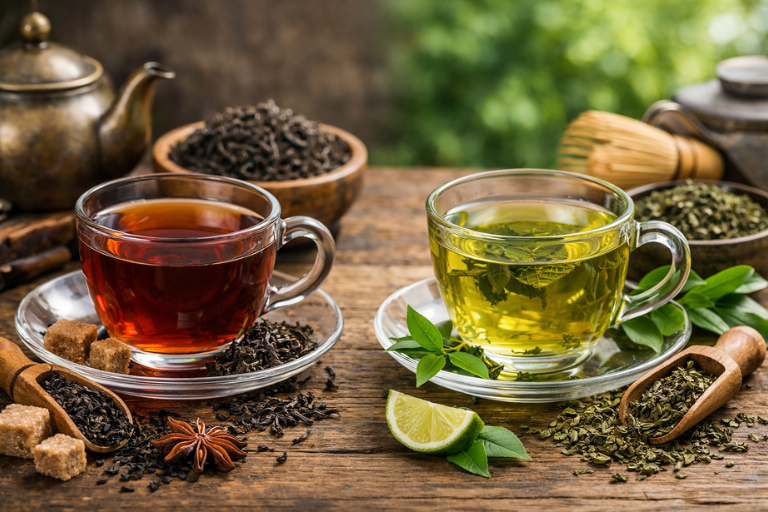
You might sip black or green tea for taste, but both quietly work on your heart. Green tea’s catechins trim LDL and ease blood pressure, while black tea’s theaflavins help lower lipids and support healthier vessels. Both link to fewer cardiovascular events and better artery function, yet their benefits aren’t identical. Even L-theanine may support calm focus and metabolism. The key is how you brew, how often you drink, and how much—because small choices stack up.
Cholesterol Control: Black vs. Green, Side by Side
Even though both brews can help your numbers, green tea generally edges out black tea for cholesterol control.
You see stronger LDL drops with green tea extract: about a 4.1% reduction versus a 0.9% rise on placebo, with significant total cholesterol declines after 12 weeks. Benefits appear greatest if your baseline cholesterol is 200 mg/dL or higher. Citrus foods rich in vitamin C can also support overall cardiovascular health and may complement the benefits of green tea.
EGCG-rich catechins likely drive these effects and outperform black tea polyphenols in several models.
Black tea still helps. Drinking five cups daily or using theaflavin-enriched extracts can lower total and LDL cholesterol, with trials showing 6–10% lipid reductions and up to a 16.4% LDL-C drop on a low-fat diet. Long-term consumption is linked to reduced LDL oxidation, supporting cardiovascular benefits over time.
However, green tea often yields broader improvements, including occasional HDL gains, while black tea shows no consistent HDL change.
Blood Pressure: How Much Each Tea Lowers It
If you’re watching cholesterol, green tea usually has the edge—but when it comes to blood pressure, both brews help, with green tea again showing a slight lead.
You’ll see modest drops from either cup, but green tea consistently delivers greater reductions in hypertensive patients, with statistically significant improvements in both systolic and diastolic readings (p<0.01) versus black tea.
Black tea still matters. In a 6‑month trial, women drinking black tea saw systolic pressure fall about 4 mmHg (from 127.0 ± 17.8 to 122.9 ± 14.6), with a mean change of −10.8 mmHg (95% CI −19.1 to −2.6).
Men didn’t show significant changes.
Mechanistically, green tea’s catechins—especially epicatechin gallate and EGCG—activate KCNQ5 channels to relax vessels, while black tea’s theaflavins support vascular health.
Daily intake yields small, consistent reductions.
Public health data show that green tea produced significantly greater systolic and diastolic BP reductions than black tea in hypertensive adults.
Antioxidants That Matter: EGCG vs. Theaflavins
While both teas brim with antioxidants, the heavy hitters differ: green tea’s EGCG and black tea’s theaflavins. You get EGCG, a catechin (C22H18O11) that inhibits NF-κB, lowers triglycerides and total cholesterol, modulates LDL receptors, and powerfully blocks LDL oxidation (EGC < EC < ECG < EGCG).
It boosts glutathione, enhances nitric oxide signaling, and shows lipoprotein-bound antioxidant activity stronger than tocopherol. In patients with coronary artery disease, an acute dose of EGCG improved endothelial function as measured by flow-mediated dilation, though this effect was not sustained with two weeks of supplementation.
Theaflavins, formed during black tea oxidation—especially theaflavin digallate—often outperform EGCG physiologically. They upregulate Nrf2 and circ-ITCH, validate benefits for liver and kidney integrity, and curb intestinal cholesterol and fat synthesis.
By elevating conjugated bile acids and suppressing the FXR-FGF15 pathway, they promote fat breakdown via alternative bile acid routes. Clinically, theaflavins lower fasting glucose and lipids, while EGCG reduces endothelial lipid deposition.
Reviews favor TFs overall.
Artery Function: Elasticity and Flow, Compared
Despite their shared caffeine and polyphenols, black and green tea don’t shape artery mechanics the same way. In a crossover study, black tea briefly stiffened your aorta, raising pulse wave velocity by 0.49 m/sec in the first 90 minutes, then trending back toward baseline; green tea didn’t budge stiffness.
Both teas increased augmentation index (wave reflections) over three hours—about 5.0% for black and 6.6% for green—yet less than caffeine alone, suggesting flavonoids blunt caffeine’s impact. Aortic stiffness and wave reflections are not only markers but prognosticators of cardiovascular risk.
Both teas raise augmentation index modestly, yet less than caffeine—flavonoids temper the stimulant’s vascular punch.
Meanwhile, you still get vasodilation. Catechins, especially EGCG and ECG, activate KCNQ5 potassium channels, lowering smooth-muscle excitability; warming to 35°C enhances this, and milk doesn’t block it.
Endothelial pathways help too: green tea catechins boost nitric oxide, while black tea polyphenols activate eNOS via PI3K/Akt and p38 MAPK, improving flow despite transient stiffness shifts.
Stroke and Heart Risk: What Studies Show
You’ve seen how black and green tea nudge artery stiffness and dilation; the next question is whether those shifts add up to fewer strokes and heart events. Evidence points yes. Pooled analyses link both teas with an 18% lower risk of cardiovascular events, including stroke.
You don’t see many trials counting hard events, but you do see consistent drops in key drivers: blood pressure and cholesterol.
With black tea, theaflavins and thearubigins support vessels, while data show LDL falls by about 0.43 mmol/L and systolic pressure by 1.85 mmHg—changes that track with lower stroke and heart risk. Black tea is often brewed at higher temperatures for full flavor extraction, which complements its robust profile.
Green tea’s EGCG improves elasticity and lowers total cholesterol by 0.62 mmol/L and LDL by 0.64 mmol/L, with modest blood pressure reductions.
Net result: credible, complementary prevention profiles.
L-Theanine’s Role: Calm Focus and Metabolism, Explained
Although best known as tea’s “calm focus” molecule, L-theanine does more than smooth your nerves—it moves through your body fast and nudges key metabolic circuits.
After about 100 mg, your blood peaks near 0.8 hours with similar uptake from tea or capsules, and it shows up in plasma, red cells, and urine for up to 24 hours. Your body also hydrolyzes it to ethylamine and glutamate.
You feel calm focus as L-theanine modulates brain-relevant metabolism, supporting glucose handling and energy efficiency that steadies attention. It also helps maintain gut microbiota balance, including boosting short-chain fatty acid pathways that support metabolic health.
Under the hood, it activates AMPK/AKT pathways, boosts thermogenesis, and raises fatty acid oxidation, increasing energy expenditure without more food.
It downshifts lipogenesis (ACC, FAS, SREBP-1c, HMGCR) while upshifting CPT-1. It also supports glycogen stores, insulin signaling, and beta-cell function—metabolic guardrails for sustained clarity.
How to Drink for Heart Benefits: Dose, Frequency, Prep
Start with a simple plan: drink 2–4 cups of unsweetened tea daily, brewed safely and consistently. Most trials lasted 3–16 weeks, so aim for a steady routine to see changes in LDL and blood pressure. Omega-3s can also complement the heart benefits of tea by supporting vessel flexibility and improving nitric oxide signaling.
Choose black tea for a caffeine lift and modest reductions in LDL and blood pressure; pick green tea for stronger total and LDL cholesterol drops and higher EGCG (about 200–300 mg per cup).
Brew with water below 140°F to avoid very hot temperatures linked to esophageal and gastric cancer; let boiling water cool a few minutes first.
Skip sugar—sweetened tea undermines heart benefits. Pair tea with a heart-healthy diet to help preserve HDL with age.
There’s no firm maximum dose; monitor caffeine tolerance, hydration, and sleep, adjusting timing as needed. Evidence from RCTs shows both black and green tea can modestly reduce LDL cholesterol and blood pressure over a few months.
Frequently Asked Questions
Can Decaffeinated Versions Provide Similar Cardiovascular Benefits?
Yes. You can get similar cardiovascular benefits from decaffeinated green tea: modest blood pressure reductions, improved fat oxidation, better exercise economy, lower LDL, and enhanced insulin signaling. Choose catechin-rich extracts, take consistently for weeks, and monitor your response.
Do Milk, Lemon, or Sweeteners Reduce Heart-Protective Effects?
Yes. You lose benefits with milk, especially reduced catechin absorption and endothelial gains; lemon helps stabilize and absorb polyphenols; sugar in excess undermines metabolic and blood pressure improvements. For best cardiovascular effects, drink tea plain or lightly sweetened.
Is Tea Safe With Common Heart Medications Like Statins or Beta-Blockers?
It depends. You should avoid green tea with statins and nadolol due to reduced absorption and possible EGCG effects; black tea seems less documented. Monitor blood pressure/heart rate, don’t change doses yourself, and ask your clinician or pharmacist first.
Are There Genetic Differences That Affect Tea’s Cardiovascular Response?
Yes. You likely vary genetically in tea response. MR studies suggest green tea–related variants lower arterial thrombosis risk, while overall tea shows mixed causal links. Effects appear lifelong, robust to sensitivity tests, and may involve hypertension mediation. More trials are needed.
What Time of Day Maximizes Tea’s Heart-Health Impact?
Drink tea 30–60 minutes after waking and 1–2 hours after meals, especially mid‑afternoon (2–4 PM). You’ll maximize catechin absorption, stabilize blood sugar, sustain alertness, and support endothelial function without disrupting sleep. Avoid empty‑stomach sips.
Conclusion
You don’t have to choose a “winner” to support your heart. Green tea shines for lowering LDL and blood pressure with catechins like EGCG, while black tea’s theaflavins drive meaningful lipid drops. Both boost artery flexibility and collectively link to about an 18% lower cardiovascular risk. Add the calm focus of L-theanine, and you’ve got a daily ritual that’s smart and soothing. Brew consistently, aim for 2–4 cups, mind caffeine, and steep right to reveal real, protective benefits.