8 Reasons Arugula Is the Ultimate Superfood for Heart Health and Detox Salads
You’re eyeing arugula for more than a peppery bite—and you should. It’s loaded with antioxidants, heart-friendly nitrates, and gut-loving fiber. You also get steady blood sugar support, detox-friendly compounds, and key nutrients like vitamin K and folate without the carb hit. It slips into salads, sautés, smoothies, and pesto with ease. But there’s more to its benefits—and a few cases where you may want to hold back.
Arugula’s Antioxidant Power and Inflammation Benefits
Although arugula looks delicate, it delivers serious antioxidant and anti-inflammatory firepower. You get isothiocyanates and indole-3-carbinol that dial down inflammation and oxidative stress—effects highlighted in a 2020 Frontiers review. Additionally, these compounds can reduce inflammatory markers associated with metabolic syndrome, enhancing overall health outcomes.
Delicate arugula packs potent anti-inflammatory, antioxidant power with isothiocyanates and indole-3-carbinol, as 2020 research shows
It’s no surprise arugula shows up in anti-inflammatory diets for rheumatoid arthritis, and a varied leafy-greens approach outperforms single-ingredient fixes. If you’re managing metabolic syndrome, these bioactives support healthier inflammatory markers. In fact, higher vitamin K intake from arugula has been associated with improved bone mineral density and lower fracture risk.
You also load up on flavonoids—quercetin, kaempferol, and isorhamnetin—plus carotenoids like beta-carotene, lutein, and zeaxanthin that curb free-radical damage and protect your eyes.
Vitamins A, C, and K amplify antioxidant defenses, while folate supports brain function and metabolism. Polyphenols further temper inflammation, aid cardiovascular health, and bolster immune defenses.
Even arugula sprouts and microgreens pack impressive antioxidant capacity.
How Arugula’s Glucosinolates Help Fight Cancer
While arugula’s peppery bite signals flavor, it also signals chemistry: rich glucosinolates that your body converts into isothiocyanates like sulforaphane and erucin—compounds that help counter cancer.
When you chew and digest arugula, enzymes hydrolyze these sulfur-containing molecules, releasing isothiocyanates that ramp up detox enzymes, enhance carcinogen elimination, and protect DNA. Additionally, omega-3 fatty acids are known to lower chronic inflammation in the body, which can further support cancer prevention.
In lab studies, arugula-derived compounds slow prostate and breast cancer cell proliferation, impede tumor cell migration and angiogenesis, and trigger cell cycle arrest. Supported by studies, higher intake of cruciferous vegetables like arugula is linked to a lower cancer risk.
Erucin, in particular, boosts p53, p21, and PARP-1 cleavage, pushing damaged tumor cells toward apoptosis.
Population research backs the trend: people who eat more cruciferous vegetables often show lower lung, colorectal, and prostate cancer risk, though genetics modulate benefits and direct arugula trials remain limited.
Add arugula regularly to stack the odds.
Arugula for Heart Health: Nitrates, Folate, Potassium
Because arugula packs nitrates, folate, and potassium into every bite, it supports your heart on multiple fronts. Its natural nitrates convert to nitric oxide, relaxing and dilating blood vessels, improving blood flow, and lowering blood pressure. Magnesium’s role in cardiovascular health further enhances these benefits, as it helps regulate heartbeat and maintain normal rhythm.
Studies show nitrate-rich greens, including arugula, enhance endothelial function, reduce arterial stiffness, and curb platelet activation—key steps in preventing atherosclerosis and stroke. Arugula’s nitrates even outperform sodium nitrate at reducing blood pressure.
You also get folate to help regulate homocysteine, support red blood cell formation, and ease heart strain. Higher folate intake from leafy greens correlates with lower stroke risk and better cardiovascular function, complementing nitrates’ vascular benefits.
Potassium rounds out the trio by counteracting sodium, easing hypertension, and reducing stroke risk—especially helpful since most adults fall short. Leafy greens like arugula help boost nitric oxide, which relaxes and dilates blood vessels to support cardiovascular health.
Better Blood Sugar Control With Arugula
Even without adding sweetness, arugula helps keep your blood sugar steady. With a glycemic index of 32 and very low glycemic load, it has minimal impact on glucose. You’re only getting about 3.65 g of carbs per 100 g, so you won’t see a quick rise in the first 15 minutes, and levels stay steadier for 2–3 hours.
Its 1.6 g of fiber per 100 g slows digestion, blunts post-meal spikes, and supports insulin sensitivity. Antioxidants like alpha-lipoic acid, sulforaphane, and erucin enhance glucose transport, combat oxidative stress, and may prevent complications. Arugula is low in carbohydrates, supporting diabetic-friendly meal plans by minimizing blood sugar impact.
Clinical data back this up: trials show meaningful reductions across age groups, and animal studies confirm antihyperglycemic effects.
Vitamins A and K, magnesium, and bioactive fatty acids further promote glucose uptake and lower insulin demand.
Arugula Detox Support: Fiber and Sulforaphane
Although it’s a delicate leafy green, arugula packs serious detox support through its fiber and sulforaphane. With a 100-gram serving, you get gut-fueling fiber that keeps digestion smooth, promotes satiety, and helps sweep cholesterol and toxins out.
That fiber acts like a prebiotic, feeding beneficial bacteria so your microbiome stays balanced—key for immunity, mood, and overall gastrointestinal comfort.
Fiber in arugula nourishes good gut bacteria, balancing your microbiome for immunity, mood, and digestive comfort.
As a crucifer, arugula delivers glucosinolates that convert to sulforaphane. This compound activates Nrf2, switching on antioxidant and detox genes that reduce oxidative stress and inflammation while supporting liver detox pathways. It’s also rich in vitamin K, which supports strong bones and healthy blood clotting.
Together, fiber and sulforaphane form a one-two cleanse: fiber removes waste physically, and sulforaphane boosts cellular defenses. Eat arugula regularly to sustain helpful gut organisms and protect against digestive disorders.
Arugula’s Key Nutrients: Vitamin K, Folate, Vitamin C, Minerals
Arugula doesn’t just support detox—it loads your plate with standout nutrients that keep your body running smoothly. You get 108.6 mcg of vitamin K per 100 g (91% DV), essential for normal clotting, wound healing, and strong bones—key for lowering osteoporosis risk. If you take blood thinners, talk to your clinician before increasing intake.
You also score 97 mcg of folate (24% DV) to power amino acid metabolism, build DNA, and support a healthy pregnancy by preventing neural tube defects.
Vitamin C adds 15 mg (17% DV) to defend cells from oxidative stress, bolster immunity, boost collagen for skin, and improve absorption of non-heme iron.
Minerals round it out: calcium hits 160 mg (about 12% DV) for bones, muscles, nerves, and clotting, while magnesium delivers 47 mg (11% DV) to support muscles, nerves, and heart health. Plus, arugula contributes nearly a gram of fiber per serving to support digestion, fullness, and healthy cholesterol levels.
Easy Ways to Use Arugula (Salads, Sautés, Smoothies, Pesto)
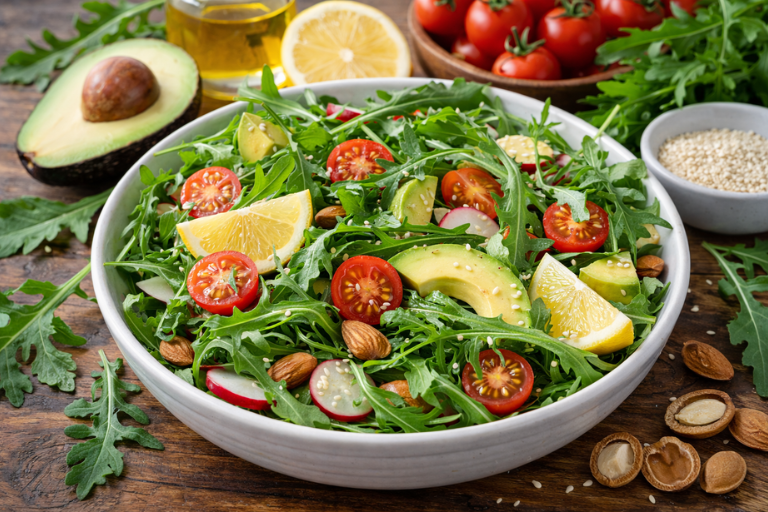
Whether you want crisp freshness or cozy comfort, you’ve got options for using arugula fast. For salads, use it as your main green; its sharp, peppery bite stands out from bland mixes while delivering vitamins K, A, C, folate, antioxidants like beta-carotene and lutein, and minerals with about 25 calories per 100g.
In sautés, toss it into a hot pan to intensify flavor, preserve heat-sensitive vitamins with gentle cooking, and reduce volume so you can eat more. As a cruciferous green, arugula offers anti-inflammatory benefits and antioxidants that may help support long-term health.
Blend baby arugula into smoothies for mild peppery balance, fiber, and antioxidants in five minutes. Pair with banana, mango, or pineapple; try coconut water and lime to mellow intensity.
Blend baby arugula into smoothies for a mellow peppery kick, fiber, and antioxidants in minutes.
For pesto, blitz arugula with nuts, olive oil, and lemon; spoon over pasta, grains, or proteins.
Who Should Limit Arugula and Recommended Servings
From salads to smoothies, it’s easy to load your plate—now here’s how much to eat and who should go easy. For most people, 1–2 cups per day fits well in a balanced diet. One cup has just 5 calories yet delivers about 20% of your daily vitamin K, plus small amounts of vitamin C and folate.
Start modestly to avoid gas or cramping from sulforaphane. Arugula is rich in antioxidants, which can help combat free radicals and support overall health.
If you take warfarin or similar anticoagulants, keep your arugula intake consistent; sudden increases in vitamin K can counteract your medication. Always consult your clinician before changing amounts.
If you have thyroid disease, don’t overdo it—glucosinolates may hinder iodine use. Prone to calcium oxalate stones? Moderate portions since leafy greens carry oxalates.
For nitrate sensitivity (infants, low stomach acid), wash well and store properly.
Frequently Asked Questions
How Does Arugula Compare to Kale or Spinach Nutritionally?
Arugula’s lighter in calories than kale, slightly higher than spinach, with more protein than spinach but less than kale. You’ll get extra calcium and glucosinolates, but fewer vitamins A, C, K, iron, and folate than spinach or kale.
Does Organic Arugula Offer More Benefits Than Conventional?
Yes, you might gain modest benefits. You’ll generally get lower nitrate levels with similar vitamins, minerals, and bioactives. You could also support sustainable practices. Still, both organic and conventional deliver cardiovascular nitric oxide and strong antioxidant, antimicrobial compounds.
Can Arugula’s Peppery Flavor Be Reduced Without Cooking?
Yes. You can mellow arugula without cooking: massage fresh leaves with lemon juice and olive oil, rinse, chill briefly, then dress lightly. Add salt, vinegar, sweetness, and creamy fats like avocado or goat cheese to balance heat.
What Is the Best Way to Store Arugula for Freshness?
Store arugula in a breathable bag lined with damp paper towels in the crisper at about 32°F. For longest freshness, layer leaves between moist towels in a container, don’t expel air, and keep away from the fridge’s rear.
Are There Seasonal Differences in Arugula’s Nutrient Content?
Yes. You’ll see modest seasonal shifts: cooler spring and fall boost glucosinolates and crisp texture. You’ll get higher vitamin A absorption when cooked, but raw delivers more vitamin C and K. Temperature swings generally optimize flavor and nutrients.
Conclusion
You’ve got a simple, powerful ally in arugula. Its antioxidants calm inflammation, glucosinolates support detox and cancer defense, and heart-healthy nitrates help blood flow and pressure. With fiber for digestion, a low glycemic load for steadier sugars, and key nutrients like vitamin K, folate, and C, it earns a spot on your plate. Toss it in salads, sauté it, blend it, or whirl pesto. If you’re on blood thinners or have kidney issues, check with your clinician first.