Top 12 Red Light Therapy Benefits for Skin, Pain Relief, and Performance
You’re about to see how red light therapy can elevate your skin, ease pain, and sharpen performance with simple, science-backed routines. You’ll learn what it is, how it works, which wavelengths matter, and the best ways to use it safely at home. From calming acne to boosting collagen, loosening stiff joints, and speeding recovery, you’ll get clear protocols and timing tips. Start here—and discover which benefits you’ve been missing.
What Is Red Light Therapy and How It Works
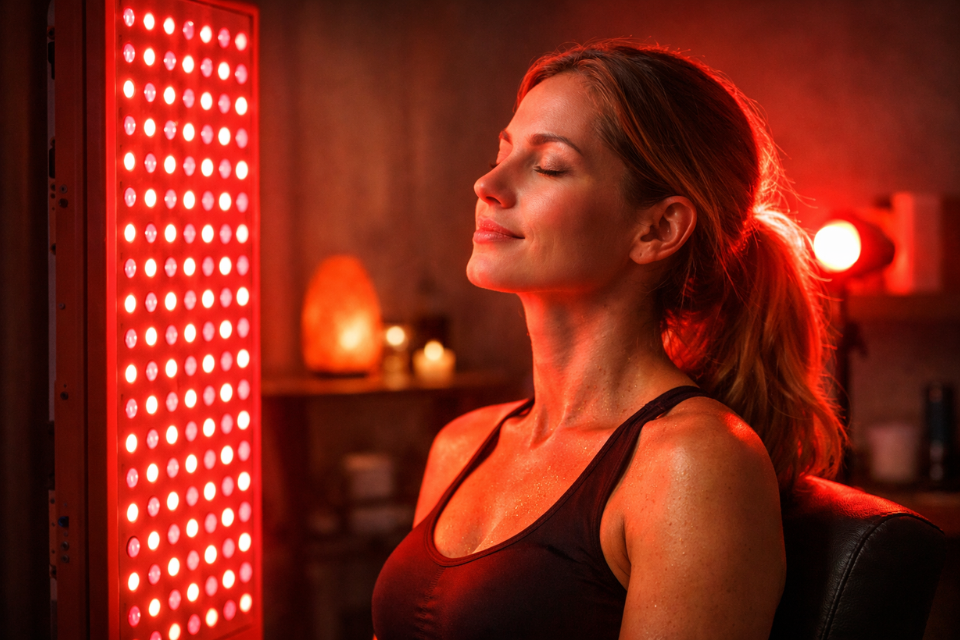
Although it sounds futuristic, red light therapy is a simple, noninvasive treatment that uses low-level wavelengths of red and near-infrared light to stimulate your cells’ natural processes. You sit or stand near an LED device that bathes your skin in specific light. The light penetrates into tissues without heat or damage.
Here’s how it works: photons are absorbed by mitochondrial chromophores, especially cytochrome c oxidase. This boosts electron transport, increases ATP production, and helps normalize cellular signaling.
You may also see reduced oxidative stress and improved microcirculation. Together, these effects support cellular repair, modulate inflammation, and prime your body for healthier skin, joints, and muscles.
Best Wavelengths, Doses, and Session Timing
You’ll get the most from red light therapy by choosing ideal therapeutic wavelengths, typically in the red (around 630–670 nm) and near-infrared (around 810–880 nm) ranges.
Next, match dose to your goal—use lower energy for skin and higher for deeper tissues, measured as energy delivered per session.
Finally, set session timing and frequency—short, consistent sessions several times per week often work better than infrequent, long exposures.
Optimal Therapeutic Wavelengths
While red light therapy looks simple, its benefits hinge on dialing in the right wavelengths, dose, and timing.
You’ll get the most from two bands: red (around 620–660 nm) and near‑infrared (around 810–850 nm). Red targets skin-level tissues—think collagen support, fine lines, and surface inflammation—because it’s absorbed shallower. Near‑infrared penetrates deeper to muscles and joints, aiding recovery and pain relief.
Pick devices that concentrate output near 630–660 nm and 810–850 nm, with narrow bandwidths and consistent irradiance across the panel.
Avoid gimmicky rainbow LEDs. You don’t need “more colors”; you need accurate peaks, steady power, and verified specifications.
Dose And Session Timing
With the target wavelengths in place, results now depend on how much light you deliver and when. Aim for 4–10 J/cm² for skin, 6–12 J/cm² for pain relief, and 10–20 J/cm² for muscle recovery.
Keep device distance consistent to control irradiance. Shorter, more frequent sessions outperform marathons: 5–10 minutes per area, 3–6 times weekly.
For skin, treat in the evening to support repair; for performance, use sessions 1–3 hours pre-workout or immediately post-exercise.
Start low, increase gradually, and pause if you notice overstimulation. Track responses and adjust dose or timing to maintain benefits without plateaus.
Red Light Therapy for Skin: Quick Overview
Two big reasons people try red light therapy for skin are collagen support and calmer inflammation.
You’ll expose skin to red and near‑infrared light that energizes cells, nudges collagen and elastin production, and supports repair. Over time, you may notice smoother texture, a more even tone, and improved firmness.
It can also help reduce visible redness from everyday irritation and support healthier-looking circulation.
You can use it on the face, neck, chest, or hands, and it pairs well with a simple skincare routine.
Clean skin, eye protection when needed, and consistent use matter most. Track photos weekly to spot subtle progress.
Acne and Breakouts: Settings and Protocols
To target acne, you’ll want clear wavelength and dose targets, plus a simple schedule you can stick to.
I’ll outline ideal wavelengths and energy doses, how often to run sessions each week, and when to adjust.
You’ll also get concise pre- and post-care steps to boost results and reduce irritation.
Optimal Wavelengths And Doses
Although many devices promise results, acne responds best to specific red and near‑infrared bands delivered at measured doses. Aim for 630–660 nm red to calm inflammation and 810–850 nm near‑infrared to support deeper repair.
For active breakouts, include 630–635 nm; for redness and healing, 650–660 nm works well.
Target incident energy of 3–8 J/cm² per area. With a 50 mW/cm² device, that’s roughly 60–160 seconds; with 100 mW/cm², 30–80 seconds.
Keep the LED 10–20 cm from skin to balance intensity and coverage. Clean skin first, avoid photosensitizing products, and shield eyes if brightness causes discomfort.
Session Frequency Guidelines
If you want visible acne improvements without overdoing light exposure, start with short, consistent sessions and taper as skin calms.
Begin with 3–5 sessions per week, 8–12 minutes per area, for two weeks. Hold devices 6–12 inches away unless your unit specifies otherwise.
If your skin tolerates this well and breakouts persist, continue the same frequency for another two weeks. Once lesions decrease, drop to 2–3 sessions weekly for maintenance.
Skip daily marathons—more time won’t mean faster clearing and may slow progress. If irritation or flushing appears, reduce either session length or weekly frequency and reassess after one week.
Pre- And Post-Care Steps
Before you switch on the device, cleanse your face with a gentle, non-exfoliating wash and pat dry so light reaches the skin evenly.
Remove makeup, sunscreen, and occlusive products. Skip retinoids, AHAs/BHAs, benzoyl peroxide, or photosensitizing meds before sessions unless cleared by your dermatologist. Use protective goggles if recommended.
After treatment, apply a lightweight, non-comedogenic moisturizer and broad-spectrum SPF in the daytime.
Don’t pick, scrub, or use harsh exfoliants for 24 hours. Keep routines simple: mild cleanser, hydrator, sunscreen.
Disinfect the device surface per manufacturer instructions. Hydrate well. Track skin responses, and adjust session duration or distance if you notice irritation.
For acne-prone skin, consider applying niacinamide post-session to help reduce inflammation and support the skin barrier.
Fine Lines and Collagen: Boosting Firmness
While time and sun exposure chip away at skin’s elasticity, red light therapy steps in to stimulate collagen and smooth fine lines.
You’ll bathe skin in wavelengths that energize mitochondria, prompting fibroblasts to produce fresh collagen and elastin. With consistent sessions, skin feels springier, looks tighter, and creases soften.
Bathe skin in energizing wavelengths; ignite fibroblasts to renew collagen and elastin for tighter, springier skin.
You don’t need heat or downtime. Keep sessions short, steady, and close to the device’s recommended distance. Pair with a peptide or hyaluronic serum to support the matrix you’re rebuilding.
Expect gradual improvements over weeks as turnover unfolds. Maintain a schedule to preserve gains, then taper to a sustainable rhythm that keeps firmness rising.
Consistent support with collagen peptides can enhance skin elasticity, with clinical trials showing improvements after 8 weeks.
Scars, Dark Spots, and Redness: What to Expect
Though results vary by concern, red light therapy can calm inflammation and gradually improve post-acne marks, mild scars, and lingering redness. You’ll likely notice subtle tone evening first, then a smoother look as sessions stack. It doesn’t bleach pigment or erase deep scars, but it can soften edges and reduce contrast so spots look less stark. Here’s what to expect and do:
- Aim for consistent sessions (3–5 times weekly) for 8–12 weeks, then maintain.
- Clean skin, remove makeup, and keep the device the recommended distance.
- Track progress with photos every two weeks to gauge fading and adjust frequency.
Use sunscreen daily to preserve results. Supporting your skin barrier with gentle cleansers and moisturizers that contain natural oils like jojoba or almond can help lock in moisture and complement red light therapy’s effects during dry winter months.
Eczema, Psoriasis, and Irritation: Calming Skin
As you even out spots and redness, you might also want relief from flare‑prone skin. Red light therapy can help calm eczema, psoriasis, and everyday irritation by dialing down inflammatory signals and supporting your skin barrier.
You’ll often notice less itch, fewer dry patches, and smoother texture as circulation and cellular repair improve.
Use consistent, short sessions—typically a few times per week—at a comfortable distance. Clean skin, remove heavy products, and avoid broken skin or active infections.
Pair treatments with gentle moisturizers and sunscreen. Track triggers, adjust frequency, and consult your dermatologist if you’re on prescription topicals or have photosensitive conditions.
Red Light Therapy for Pain and Mobility
You’re looking for relief that actually lasts, and red light therapy may help reduce chronic pain by easing inflammation and supporting tissue repair.
You can also use it to support joint mobility, helping stiff knees, hips, or shoulders move more freely.
With consistent sessions, you may notice shorter recovery times and smoother daily movement.
Chronic Pain Reduction
While chronic pain can feel unrelenting, red light therapy offers a noninvasive way to dial down discomfort and improve mobility.
You’re targeting cells with low-level wavelengths that nudge mitochondria to produce more energy, calm inflammation, and signal tissue repair. Over time, you may notice fewer flare-ups, less stiffness, and better daily function without drugs.
- Aim for consistent sessions: 5–10 minutes per area, 3–5 days weekly.
- Position the device 6–12 inches from skin; clean skin, remove barriers, and protect sensitive eyes.
- Track outcomes—pain scores, sleep quality, activity tolerance—to fine-tune frequency, duration, and timing.
Joint Mobility Support
Even if stiffness limits your range, red light therapy can help joints move more freely by easing inflammation, improving microcirculation, and supporting cartilage and synovial tissue health.
You’ll feel less resistance because mitochondria produce more ATP, powering repair and fluid balance. Consistent sessions can reduce morning stiffness, enhance warmth, and restore glide in knees, hips, shoulders, and fingers.
Use it after workouts or rehab to calm flare-ups and protect mobility gains. Pair with gentle range-of-motion drills and strength work for lasting results.
Start with manufacturer-recommended distances and durations, then track changes in flexion, pain, and daily movement capacity.
Joint Pain Relief and Flexibility Gains
Although joint pain can sideline your daily routine, red light therapy offers a practical path back to comfort and movement. By targeting sore joints with specific wavelengths, you support cellular energy, calm stiffness, and restore range without drugs.
You’ll feel looser, move easier, and bounce back faster from everyday strain.
1) Reduce pain: Consistent sessions can dial down aching knees, hips, shoulders, and hands so you can walk, lift, and twist with confidence.
2) Increase flexibility: Tension eases, letting you stretch deeper and maintain fluid motion through your day.
3) Support joint function: Pair therapy with gentle mobility drills to reinforce smoother, stronger movement patterns.
Wound Healing and Post-Procedure Recovery
After a cut, scrape, or procedure, red light therapy helps your skin kickstart repair and calm inflammation so you recover faster with less discomfort.
You’ll boost cellular energy (ATP), which fuels fibroblasts to lay down fresh collagen and elastin, tightening edges and supporting clean closure. It also improves microcirculation, delivering oxygen and nutrients while clearing waste.
Use it around, not directly on, open wounds unless your clinician approves. Keep sessions short, consistent, and at recommended distances.
You’ll likely notice reduced redness and swelling, quicker scab formation, and better scar quality over time.
Pair therapy with proper cleaning, hydration, and sun protection for best healing.
Red Light Therapy for Performance and Recovery
When you’re pushing hard in training or competition, red light therapy helps your muscles produce more energy, resist fatigue, and bounce back faster. It targets mitochondria, boosting ATP output so you can sustain intensity and recover between sessions.
You’ll likely notice less post-workout soreness, improved flexibility, and fresher legs for your next effort.
1) Boosts performance: Increases cellular energy and blood flow, supporting speed, power, and endurance.
2) Accelerates recovery: Reduces inflammation, muscle damage markers, and DOMS to shorten downtime.
3) Supports resilience: Promotes collagen, tendon health, and joint comfort to handle higher training loads while maintaining form, consistency, and progress across cycles.
How to Use Red Light Therapy at Home Safely
Even with its benefits, you’ll get the best results from red light therapy by using it correctly and safely at home.
Start by choosing a device with medical-grade LEDs (wavelengths around 630–660 nm and 810–850 nm). Read the manual, clean the panel, and position it 6–18 inches from your skin.
Begin with 5–10 minutes per area, 3–5 days weekly. Protect your eyes; wear goggles if the device is intense or near your face.
Don’t use on open wounds, active infections, or suspicious moles. Monitor skin warmth; stop if you feel discomfort.
Stay consistent, track progress, and consult your clinician if you have photosensitive conditions.
Frequently Asked Questions
Can Red Light Therapy Affect Sleep Quality or Circadian Rhythm?
Yes, it can. Evening exposure may delay melatonin and disrupt circadian timing, while morning or daytime sessions can reinforce rhythms. Use bright light early, avoid red light near bedtime, and keep sessions consistent to support better sleep quality.
Is Red Light Therapy Safe During Pregnancy or Breastfeeding?
It’s likely safe when used on small areas, but definitive pregnancy and breastfeeding data are limited. Avoid abdomen, pelvis, breasts, and eyes. Use low doses, short sessions, medical-grade devices, and stop if discomfort occurs. Ask your clinician first.
Does Red Light Therapy Interact With Photosensitive Medications or Conditions?
Yes. You should treat red light therapy cautiously with photosensitive meds or conditions. Drugs like isotretinoin, tetracyclines, sulfonamides, thiazides, amiodarone, and St. John’s wort can increase light sensitivity. Check labels, start low, protect eyes, and consult your clinician.
How Do Travel and Jet Lag Impact Therapy Consistency and Results?
Travel and jet lag disrupt routine, timing, and sleep, reducing therapy consistency and results. You’ll miss sessions, shift circadian rhythms, and alter dose timing. Pack a portable device, schedule alarms, anchor sessions to local mornings, and track adherence.
What Are the Ongoing Costs and Device Maintenance Requirements?
You’ll spend on electricity, occasional replacement parts, and cleaning supplies. You’ll wipe lenses, dust vents, check timers, update firmware, and replace LEDs or power supplies when needed. You won’t need consumables; warranty coverage can reduce unexpected costs.
Conclusion
You’ve got a powerful, noninvasive tool at your fingertips. With the right wavelengths, doses, and timing, you can smooth fine lines, calm acne, and support healthier, firmer skin. You’ll also ease joint pain, reduce stiffness, and speed recovery after workouts or procedures. Stay consistent, track settings, and adjust based on your goals and response. Use eye protection, avoid overheating, and follow safe session times. Start small, build a routine, and let red light therapy elevate your skin, comfort, and performance.