8 Reasons to Switch to Almond Milk: Skin Health, Weight Management, and Digestion
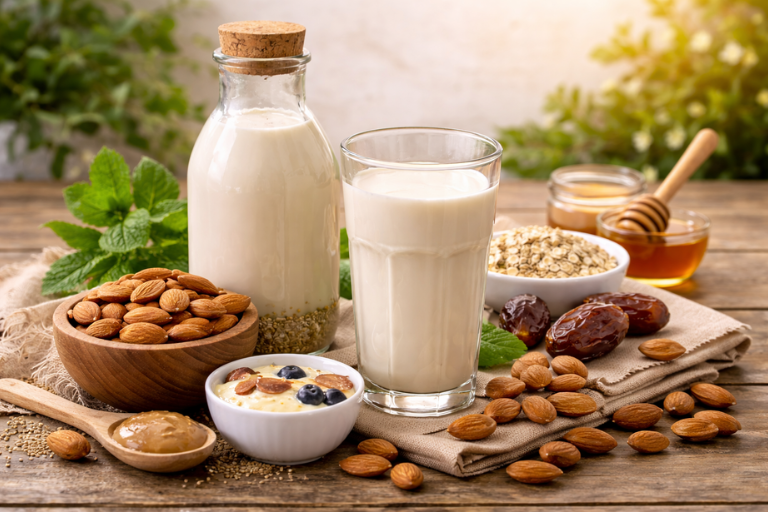
If you’re weighing a switch from dairy, almond milk can quietly work in your favor. It’s rich in vitamin E for clearer skin, low in calories for easier weight control, and naturally lactose‑ and gluten‑free for smoother digestion. You’ll also avoid dairy hormones and high glycemic swings that can trigger oiliness and breakouts. Plus, polyphenols support your gut and immunity. The real surprise is how these benefits stack up when you change just one habit…
Clearer Skin With Almond Milk’s Vitamin E
Although clear skin has many drivers, almond milk’s vitamin E gives you a tangible edge: a cup can deliver roughly 6.9 mg—over half your daily need—supporting your skin’s antioxidant defenses that fight acne-triggering oxidative stress and redness. You tap into a potent antioxidant that shields lipids in your skin barrier, helping limit damage that can lead to breakouts and premature aging.
Almond skins add polyphenols that amplify vitamin E’s effects, boosting redox balance and reinforcing defense against inflammation. Additionally, incorporating almond-containing meals can further enhance your vitamin E intake and overall health benefits. Choose unsweetened varieties to avoid irritants, and check labels—vitamin E fortification varies, with some listing about 3.3 mg per serving. Almond milk is lactose-free, making it suitable for those avoiding dairy that may aggravate acne.
Almond milk’s vitamin E fortifies skin defenses, easing oxidative stress and redness for clearer, calmer complexions.
Consistency matters: enjoy almond milk regularly alongside whole almonds, which supply 12.8 mg per 50 g, to round out intake and keep your skin calm, resilient, and clearer.
Fewer Breakouts by Ditching Dairy Hormones
While acne has many triggers, cutting dairy can quickly reduce one big driver: hormones that crank up oil production.
Milk carries androgens and IGF-1 precursors that stimulate sebocytes, enlarge follicles, and clog pores. Dairy-derived amino acids spike insulin and hepatic IGF-1, accelerating keratinocyte growth and keratinization—prime conditions for breakouts. IGF-1 also boosts adrenal and gonadal androgen synthesis, pushing even more sebum. Observational research in youths and young adults links dairy to higher acne odds, with an overall odds ratio around 1.25 across 14 studies. Stress can further exacerbate these conditions, leading to more severe breakouts.
Epidemiology backs this up: any dairy raises acne odds in ages 7–30. Risk climbs with intake, and skim milk shows the strongest association—often amplified by added whey proteins.
Reported odds ratios include 1.48 for total milk, 1.82 for skim, and up to 2.61 comparing highest to lowest dairy. Not everyone reacts; genetics and lifestyle matter.
Still, swapping to almond milk removes these hormone signals, helping you see fewer eruptions.
Low Glycemic Almond Milk for Calmer, Less Oily Skin
Because steady blood sugar keeps oil glands in check, choosing unsweetened almond milk can calm acne-prone skin. Its low glycemic index helps you avoid the glucose spikes that drive hormonal imbalances, excess sebum, and clogged pores. By keeping levels steady, you reduce flare-ups and keep shine under control.
Unsweetened varieties skip added sugars that irritate skin like other high-glycemic drinks. You also sidestep saturated fats and dairy hormones that can stimulate oil glands. Plant-based and non-comedogenic, almond milk won’t block pores. Incorporating a lightweight moisturizer into your skincare routine can further help maintain hydration without adding shine.
Almond milk’s vitamin E and antioxidants help soothe inflammation and support your skin barrier, defending against oxidative stress and environmental damage. Studies on almond intake show reduced serum CRP, a key inflammation marker. Many brands are fortified with vitamin D, which supports skin barrier function and works with calcium to promote overall skin health.
Choose clean-label, unsweetened cartons, and you’ll support calmer, less oily, more resilient skin.
Polyphenols in Almond Milk That Help Keep Skin Clear
Even in small sips, almond milk delivers polyphenols—especially from almond skins—that help keep your complexion calm and clear.
These compounds up-regulate your antioxidant defenses, scavenge free radicals, and guard skin from UV-driven oxidative stress that speeds early aging. By extending LDL oxidation lag time and modulating plasma oxidative markers, they help stabilize your internal redox balance that shows up as calmer skin. Almond milk is also often fortified with calcium, vitamin D, and vitamin E, supporting skin health from the inside out.
Almond polyphenols fortify antioxidants, neutralize free radicals, and steady redox balance for visibly calmer skin.
You’ll also get anti-inflammatory support: polyphenols and healthy fats can reduce redness, irritation, and discomfort linked to sensitivity or eczema, lowering risks tied to chronic inflammatory skin issues.
Clinical data backs it up—higher almond skin polyphenol doses boost GSH and GPx activity while decreasing GSSG within hours.
Note: Polyphenols are bioavailable in milk, yet almond skin fiber can slow release during digestion, so consistency matters.
Easier Weight Control With Low‑Calorie Almond Milk
Although it’s rich and creamy, unsweetened almond milk is a low‑calorie swap that helps you trim daily intake without feeling deprived. One cup delivers about 30–50 calories—up to 50% fewer than cow’s milk—so every latte, smoothie, or bowl of cereal shaves calories without much effort.
Because it’s the lowest‑calorie common milk alternative, you can control portions more easily and still enjoy familiar drinks. Swap it for dairy and you’ll cut beverage calories, helping a deficit add up over the week. Daily almond intake has been shown to lower LDL‑C, contributing to improved heart health alongside weight management benefits.
Research shows that when almonds enter the diet, people naturally eat fewer other calories—up to 54–78% of added energy gets displaced. Trials link almond‑based patterns to reduced body fat, smaller waists, and modest weight loss, while preserving fat‑free mass.
You’ll also feel fuller, thanks to a little fiber and healthy fats.
Lower Glycemic Load to Curb Fat Storage
On top of cutting calories, unsweetened almond milk helps you manage blood sugar so your body stores less fat.
With a glycemic index around 25–30—Almond Breeze Original tests at 25—it’s firmly low GI, meaning it won’t spike glucose. Its glycemic load sits near 3.9–4.6 per cup, well under the target of 10, signaling slower sugar absorption and steadier insulin. That steadiness helps limit fat storage after meals. As a low GL food, almond milk supports stable blood sugar and overall metabolic health.
Low-GI almond milk steadies glucose and insulin, curbing post-meal fat storage.
You also take in very few carbs—typically 1–3 grams per cup—so the overall glycemic impact stays minimal.
Compared with oat milk (GI 60–70) and rice milk (GI 54–92), almond milk keeps you on a flatter glucose curve, similar to cow’s milk (GI 20–34) but with less sugar.
Choose unsweetened varieties to maintain stable energy and support leaner results.
Gentler Digestion With Lactose‑ and Gluten‑Free Almond Milk
Because almond milk is naturally lactose- and gluten-free, it’s easier on your gut and a smart swap if you’re sensitive to either. If lactose triggers bloating, gas, or cramps, switching spares you the undigested milk sugar that ferments in the colon.
It’s also a low-FODMAP choice, so you’re less likely to experience IBS flare-ups from rapidly fermented short-chain carbs. Enriched almond milk often provides calcium, supporting bone health while offering a dairy-free option.
You’ll get vitamin E’s anti-inflammatory support, which can help calm an irritated digestive tract and maintain the mucosal lining. The drink’s healthy fats aid absorption of fat-soluble vitamins A, D, E, and K, while fortified options often supply meaningful calcium.
Although almond’s phytic acid may slightly reduce mineral uptake compared with dairy, staying hydrated with almond milk still supports smooth digestion and overall gut balance.
Fermented Almond Milk Polyphenols That Ease Oxidative Gut Stress
If gentler digestion got your attention, fermented almond milk takes it further by arming your gut with more accessible polyphenols that counter oxidative stress.
Fermenting almond milk with Bifidobacterium longum or B. lactis boosts total phenolic and flavonoid content, especially by day 21 at 4°C, with B. longum leading. Fermentation also reduces phytates, so you absorb more polyphenols.
Those polyphenols favor helpful microbes—Bifidobacterium and Lactobacillus—while keeping pathogens in check. Probiotics like L. reuteri and S. thermophilus stay viable for weeks, sustaining benefits. Polyphenols modulate gut microbiota and support intestinal defenses by promoting mucin and IgA production.
As these microbes metabolize polyphenols, they generate SCFAs—acetate, propionate, and butyrate—that strengthen your gut barrier, fuel enterocytes, and calm inflammation.
Clinically relevant effects follow: improved iron uptake, higher mucin and IgA, and fewer putrefactive compounds.
Net result—less oxidative, inflammatory gut stress.
Frequently Asked Questions
How Does Almond Milk Compare Nutritionally to Dairy and Other Plant Milks?
It’s lowest in calories and carbs, but you sacrifice protein versus dairy and soy. You’ll get low saturated fat, variable fortification (calcium, vitamin D), and less sugar than oat or rice. Choose soy for protein parity.
Are There Additives or Gums in Almond Milk That May Cause Sensitivities?
Yes. You might react to carrageenan, xanthan, guar, gellan, or locust bean gum. Symptoms can include bloating or inflammation. Check labels, choose higher-almond or gum-free brands like Elmhurst or MALK, or make simple homemade almond milk.
Which Almond Milk Types (Unsweetened, Fortified, Organic) Are Best for Daily Use?
Choose unsweetened organic for daily use—you’ll get pure ingredients, no gums, and reliable frothing. If you need added nutrients, pick thoughtfully fortified options with minimal thickeners. Prioritize brands like Malk or Three Trees; avoid low-almond, heavily emulsified varieties.
Can I Cook and Bake With Almond Milk Without Texture or Flavor Issues?
Yes. Substitute almond milk 1:1. Choose creamy, unsweetened brands. Add a little fat, underbake slightly, or add berries for moisture. Reduce bake time; muffins cook faster. Expect a mild nutty note that complements most recipes.
Is Almond Milk Environmentally More Sustainable Than Dairy Milk Production?
Yes. You’ll cut emissions by about two-thirds, shrink land use roughly tenfold, and reduce eutrophication. You’ll usually save water per glass, though almonds can strain water-stressed regions. Overall, you’ll lower your footprint compared with dairy.
Conclusion
When you switch to almond milk, you give your skin, weight, and gut a clean boost. You’ll tap into vitamin E for glow, skip dairy hormones that trigger breakouts, and steady oil production with a low glycemic option. Its polyphenols support a balanced microbiome and stronger immunity. With fewer calories and a lower glycemic load, you’ll manage weight more easily. Plus, it’s naturally lactose- and gluten-free, so you’ll digest comfortably. Make the swap—you’ll feel and see the difference.