Soaked vs. Raw Almonds: 5 Reasons Why Soaking Them Multiplies the Health Benefits
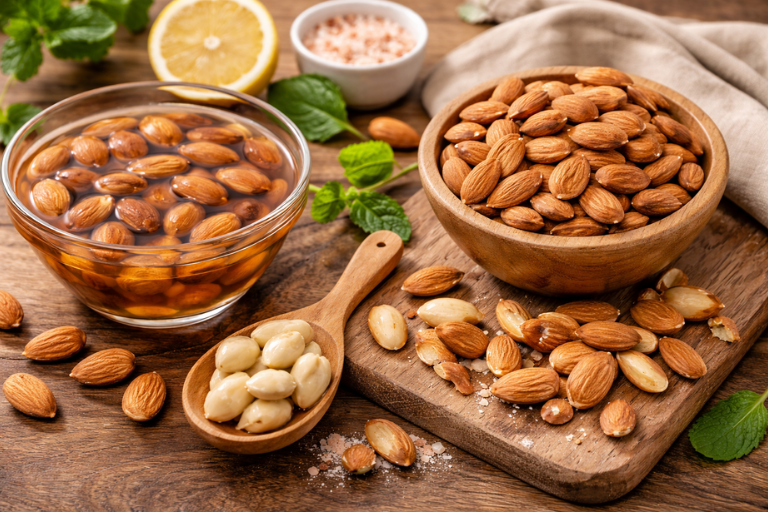
If you’ve ever wondered whether soaking almonds really changes anything, you’re not alone. When you soak them, you soften the texture, make them easier to digest, and strip away some skin-based tannins that can affect flavor. You may also reduce enzyme inhibitors and get a creamier base for smoothies and sauces. But does soaking boost nutrient absorption—or cost you some? And when are raw almonds the smarter pick?
Soaked vs. Raw Almonds: Which Should You Choose?
Although both options are nutritious, you should choose between soaked and raw almonds based on your goals: pick raw if you want maximum antioxidants, crunch, and convenience, or choose soaked if you prefer a softer, less bitter bite that may be easier to chew and gentler on your stomach—just note that current research doesn’t consistently show better nutrient absorption from soaking, and removing the skin can reduce antioxidant content.
Choose raw for antioxidants and crunch; soaked for softer texture—research shows no clear absorption advantage.
If antioxidants matter most, go raw; the brown skin concentrates protective compounds and preserves vitamin E. Soaked almonds are often recommended in Ayurveda and by modern nutritionists for being easier to digest.
If texture and taste sway you, soaked almonds feel smooth and buttery but require planning.
Evidence on phytic acid is mixed: some studies show minimal reduction after soaking, and a 2020 review found no consistent bioavailability gains.
Either way, you’ll still get healthy fats, protein, and minerals.
Better Digestion With Soaked Almonds: What to Expect
If you’re eyeing soaked almonds hoping for easier digestion, here’s what the evidence and experience suggest.
Soaking softens the nut and loosens skin-based enzyme inhibitors, so you may chew and swallow them more easily—helpful if you struggle with hard textures. Some traditions say they “feel” gentler, and many people like their softer bite.
But controlled trials don’t back digestive advantages. An 8-week crossover study found no improvements in gut tolerance, transit time, stool consistency, or overall gastrointestinal acceptance. In fact, whole soaked almonds scored higher for flatulence, and sliced soaked almonds were liked less for future eating.
Almonds themselves are generally well tolerated and can boost butyrate production, reflecting a modest prebiotic effect, with little change in microbiota composition. Limited scientific evidence supports claims that soaking enhances nutrient bioavailability.
Bottom line: soak for texture and preference, not proven digestibility gains.
Do Soaked Almonds Lower Phytic Acid and Tannins?
Despite the popular claim, soaking almonds barely lowers phytic acid and mainly helps by loosening the skin where tannins sit.
Studies show less than a 5% drop after 12–24 hours, with some tests finding soaked whole almonds at 563 mg/100g phytate versus 531 mg/100g in raw. Sliced or chopped soaked almonds hover around 548 mg/100g, showing no meaningful change. In some cases, chopping plus soaking trims phytate a little, but it can also reduce mineral content. Soaking may slightly aid fat absorption, but it can also decrease mineral availability.
Where soaking helps is tannins. Water loosens the brown skin, letting you peel it off—removing the bitter compounds that sit on the surface.
That peel-off step lowers tannin exposure and improves flavor.
Bottom line: soak to slip the skins and cut tannins, not to meaningfully reduce phytic acid.
Will You Absorb More Minerals and Vitamin E After Soaking?
Soaking almonds won’t help you absorb more minerals or Vitamin E. Studies show mineral concentrations drop after soaking—especially in chopped almonds—and phytate-to-mineral ratios don’t improve.
Research on whole almonds reports little or no change in the availability of iron, calcium, magnesium, phosphorus, or zinc. Even when soaking slightly reduces phytic acid (about 4%–5%), that shift hasn’t translated into better mineral absorption in humans. Soaking activates enzymes that can aid digestion and make almonds easier on the stomach.
Vitamin E doesn’t get a clear boost either. While soaking might aid fat absorption in theory, clinical evidence hasn’t shown enhanced Vitamin E bioavailability, and measured Vitamin E levels differ minimally between soaked and raw almonds.
Raw almonds also keep more antioxidants, particularly in the skin.
Bottom line: choose soaked or raw based on preference, not because soaking increases mineral or Vitamin E absorption.
Taste, Texture, Time, and When Raw Almonds Win
Though both styles have fans, you’ll notice clear trade-offs in taste, texture, and time that shape which almond works best for you.
Soaked almonds taste milder and less bitter because removing the skin reduces tannins, which also coaxes out a subtle sweetness many prefer for daily snacking—especially kids and older adults. This also supports better digestion by reducing tannins and making key nutrients more bioavailable.
Raw almonds hit harder: a robust, nutty bite with a bitter edge some love.
Texture splits the decision, too. Soaked almonds turn soft and smooth, easy on teeth and sensitive gums.
Raw almonds stay firm and crunchy; if you crave that snap, they win. You can roast soaked almonds to regain some crunch.
Time and practicality matter. Soaking takes 6–12 hours and shortens storage to three days.
Raw almonds need no prep, store longer, and travel better.
Frequently Asked Questions
Do Soaked Almonds Need Refrigeration, and How Long Do They Safely Keep?
Yes—refrigerate soaked almonds in an airtight container. Change the water daily. Eat them within 2 days for best quality; they can last up to 7 days. Discard if water’s murky, smells off, or a hazy film appears.
Is It Better to Peel Soaked Almonds or Keep the Skins On?
Keep skins on for antioxidants and heart-protective polyphenols; peel after soaking if you want better mineral absorption and easier digestion. You can alternate: eat peeled in the morning for bioavailability, keep skins other days for added antioxidant defense.
Does Soaking Affect Almond Allergenicity for Nut-Sensitive Individuals?
No—soaking doesn’t reduce almond allergenicity. You’ll still face tree nut allergy risks. Hydration alone leaves allergenic proteins intact; meaningful reduction needs autoclaving or similar. If you’re only skin-sensitive, you can peel soaked almonds, but consult your clinician.
Can You Dehydrate Soaked Almonds to Regain Crunch Without Nutrient Loss?
Yes. Dehydrate soaked almonds at low heat—ideally 95–115°F—for 12–24 hours to regain crispness while keeping enzymes and most vitamins intact. You’ll concentrate fats and minerals, reduce moisture for shelf life, and minimize nutrient loss.
Are There Food Safety Risks Like Mold or Bacteria When Soaking?
Yes. Soaking adds moisture that can let Salmonella, Listeria, E. coli, and molds grow, especially warm or prolonged. You’ll reduce risk by soaking ≤8 hours at ≤15°C, refrigerating, rinsing, thoroughly drying, using clean tools, and storing cold.
Conclusion
Bottom line: if you’re after easier digestion, a gentler flavor, and creamier texture for smoothies or spreads, you’ll get more mileage from soaked almonds. You’ll likely tolerate them better, peel them easily to cut tannins, and enjoy them more—so you may eat them more consistently. But don’t overthink it: raw almonds still deliver fiber, protein, and vitamin E. Choose soaked when you want comfort and versatility, raw when you want crunch, convenience, and long shelf life.