7 Protein-Packed Benefits of Chickpeas for Plant-Based Diets
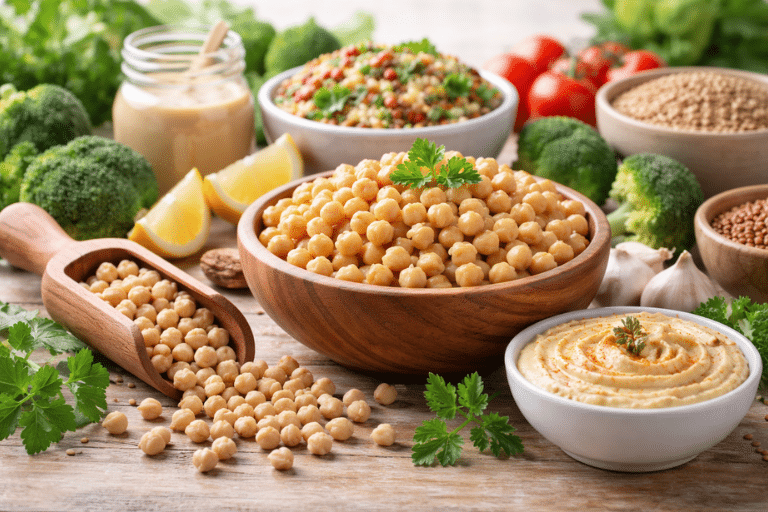
If you’re building a plant-based diet, chickpeas can quietly do a lot of heavy lifting. They offer respectable protein for muscle repair, plus fiber that keeps you full and supports steady energy. You’ll also get heart-friendly nutrients and iron that can help ward off fatigue. And because they’re so versatile, you can work them into almost any meal without much effort. But the real advantage of chickpeas goes beyond their basic nutrition…
How Much Protein Do Chickpeas Really Provide?
Surprisingly protein-rich for their size, chickpeas deliver about 8–9 grams of protein per 100 grams cooked, which works out to roughly 14.5 grams in a 1-cup serving. A half-cup cooked portion gives you about 6–7 grams, so even modest servings add up quickly. Thanks to their rich nutrient profile, chickpeas also supply key minerals like iron, zinc, and magnesium alongside their protein content. Additionally, adequate magnesium intake is essential for energy production, making chickpeas a great choice for those seeking plant-based protein.
If you prefer canned chickpeas, 1 cup drained still provides around 11 grams of protein.
When you look at raw or dried chickpeas, protein density jumps: 100 grams dry offers about 19–20 grams, or roughly 38% of the daily value.
Once cooked, ½ cup dry typically yields about 6 grams. Overall, a cooked cup covers about 29% of a 50-gram daily protein target, making chickpeas a cost-effective, nutrient-dense plant protein.
How Chickpea Protein Supports Muscle Repair and Growth
Although chickpeas don’t match whey scoop for scoop, their protein still plays a clear role in muscle repair and growth. You get a complete protein with all essential amino acids, including plenty of lysine, which many plant foods lack. Additionally, the immune system support from chickpeas can enhance overall health, allowing for better workout recovery.
Chickpea protein supports muscle repair and growth with complete, lysine-rich amino acids—even if it’s not whey
Its DIAAS of about 76 and in vitro digestibility near 80% mean your muscles can actually use what you eat. Spreading chickpea protein across meals rather than in a single serving can further support absorption and muscle recovery throughout the day.
If you’re active, chickpea protein helps supply the amino acid building blocks you need within the 1.3–2.2 g/kg daily protein range. Isolates concentrated to 80–90% protein by weight make hitting those targets easier, especially when you pair chickpeas with soy, wheat, or other proteins to boost BCAAs.
This combo supports recovery, preserves lean mass, and helps older adults combat age-related muscle loss.
How Chickpeas Support Healthy Weight and Fullness
When you add chickpeas to your meals, you get a powerful combo of protein, fiber, and slow-digesting carbs that keeps you full and naturally reins in calories.
Their soluble fiber adds bulk, slows digestion, and boosts satiety, so you feel satisfied longer and naturally eat less. In studies, a single chickpea serving (about ¾ cup) led to 31% greater fullness and cut energy intake at later meals by up to 98%. One study even found that chickpeas could lower blood glucose by around one-third compared to white bread, while still helping people compensate for most of the calories they ate earlier. This is similar to how omega-3 fatty acids can help manage blood sugar levels effectively.
Because chickpeas have a low glycemic index and resistant starch (amylose), they release glucose slowly, preventing spikes, crashes, and the cravings that follow.
This steadier blood sugar supports healthier insulin levels, limits visceral fat storage, and helps you manage weight, even without strict calorie restriction.
Easy Ways to Add Chickpea Protein to Everyday Meals
You know chickpeas help you stay full and steady your blood sugar; now it’s about putting that power on your plate all day long.
Start at breakfast: stir chickpea flour into pancake or waffle batter, or blend cooked chickpeas into smoothie bowls for an easy 8–9 grams of protein per 100 grams. Chickpea granola, roasted chickpeas, or chickpea pasta give you quick, protein-strong options. With their low glycemic index and moderate glycemic load, chickpeas can help support more stable blood sugar throughout the day.
At lunch and dinner, build meals around chickpeas for complete amino acid coverage when you pair them with whole grains.
For snacks, keep portable chickpea choices on hand.
- Chickpea flour pancakes or waffles
- Smoothie bowls with blended chickpeas
- Hummus wraps or sandwiches
- Roasted chickpea grain bowls or salads
- Dry-roasted chickpeas, hummus, or chickpea chips
How Chickpeas Help Manage Blood Sugar and Energy
Because chickpeas digest slowly and release glucose at a steady pace, they’re a smart carb choice for keeping your blood sugar and energy on an even keel. Their low glycemic index means your body absorbs their complex carbohydrates gradually, avoiding the sharp spikes and crashes you’d get from refined starches. Diabetes affects one in eleven adults worldwide, so choosing low-glycemic foods like chickpeas can be a meaningful everyday step in supporting healthier blood sugar control.
Slow-digesting chickpeas deliver steady glucose, avoiding the sharp blood sugar spikes and crashes of refined carbs
You also benefit from chickpeas’ high fiber and protein. Soluble fiber, including raffinose, slows sugar absorption, while insoluble fiber and resistant starch further delay digestion.
Together with plant-based protein, this combination blunts post-meal glucose and insulin surges and helps you feel full longer.
Clinical trials back this up: compared with potatoes, wheat, pasta, and rice, chickpeas markedly reduce postprandial glucose responses, making them a reliable base for steady, day-long energy.
How Chickpeas Support Heart Health
Steady blood sugar is only part of chickpeas’ cardiometabolic story—these little legumes also work on multiple fronts to protect your heart.
Their soluble fiber helps pull cholesterol from your bloodstream, lowering total and LDL levels in controlled 12–20 week trials. When you swap processed foods for chickpeas, you also cut sodium while adding potassium, magnesium, and plant protein that support healthier blood pressure and vessel function. Chickpeas also supply antioxidants and phytochemicals that may help protect blood vessels from oxidative damage and support long-term cardiovascular health.
Here’s how chickpeas fit into your heart-protective toolkit:
- Lower total and LDL cholesterol through soluble fiber and polyunsaturated fats
- Support normal blood pressure with potassium, magnesium, and ACE-inhibiting peptides
- Contribute to lower triglycerides when replacing refined carbohydrates
- Provide fiber linked to reduced stroke and coronary heart disease risk
- Help calm low-grade inflammation that underlies cardiovascular disease
How Iron in Chickpeas Helps Prevent Anemia
Iron-rich chickpeas quietly pull a lot of weight in preventing anemia, especially if you eat little or no meat. One cup gives you 4.7 mg of non-heme iron—about 26% of your daily value—along with zinc and folate to support healthy red blood cell formation. Because chickpeas are also a good source of dietary fiber, they can help support overall blood health by improving cholesterol levels and supporting heart function.
Iron-rich chickpeas help prevent anemia, offering non-heme iron plus zinc and folate for healthy red blood cells
Iron lets your blood carry oxygen, so getting enough helps you avoid fatigue, weakness, and shortness of breath.
Because chickpeas provide plant-based iron, you’ll absorb more when you pair them with vitamin C. Their small vitamin C content (2.13 mg per cup) helps, but adding lemon juice, tomatoes, or peppers boosts absorption further.
Regularly eating chickpeas, especially alongside vitamin C–rich foods, can lower your risk of iron deficiency anemia, particularly if you’re vegan or vegetarian.
Frequently Asked Questions
Are Chickpeas a Complete Protein or Should They Be Combined With Other Foods?
You can call chickpeas “complete,” but they’re low in methionine and cysteine, so you’ll get better balance if you combine them with grains, nuts, or seeds over the day rather than stressing about every meal.
Can People With Digestive Issues or IBS Tolerate Chickpeas Well?
You might tolerate chickpeas in small, carefully prepared portions, but many people with IBS react poorly. Start with ¼ cup canned, well-rinsed, increase slowly, drink water, and consider alpha-galactosidase. Stop if pain or significant bloating returns.
Do Canned Chickpeas Offer the Same Nutritional Benefits as Dried and Cooked Chickpeas?
They’re very similar, but not identical. You’ll get comparable protein, fiber, and calories from both. Dried chickpeas give you more folate and minerals with almost no sodium, while canned versions trade some nutrients for convenience and higher salt.
How Do Chickpeas Compare Nutritionally to Other Plant-Based Protein Sources Like Lentils or Tofu?
You’ll find chickpeas higher in protein and fiber than lentils but lower in protein quality than tofu. You get great satiety and gut support, yet you’ll still pair chickpeas with grains to balance amino acids.
Are There Any Allergy or Safety Concerns Associated With Eating Chickpeas Regularly?
Yes, you should consider allergies and cross‑reactivity. If you’ve peanut, lentil, pea, or tree nut allergies, get evaluated. Regularly check labels, watch for hidden chickpea ingredients, and carry prescribed emergency medication if you’re sensitized.
Conclusion
Chickpeas give you an easy, protein-packed way to strengthen your plant-based diet. You’ll support muscle repair, stay fuller longer, and better manage your weight and blood sugar. Their fiber and heart-healthy nutrients work together to protect your cardiovascular system, while their iron helps lower your risk of anemia. When you toss chickpeas into salads, stews, bowls, or snacks, you’re not just adding flavor—you’re building a stronger, more energized you with every bite.