6 Healing Benefits of Bromelain: Why Pineapple Core Is Good for Joint Pain
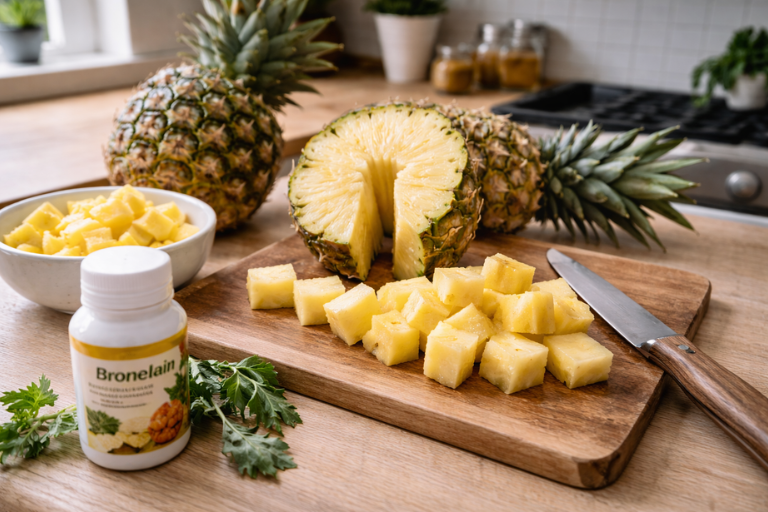
If your knees ache or your hands stiffen after a long day, bromelain from pineapple’s core might help. You’ll find it reduces inflammation, eases swelling, and may rival common pain relievers without the usual stomach upset. It can also support recovery after sprains or surgery by limiting bruising and helping tissues bounce back. But how does it work, what dose makes sense, and who should avoid it? Let’s unpack the six benefits that matter most to you.
Bromelain for Joints: What It Is and How It Works
Bromelain is a blend of protein-digesting enzymes naturally found in pineapple, especially its stem, that’s often used to support joint comfort. You’re getting a crude aqueous extract rich in thiol endopeptidases and related enzymes, active in a pH near neutral.
Commercial products typically come from the stem, where concentrations are highest, though the fruit, peel, core, and juice also contain it. Stem bromelain is identified by EC 3.4.22.32, while fruit bromelain is EC 3.4.22.33.
Here’s how it works: as a cysteine protease complex, bromelain hydrolyzes peptide bonds, breaking large proteins into smaller fragments. Its thiol group drives this internal bond-cleaving action.
In the gut, a portion is absorbed and reaches your bloodstream, where it can lower bradykinin and influence mediators tied to swelling. It remains active around pH 6–7.
Manufacturers extract, concentrate, and dry it for stable potency.
Bromelain for Joint Pain and Swelling: What the Evidence Shows
Knowing how this pineapple-derived enzyme works in theory sets up the real question: does it ease joint pain and swelling in practice? Evidence is mixed but encouraging.
This pineapple-derived enzyme may ease joint pain and swelling—evidence remains mixed yet encouraging.
In knee osteoarthritis, one randomized trial using 800 mg/day for 12 weeks found no significant WOMAC advantage over placebo. Yet multiple studies report benefits: symptom reductions of 41% at 200 mg/day and 59% at 400 mg/day in mild acute knee pain; dose-dependent gains in stiffness and function favoring 400 mg/day; and meta-analysis showing modest pain superiority versus controls. Importantly, many trials were short and methodologically limited, so further studies are needed to confirm effectiveness and define optimal dosing.
Several comparative trials found bromelain outperformed diclofenac on pain and Lequesne scores.
Mechanistically, you reduce edema and nociception by lowering fibrinogen, bradykinin, prostaglandin E2, and thromboxane A2, with oral proteolytic activity retained.
Most adverse effects are mild; evidence is stronger for OA than inflammatory arthritis.
Bromelain vs. NSAIDs for Inflammation and Pain
While NSAIDs remain the default for short-term pain and inflammation, head-to-head data suggest bromelain can match their analgesic punch in several settings with a gentler safety profile.
You’ll see comparable pain relief to diclofenac by 12–72 hours, though diclofenac edges bromelain at 6 hours. A randomized double-blinded trial in patients with irreversible pulpitis found bromelain and diclofenac provided equal overall postoperative analgesia, with diclofenac better at 6 hours and bromelain comparable by 12 hours, and bromelain showing fewer adverse effects.
Additionally, bromelain’s anti-inflammatory properties are beneficial in reducing joint pain without the side effects commonly associated with NSAIDs.
Bromelain also outperforms paracetamol for postoperative pain and matches ibuprofen for orthodontic pain, with no advantage for either in delayed-onset muscle soreness.
Mechanistically, bromelain lowers bradykinin, prostaglandin E2, thromboxane B2, and plasma kinin in a dose-dependent fashion and inhibits proinflammatory prostaglandin synthesis—actions that help resolve edema.
Safety’s the differentiator: oral bromelain is non-toxic and causes fewer gastrointestinal, cardiovascular, and renal issues than NSAIDs.
It’s a practical option when NSAIDs are contraindicated, and bromelain-trypsin combinations show NSAID-comparable anti-inflammatory benefits.
Recovery After Injury or Surgery: Swelling, Bruising, and Wound Healing
After an injury or surgery, you’re likely focused on swelling, pain, bruising, and how fast the wound will heal—and that’s where bromelain may help.
As a proteolytic enzyme, it digests fibrin, aiding fluid clearance from tissues after trauma. It also appears to slow conversion of prothrombin to thrombin and plasminogen to plasmin, mechanisms tied to edema control. Incorporating an anti-inflammatory diet can further support healing and reduce inflammation during recovery.
Pain relief shows the most consistent signal: decades of research report reductions, including dose-dependent relief in healthy adults with acute knee pain and benefits when applied to open blisters.
Findings on swelling are mixed; several trials noted less inflammation and faster edema reduction, but many results weren’t statistically significant. Evidence suggests fewer bruises and shorter soft‑tissue healing time.
In chronic and burn wounds, bromelain-based debridement selectively removes devitalized tissue and showed superior complete debridement rates versus control. In exploratory clinical studies of chronic wounds, bromelain-based debridement achieved substantial removal of necrotic tissue with an average of about two to six daily applications and had few serious adverse events, highlighting its potential as a sharp debridement alternative.
Safe Use of Bromelain: Doses, Forms, and Interactions
You’ve seen how bromelain may ease pain, swelling, and support wound care—now use it safely by matching dose, form, and timing to your goal.
For general use, 200–2,000 mg daily is typical; many stick to 80–400 mg per dose, 2–3 times daily. For osteoarthritis or broader inflammation, 1,000–2,000 mg daily in divided doses is common.
Take it with meals to aid digestion (and before your heaviest meal), or on an empty stomach for anti-inflammatory or allergy support. Consistency matters—don’t double a missed dose. To preserve potency, store bromelain in a cool, dry place away from direct sunlight and moisture.
Capsules or tablets are standard; some combine bromelain with quercetin. Topicals can help skin but may trigger allergies.
Side effects include stomach upset or diarrhea, and rarely severe reactions. It may raise bleeding risk, interact with blood thinners and tetracyclines, and should be stopped 2 weeks pre-surgery.
Who Should Use Bromelain (and Who Shouldn’t) and When to Seek Care
Although bromelain shows promise for easing pain and swelling, it isn’t right for everyone—and knowing where you fit helps you use it safely. You may consider it if you have osteoarthritis, musculoskeletal pain, tendon injuries, or sinusitis, or you’re an adult seeking early evidence for knee pain relief. It may also aid burns under medical guidance. Some evidence suggests it may help reduce pain and swelling, but there is limited evidence from clinical trials supporting its efficacy and safety, especially for ME/CFS. Additionally, incorporating spicy foods into your diet may also provide complementary benefits for overall health.
Avoid bromelain if you’re allergic to pineapple, latex, wheat, celery, carrot, fennel, cypress or grass pollen; have bleeding disorders; asthma; heart, liver, or kidney disease; stomach ulcers; are pregnant or breastfeeding; or have surgery scheduled—stop at least two weeks before.
Use caution if you take blood thinners, aspirin, NSAIDs, antibiotics, or cancer drugs; have heavy periods; rapid heartbeat; or ulcerative colitis or UTIs.
Seek care for allergic signs, GI distress, bruising/bleeding, or persistent symptoms.
Frequently Asked Questions
Can Bromelain Be Combined With Physical Therapy for Better Joint Outcomes?
Yes. You can combine bromelain with physical therapy for better joint outcomes. It may reduce pain, swelling, and fatigue, support muscle recovery, and improve function. Check interactions, dosing, and surgery timing with your clinician, especially if using anticoagulants.
Does Eating Pineapple Provide Enough Bromelain for Therapeutic Effects?
No. When you eat pineapple—even with the core—you won’t reach therapeutic bromelain levels. Typical juice or flesh falls short of doses used in studies. If you want clinical effects, use standardized supplements to meet target milligrams.
Is Enteric-Coated Bromelain More Effective Than Standard Capsules?
Yes—enteric‑coated bromelain’s typically more effective. You’ll protect it from stomach acid, preserve potency, and boost absorption. Studies using coated forms show stronger joint comfort, comparable COX‑2 reduction post‑digestion, and effective doses around 500 MCU four times daily or up to 2,400 GDU/day.
How Long Should Bromelain Be Taken Before Expected Benefits Appear?
You can expect initial relief within 1–3 weeks, with many studies showing meaningful pain and swelling reductions by week three. Continue 4–6 weeks for fuller effects, then reassess. Take between meals; stop and consult if side effects appear.
Does Bromelain Affect Blood Test Results or Biomarkers of Inflammation?
Yes. You’ll likely see lowered CRP and fibrinogen, modest antiplatelet and fibrinolytic effects, and possible shifts in TEG. You might not alter routine panels much, but clinicians should monitor PT/APTT, liver enzymes, kidney markers, and lipids.
Conclusion
You’ve seen how bromelain can ease joint pain by calming inflammation, reducing swelling, and supporting recovery after injuries or surgery—with fewer side effects than many NSAIDs. If you’re considering it, choose a quality supplement, use evidence-based doses, and watch for interactions, especially if you take blood thinners or have allergies. It’s not a cure-all, but it can be a smart part of your joint-care toolkit. Listen to your body, and check with your clinician when symptoms persist or worsen.