5 Gut-Healing Benefits of Cabbage Juice for Ulcers and Digestion
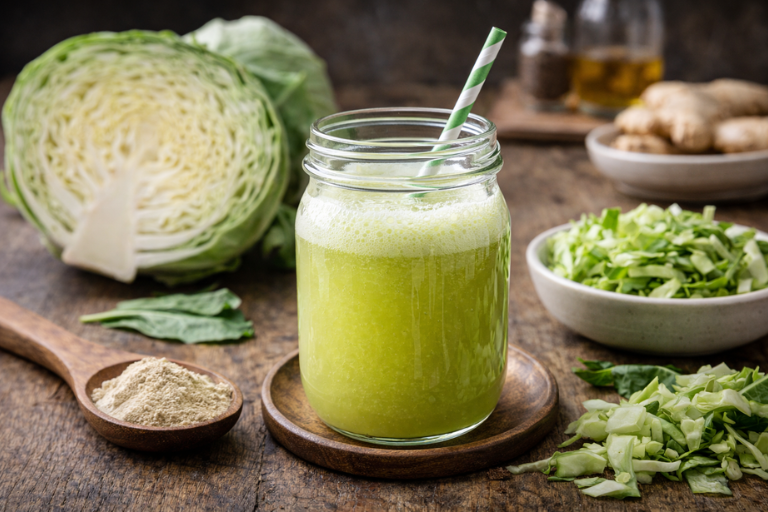
If you’re dealing with ulcers or stubborn digestive issues, cabbage juice might be the quiet powerhouse you’ve overlooked. You’ll find evidence-backed healing timelines, practical dosing, and who should use caution. You’ll also see how it nudges your microbiome toward balance, fortifies your gut lining, and uses red cabbage antioxidants to calm inflammation. The benefits aren’t hype—but the way you use it matters, and one detail can make or break your results.
Cabbage Juice for Ulcers: Evidence, Dose, Timeline
Although the evidence is old and imperfect, early studies suggest fresh cabbage juice may speed peptic ulcer healing dramatically—often within 7–13 days—likely via “vitamin U” (S-methylmethionine), sulforaphane, and other anti-inflammatory, anti–H. pylori compounds.
In 1949, duodenal ulcers healed in about 10.4 days versus 37 days in the literature, and gastric ulcers in 7.3 days versus 42. Across early trials, ulcers healed 3.5–6 times faster, with 81% of 100 patients symptom-free within a week and radiographic healing confirmed. A double-blind prison study reported that concentrated cabbage juice outperformed a placebo over a 22-day evaluation period.
Mechanistically, sulforaphane and isothiocyanates inhibit H. pylori and block inflammatory enzymes; an anti-peptic factor also reduced histamine-induced ulcers in animals.
A double-blind prison study found concentrated cabbage juice beat placebo in 22 days. Still, studies lacked rigorous placebos, modern RCTs are missing, and exact active doses remain unclear.
Safe Ways to Use Cabbage Juice (Who, How Much, When)
Those early ulcer results raise a practical question: how should you use cabbage juice safely today? Start with 1/4 cup to test tolerance, then gradually increase. For most adults, drink it two to three times daily. Historical data points to about 1 liter per day for active ulcers, but modern dosing for prevention versus treatment isn’t settled, so stay consistent and monitor symptoms.
Cabbage juice provides antioxidants like flavonoids and polyphenols that help reduce inflammation and protect the gut lining, supporting overall digestive health antioxidants. Additionally, cabbage juice can complement the effects of curcumin’s anti-inflammatory properties by further reducing gut inflammation.
Prepare it fresh for best potency. If you must store it, refrigerate in an airtight container and finish within 24 hours; shake before drinking. Use a juicer or blender, and improve flavor with fruit or other vegetables.
Prepare fresh for best potency; refrigerate up to 24 hours. Shake, then sip—blend with fruit or veggies for flavor.
Avoid or limit if you have hypothyroidism or other thyroid disease. If you take warfarin or other blood thinners, keep vitamin K intake consistent and consult your clinician.
IBS or sensitive guts may experience gas, bloating, or diarrhea—go slowly. Raw, unpasteurized juices carry food safety risks; make it at home and drink promptly.
Always review medications and conditions with a healthcare professional before starting, and seek guidance if you’re integrating cabbage juice with ulcer therapies.
How Cabbage Juice Reshapes Your Gut Microbiome
When red cabbage juice hits your gut, it nudges the microbiome toward a sturdier, anti‑inflammatory profile. You’ll see a rise in Firmicutes and a corrected Firmicutes-to-Bacteroidetes ratio, reversing dysbiosis patterns linked to inflammation.
Those shifts aren’t just taxonomic; functions change too, as bioactive compounds in the juice expand beneficial species that generate more short‑chain fatty acids (SCFAs).
SCFAs fuel anti‑inflammatory signaling, helping calm the colon’s immune tone. They also cue beneficial microbes to activate receptors like PPAR‑γ, a switch that dampens oxidative stress and keeps inflammatory cascades in check. RCJ increased alpha diversity in mouse models of colitis, aligning with its observed anti‑inflammatory and barrier‑supporting effects.
As these pathways engage, regulatory T cells expand, restoring immune balance and reducing collateral tissue damage.
Fermented‑cabbage metabolites further amplify these effects, outperforming isolated compounds through synergistic, microbiota‑driven mechanisms.
How Cabbage Juice Strengthens Your Gut Barrier
As your microbiome shifts toward an anti‑inflammatory profile, red cabbage juice goes a step further by fortifying the gut’s physical gatekeepers. It boosts tight junction proteins—helped by its L‑glutamine—so cells seal more tightly, cutting permeability and disease activity in colitis models.
You also ramp up protective colonic mucins, which keep microbes at a safe distance and maintain homeostasis; fiber in the juice feeds this mucin layer. These structural gains pair with microbiota‑derived short‑chain fatty acids that nourish epithelial cells and reinforce barrier function. In animal studies, red cabbage juice reduces inflammation, supporting overall gut health.
Fermented cabbage adds barrier‑protective metabolites that outperform single compounds, shielding cell monolayers from TNF‑α and IFN‑γ.
You support epithelial repair, curb inflammation‑induced leaks, and retain body weight and survival in stress models. Even vitamin U helps defend against ulcer‑related barrier breakdown.
Red Cabbage Antioxidants: Benefits for Gut Inflammation
Two standout defenders in red cabbage juice—polyphenols and vitamin C—tackle gut inflammation at its source. They neutralize free radicals that damage cells and drive chronic inflammation linked to IBD, heart disease, cancer, and diabetes.
By lowering oxidative stress, you reduce inflammatory signaling and protect gut tissues. Ginger’s anti-inflammatory properties can also complement these effects, further aiding in the reduction of gut inflammation.
Polyphenols and glucosinolates deliver potent antioxidant activity while reshaping your microbiome. They boost beneficial bacteria that produce short-chain fatty acids, which calm the colon, strengthen the gut barrier, and lessen intestinal damage.
With better barrier integrity, irritants stay out and healing accelerates. RCJ has been shown in mice with DSS-induced colitis to enrich SCFA-producing bacteria and improve outcomes like weight and survival.
Red cabbage antioxidants also regulate immunity. They promote regulatory T cells, restoring balance and dampening excessive inflammatory responses.
Add fiber-rich cabbage for regularity and smoother digestion. Together, these compounds make red cabbage juice a precise, multi-pathway ally against gut inflammation.
Frequently Asked Questions
Can I Combine Cabbage Juice With Proton Pump Inhibitors or Antibiotics?
Yes, you can, but you should talk to your clinician first. Cabbage juice may shift stomach pH and gut microbes, possibly affecting PPIs’ symptom control. It doesn’t oppose antibiotics for H. pylori. Start slowly and monitor symptoms.
Does Cooking Versus Raw Cabbage Change Ulcer-Healing Effectiveness?
Yes—raw appears more effective. You’ll preserve heat‑sensitive vitamin U and glutamine that early studies linked to rapid healing. Cooking lowers these, so you’d likely lose benefits. Evidence’s old and uncontrolled; use raw juice alongside clinician‑guided therapy.
Are There Interactions With Thyroid Conditions or Goitrogen Concerns?
Yes. If you’ve got thyroid issues, especially hypothyroidism or low iodine, raw cabbage juice’s goitrogens can hinder iodine uptake. Cook it to reduce risk, monitor symptoms, keep portions moderate, and discuss with your clinician and dietitian.
Which Cabbage Varieties Yield the Most Vitamin U Content?
You won’t find definitive rankings; vitamin U (methylmethionine sulfonium) isn’t routinely quantified by variety. You’ll maximize it by using fresh, raw or lightly blended green or purple cabbages, juicing immediately, and minimizing heat, storage time, and oxidation.
How Should I Store Fresh Cabbage Juice to Preserve Benefits?
Store it cold and airtight. Fill jars to the brim, add lemon, and refrigerate at 41°F. For longer keeping, freeze in sealed portions; thaw, then filter precipitates. Dehydrate to powder for months; vacuum-pack and chill. Avoid iron.
Conclusion
You’ve got a powerful, simple tool in cabbage juice. It can speed ulcer healing in days, soothe inflammation, and rebalance your microbiome. With the right dose and timing, you’ll support beneficial bacteria, strengthen tight junctions and mucins, and calm oxidative stress—especially with antioxidant-rich red cabbage. Start low, sip consistently, and listen to your body. Pair it with a gentle diet and medical guidance. You’re not just easing symptoms—you’re rebuilding your gut’s foundation for lasting digestive health.