Carrot Juice for Glowing Skin: 5 Benefits You Need to Know
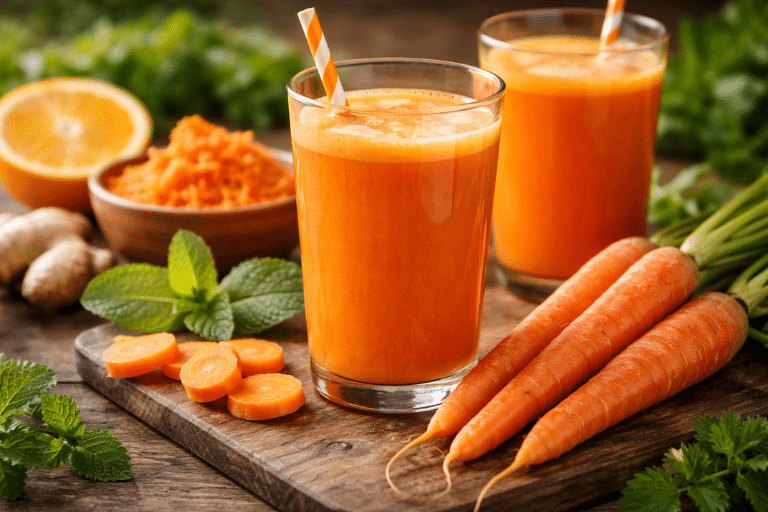
If you’re looking for a simple way to support healthier, glowing skin, carrot juice deserves a closer look. It’s more than a bright drink in your glass; it’s packed with nutrients that quietly work on tone, texture, and clarity from within. From UV support to fewer breakouts, its benefits reach deeper than most people realize—and one of its skin perks in particular might surprise you most…
What’s in Carrot Juice That Helps Skin
Although it looks simple, a glass of carrot juice is loaded with skin-focused nutrients that work together to brighten, repair, and protect your complexion from the inside out.
Vitamin A in carrot juice converts to retinol, driving cell turnover so you shed dull cells, fade scars, and heal blemishes faster. Ginger’s anti-inflammatory properties can also help reduce redness and irritation in the skin. Vitamin C supports collagen, helping your skin feel firmer and look smoother while it repairs breakouts. You also get a powerful dose of beta-carotene, which nourishes skin tone, refines texture, and promotes a natural glow.
Carrot juice fuels retinol-powered renewal and collagen support for clearer, smoother, breakout-resistant skin
Vitamin K backs up collagen-related proteins for elasticity and a more lifted look. Additional nutrients—like lutein, potassium, manganese, skin-friendly enzymes, and B vitamins—keep cells protected, hydrated, and calm, so your complexion appears even and refreshed. These same nutrients, especially antioxidants, help defend your skin from everyday UV-related stress and environmental damage.
UV Protection and Antioxidants in Carrot Juice
While carrot juice is famous for its glow-boosting vitamins, its real superpower lies in how its antioxidants quietly shield your skin from the sun. Beta-carotene, the star carotenoid, converts to vitamin A and builds up in your skin, boosting its natural UV defense and slowing damage from everyday stress or smoking. Carrot juice also supports collagen production, which helps maintain firm, elastic skin as it defends against environmental damage. Additionally, it offers natural antibacterial properties that can help protect your skin from infections.
Carrot juice also delivers vitamin C, giving you over 20% of your daily needs in a cup. This antioxidant helps neutralize free radicals from UV exposure and supports skin repair after sun stress.
You also get phenolic compounds and polyphenols that act as free-radical scavengers, reduce UV-related inflammation, and calm hyperpigmentation.
Lutein and zeaxanthin further accumulate in your tissues, helping your skin stay resilient against damaging light.
How Carrot Juice Supports Collagen and Elasticity
Carrot juice doesn’t just make your skin look brighter—it feeds the very structure that keeps it firm and bouncy. Its vitamin C acts as a critical cofactor for collagen synthesis, helping you build and repair the collagen matrix that supports your skin.
Paired with beta-carotene–derived vitamin A, it nourishes skin cells from within and promotes efficient cellular repair. You also protect what you already have. Antioxidants in carrot juice neutralize free radicals that break down collagen and elastin, slowing sagging and structural loss.
Over time, this helps preserve collagen integrity and improve overall density. By reducing inflammation through its natural antioxidant and anti-inflammatory compounds, carrot juice indirectly supports smoother, more even-toned skin while protecting collagen from inflammatory damage. Additionally, it encourages enhanced collagen synthesis for a more youthful appearance and improved skin vitality.
Fewer Breakouts and Blemishes With Carrot Juice
Even beyond its glow-boosting reputation, carrot juice can help you see fewer breakouts and stubborn marks over time. Its beta carotene helps regulate sebum, so your pores don’t stay overloaded with oil. As your body converts beta carotene to retinol, your skin heals more efficiently, and with consistent drinking, you may notice fewer acne flare-ups over several months. Regular intake also supports your skin’s natural defenses against sun damage, which can otherwise worsen post-acne marks and irritation.
Carrot juice also delivers polyacetylenes and other phytochemicals that target acne-causing bacteria and fungi, limiting new pimples.
Anti-inflammatory polyphenols calm redness by lowering inflammatory cytokines, while antioxidants like vitamin C and phenolic compounds protect against free radical damage that leads to dark marks. Together, these nutrients slowly soften the look of existing scars and discoloration as fresher, healthier skin replaces damaged areas.
Brighter Complexion, Hydration, and Skin Renewal
As you sip carrot juice regularly, its mix of carotenoids, vitamin C, and phenolic compounds quietly works to brighten your complexion, lock in moisture, and support steady skin renewal.
Carotenoids and umbelliferous compounds help fade the look of hyperpigmentation, while vitamin C boosts antioxidant activity to even and illuminate your skin tone. Beta-carotene, converted to vitamin A, further refines clarity and resilience, offering added protection against UV-induced darkening. Because juicing removes most of the fiber, it’s best to enjoy carrot juice in moderation and pair it with whole foods to help support healthy blood sugar.
For hydration, carrot juice’s antioxidants and carotenoids support better moisture retention and elasticity, while vitamin A strengthens your skin barrier and mucous membranes so skin stays supple.
Meanwhile, carotenoids and vitamin C promote collagen production and healthy cell turnover, replacing dead, dull cells with smoother, renewed skin and a fresher overall texture.
Frequently Asked Questions
How Much Carrot Juice Should I Drink Daily for Visible Skin Benefits?
You should drink a small 4–8 oz glass daily, ideally 3–4 times weekly at minimum. Pair it with healthy fats. Expect noticeable skin improvements in 2–4 weeks, and don’t exceed 8 oz to avoid carotenemia.
Can Drinking Too Much Carrot Juice Cause Skin Discoloration or Carotenemia?
Yes, it can. If you drink large amounts daily for weeks, you may develop yellow‑orange skin (carotenemia), especially on palms and soles. It’s harmless and reversible; just cut back on carrot juice and carotene‑rich foods.
How Long Does It Take to See Skin Changes From Carrot Juice?
You usually see subtle skin changes after 3–6 weeks of daily carrot juice. You’re building carotenoids in your skin, so glow appears gradually, not overnight. Maintain moderate intake, pair with varied produce, and protect skin from sun.
Is Fresh-Pressed Carrot Juice Better for Skin Than Store-Bought Versions?
Yes, fresh-pressed carrot juice’s better for your skin. You get more beta-carotene, vitamin C, and antioxidants, which improve glow, texture, firmness, and UV protection faster, as long as you drink it consistently in moderation.
Can Carrot Juice Interact With Medications or Existing Skin Treatments?
Carrot juice rarely interacts with medications or skin treatments, but you should watch vitamin K if you’re on warfarin, monitor allergies (celery–mugwort–spice), and tell your dermatologist so routines, peels, or retinoids don’t compound irritation.
Conclusion
When you add carrot juice to your routine, you’re giving your skin a natural, nutrient-rich boost from the inside out. Its antioxidants help shield against UV damage, while vitamin A and C support smoother texture, firmer skin, and a more even tone. You’ll likely notice fewer breakouts, less redness, and a healthy, hydrated glow. Sip it regularly, pair it with a balanced diet, and you’ll elevate your skincare results—naturally and effortlessly.