Cacao vs. Cocoa: 7 Mood-Boosting Benefits of Raw Chocolate You Miss Out On
You’ve probably heard cacao and cocoa used interchangeably, but they’re not the same—and your mood could be missing out. When you choose raw cacao, you keep more magnesium, theobromine, and flavanols that can lift serotonin, steady stress, and sharpen focus without jitters. Cocoa’s higher-heat processing strips many of these perks. If you’re aiming for calmer energy, clearer thinking, and a happier baseline, the difference matters more than you think—especially when you see how to use it right.
Cacao vs. Cocoa: What’s the Real Difference?
Although people often use the terms interchangeably, cacao and cocoa differ mainly in how they’re processed—and that shapes their nutrition and flavor.
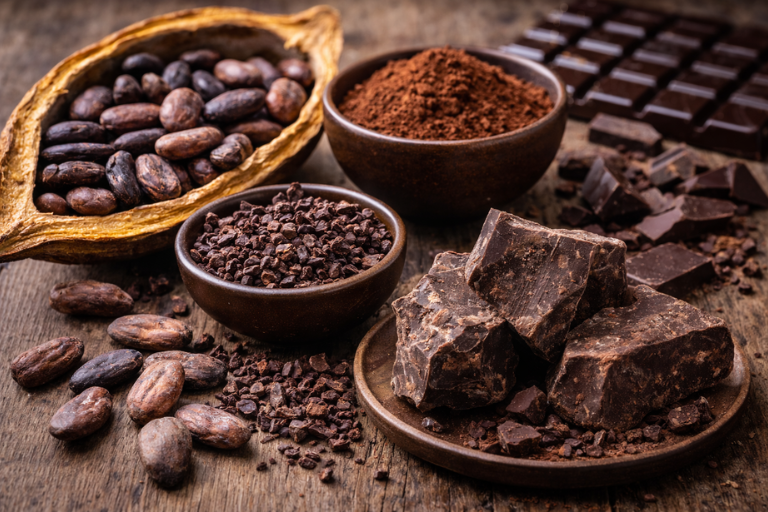
You get cacao by cold-pressing gently heated beans, preserving enzymes, flavanols, and minerals. Cocoa comes from high-temperature roasting that alters structure, reduces enzymes, and lowers antioxidant content. Many compounds in chocolate are bitter, which can be unpleasant without sweeteners.
Pressing cacao liquor removes most fat to make cocoa powder, typically 10–24% fat; cacao beans naturally hold over 50% cocoa butter rich in oleic, stearic, and palmitic acids.
Natural (non-alkalized) cocoa resembles cacao more, while alkalized cocoa uses a solution to mellow acidity and darken color but further trims nutrients.
Labels listing higher cacao percentages generally indicate more minerals. Raw cacao powder and nibs keep nutrient density with minimal processing and no added sugar.
Raw Cacao for Mood: Serotonin, PEA, and Quick Effects
If you’re looking for a fast lift, raw cacao delivers a mood bump through several synergistic compounds. You get small amounts of serotonin and its precursor tryptophan, helping regulate mood, appetite, and sleep. Raw cacao retains essential nutrients like magnesium, iron, zinc, copper, potassium, and calcium, and its minimal processing helps preserve these compounds. Additionally, the antioxidant properties found in ginger can further enhance mood and overall well-being.
With cacao’s boost to neurotransmitter circulation, you feel more positivity and less stress, while caffeine and theobromine enhance brain blood flow to elevate serotonin activity.
PEA takes center stage for quick euphoria. It spikes rapidly, releases endorphins, and stimulates dopamine and norepinephrine—fueling excitement, attraction, and focused energy without jitters.
PEA surges for swift euphoria, sparking endorphins, dopamine, and norepinephrine—energized focus without the jitters
Cacao has the highest food concentration of PEA, which can heighten empathy and attention.
Flavanol-rich polyphenols improve cerebral blood flow and reduce inflammation, sharpening clarity fast.
Magnesium, valeric acid, salsolinol, and theobromine further calm, energize, and stabilize mood.
Raw cacao’s minimal processing preserves these fast-acting benefits.
Anandamide and Tryptophan for Stress Relief
While stress can hijack your mood, two pathways—anandamide and tryptophan—offer direct relief by restoring balance in your brain.
When stress hits, anandamide often drops across the brain, which predicts anxiety-like behavior. You can think of it as losing a brake on threat responses: low anandamide ramps up fear, impairs coping, and heightens reactivity. Boosting anandamide—often studied via FAAH inhibition—reverses stress-induced anxiety through CB1 receptors and supports fear extinction in the amygdala. Enhancing eCB signaling may mitigate adverse effects of stress.
People with naturally lower FAAH activity even show faster habituation to threat cues.
Tryptophan works differently. Under stress and inflammation, your body diverts it from serotonin toward kynurenine, lowering 5-HT and worsening mood.
Restoring healthy tryptophan flux—rather than depleting it—helps preserve serotonin signaling and counters stress-linked, inflammation-driven mood dips.
Raw Cacao Flavanols for Memory and Focus
Because raw cacao is rich in flavanols like epicatechin, it can sharpen memory and focus by boosting blood flow and energizing key brain regions. These compounds raise nitric oxide, relax vessels, and enhance cerebral oxygenation, which you’ll feel as quicker thinking and steadier concentration. Berberine, known for its ability to improve insulin sensitivity, may further support cognitive function by ensuring optimal blood sugar levels for brain health.
Evidence is strong: in people with mild cognitive decline, higher daily cocoa flavanols improved overall cognition, sped test completion, and raised word recall by 13% at 400 mg and 31% at 750 mg.
In healthy older adults, high-flavanol drinks reversed age-related memory decline by improving dentate gyrus function. Flavanols also accumulate in the hippocampus, fortifying learning circuits and protecting neurons from oxidative damage.
You’ll see benefits at multiple doses: 150–250 mg acutely heightens blood flow and task accuracy, while 500–750 mg boosts memory and executive function. Regular intake supports cardiovascular health by improving blood vessel function and nitric oxide levels, which helps deliver more oxygen and nutrients to the brain.
Theobromine and Mild Caffeine for Steady Energy
Though chocolate carries a reputation for “stimulating,” its lift comes mainly from theobromine, not a jolt of caffeine. You’ll feel steady, clear energy because theobromine is milder, doesn’t cross the blood–brain barrier like caffeine, and won’t trigger jitters, crashes, or withdrawal.
Chocolate’s lift comes from mellow theobromine—steady clarity without caffeine’s jitters, crashes, or withdrawal.
It also lacks caffeine’s adrenaline surge and adenosine blockade, so your alertness feels smooth, not spiky.
In dark chocolate, a typical 50‑gram serving delivers about 250 mg theobromine and only ~19 mg caffeine. That ratio matters: theobromine’s longer‑lasting, subtle stimulation pairs with a touch of caffeine to boost mood and focus without edgy side effects. And unlike caffeine, theobromine does not cross the blood–brain barrier, contributing to its steadier, non‑jittery profile.
Research shows this combo enhances relaxation, positive affect, and preference over placebo. Because theobromine is metabolized slowly and remains stable, you get sustained benefits—mental clarity, gentle uplift, and dependable energy—from reasonable portions.
Raw Cacao Flavanols for Heart Health
EFSA notes 200 mg flavanols (about 20 g Super Cacao) helps maintain vessel elasticity.
Flavanols also lower blood pressure. Average reductions are about 2.8 mm Hg systolic and 2.2 mm Hg diastolic, with bigger drops in hypertensive people and those under 50. In studies, 15 days of flavanol‑rich dark chocolate cut 24‑hour systolic by 11.9 and diastolic by 8.5.
You gain broader protection: epicatechin and catechin curb ROS and inflammation, improve insulin resistance, raise HDL, lower LDL, inhibit platelet activation, and enhance circulation.
How to Choose and Use Raw Cacao (Dose, Timing, Safety)
You’ve seen how cacao’s flavanols can support vessel function within hours; now make those benefits repeatable by choosing the right product and using it wisely. Regular, moderate intake generally delivers better long-term benefits than sporadic large amounts.
Pick organic, minimally processed raw cacao powder or paste labeled “raw” or “non-alkalized.” Favor ceremonial-grade options from reputable sources (e.g., Keith’s, Sacred Earth), ideally Peruvian or Ecuadorian heirloom varieties. Verify third-party testing for heavy metals, mold, and pesticides.
Dose: start 10–20 g, then aim 15–30 g daily; 5–10 g delivers basic antioxidants. Ceremonial paste is 20–42.5 g; halve for powder. Max for most adults: 40 g. Pregnant/breastfeeding: 10–25 g; kids 5–10 g; teens 10–15 g.
Timing: morning or early afternoon; split doses. Pre-workout: 28–35 g, 30–60 minutes prior. Avoid evenings unless tolerant (5–10 g).
Watch for jitters, nausea, or sleep issues; reduce dose. Avoid high doses with SSRIs, hypotensives, or chemotherapy. Track mood and reactions.
Frequently Asked Questions
Can Raw Cacao Interact With Antidepressants or Anxiety Medications?
Yes. You can experience interactions: SSRIs may raise serotonin too high; watch for headaches, shivering, diarrhea. MAOIs are contraindicated due to tyramine and MAO inhibition. Start low if on SSRIs, avoid with MAOIs, and consult your clinician.
Is Raw Cacao Safe During Pregnancy or Breastfeeding?
Yes, with caution. During pregnancy, avoid the first trimester, use 15–20g per 200–250ml, and limit caffeine; avoid late-third-trimester polyphenol-rich cocoa. While breastfeeding, moderate cacao may help minerals and mood. Always confirm with your clinician.
Does Cacao Impact Sleep Quality if Taken in the Evening?
Yes—cacao can improve evening sleep if you time it right. You’ll gain magnesium, tryptophan, and calming flavonoids. Start small, take it about two hours before bed, avoid blue light, and assess your caffeine/theobromine sensitivity. Consistency helps.
Are There Allergy or Histamine Concerns With Raw Cacao?
Yes. You may react to raw cacao: it’s fermented, can contain histamine, and can liberate histamine from mast cells. If you’re histamine-intolerant, start small, track symptoms, prefer organic, low-processed options, or choose cacao butter instead.
How Does Cacao Affect Gut Health and the Microbiome?
It supports your gut by feeding beneficial microbes and boosting diversity. You’ll see rises in Bifidobacteria, Lactobacilli, and Blautia, suppression of some pathogens, and more short-chain fatty acids, as polyphenols and fibers act as prebiotics metabolized by bacteria.
Conclusion
You’ve seen how raw cacao outshines cocoa for mood and mental clarity. Choose minimally processed cacao to keep serotonin-supporting nutrients, PEA, and anandamide intact, while flavanols sharpen memory and focus. Theobromine and mild caffeine lift energy without jitters, and heart-friendly benefits add bonus protection. Start with 1–2 tablespoons daily, earlier in the day, and watch for sensitivity. Mix it into smoothies, oatmeal, or elixirs. Choose raw, organic, and fair-trade—and let cacao brighten your day.