7 Hydrating Benefits of Cantaloupe for Glowing Summer Skin and Eye Health
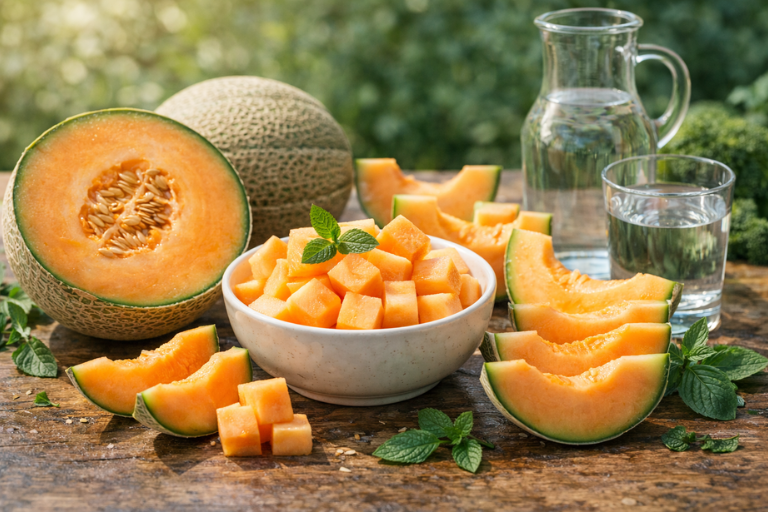
You’re looking for simple ways to keep your skin dewy and your eyes sharp this summer, and cantaloupe quietly checks those boxes. With high water content, vitamin C, and beta-carotene, it supports elasticity, collagen, and a natural glow. Its antioxidants also help buffer UV stress and nourish the delicate tissues in your eyes. There’s more to this melon than sweetness—especially when, how much, and the easiest ways to make it work for you matter most.
Cantaloupe’s Hydration Benefits for Plump, Summer-Ready Skin
Even before you notice the heat, cantaloupe’s ultra-high water content—about 90%—starts working to rehydrate your skin from within. Each bite helps restore moisture in the dermal layers, improving elasticity and preventing dryness that leads to dullness and flakes. As hydration builds, your complexion looks plumper, smoother, and more youthful, primed for summer sun and wind. You also get essential electrolytes that direct water into cells, supporting firmness and your skin’s natural plumping mechanisms.
Cantaloupe is rich in vitamin C, which supports collagen synthesis for improved skin texture and resilience, while curcumin’s antioxidant properties help protect skin from oxidative stress. This balanced hydration maintains structural integrity over time, helping skin look resilient rather than slack.
Antioxidants like lutein, zeaxanthin, and cucurbitacin add a defensive edge by reducing inflammation from environmental stressors. Regular intake supports steady moisture, while topical and oral melon concentrates have shown measurable boosts in photoprotective capacity and reduced sun-induced cellular damage.
Cantaloupe Vitamin C: Collagen Support and a Healthy Glow
While you’re hydrating with cantaloupe, its vitamin C goes to work behind the scenes to fortify your skin’s collagen and brighten your glow. You’ll get roughly 17–25 mg per cup—about 95–100% of your daily need—making cantaloupe a top vitamin C fruit. That steady supply fuels natural collagen production, the structural backbone of firm, elastic skin, while protecting existing collagen from oxidative damage. Additionally, collagen supplementation can lead to reduced wrinkles and improved skin hydration over time.
With each juicy serving, vitamin C’s antioxidant power helps neutralize free radicals that can dull tone and accelerate visible aging. Half a cup can deliver around 28.6 mg, and even 100 grams of raw melon contributes a meaningful 12% of daily value. Cantaloupe is rich in beta-carotene, which the body converts to vitamin A to support skin and eye health.
Paired with folate, potassium, and supportive minerals, cantaloupe’s vitamin C helps maintain resilient skin, smoother texture, and a healthy, natural radiance.
Cantaloupe’s Beta-Carotene to Vitamin A for Smoother, Younger-Looking Skin
Because cantaloupe is rich in beta-carotene—the bright-orange pigment your body converts to vitamin A—it naturally supports smoother, younger-looking skin. One cup delivers about 25% to 30% of your daily vitamin A needs, giving you steady support for skin renewal. Your body converts beta-carotene to vitamin A as needed, supplying retinoid forms that guide skin cell function without the risk of excess retinol buildup. This helps maintain skin integrity, encourages repair, and keeps your barrier resilient.
Vitamin A accelerates cell turnover, so you shed dull, dead cells and reveal fresher skin beneath. That renewal can reduce acne, refine texture, and create a brighter, more even complexion. With better turnover and elasticity support, fine lines look softer and skin feels firmer.
Additionally, the antioxidant properties of cantaloupe can further enhance skin health by combating free radicals. Enjoy cantaloupe regularly for consistent, nutrient-dense skin benefits. Plus, its high water content helps keep you hydrated, supporting plumper-looking skin and overall temperature regulation.
Antioxidants in Cantaloupe That Defend Against UV Damage
Sun-smart nourishment starts from within: cantaloupe packs antioxidants that help your skin resist UV stress. Its beta-carotene acts like a natural sun shield, protecting skin cells from ultraviolet harm, neutralizing free radicals, and minimizing premature aging, wrinkles, and uneven pigmentation from repeated exposure.
Sun-smart nourishment begins within: cantaloupe’s beta-carotene shields skin, neutralizes UV free radicals, and minimizes photoaging.
You also get vitamin C, which quickly quenches reactive oxygen species generated by sunlight. It limits oxidative stress, calms post-UV inflammation, helps preserve collagen, and reduces visible effects like dark spots.
Cantaloupe contributes lutein and zeaxanthin that work alongside these antioxidants to counter free radicals, blunt sunburn risk, and bolster defense against environmental stressors. Hydration benefits, since cantaloupe is about 90% water, also support supple, resilient skin by helping maintain moisture balance and reducing the look of dryness and fine lines.
Research on melon concentrate shows photoprotective benefits: higher minimal erythema dose, fewer sunburn cells, reduced melanin, and boosted endogenous enzymes—SOD, glutathione, and catalase—enhancing resilience against UV-induced damage.
Cantaloupe for Eye Health: Lutein, Zeaxanthin, Vitamins A & C
Even beyond skin defense, cantaloupe stands out for vision support, delivering lutein, zeaxanthin, and vitamins A and C that protect your eyes from light-induced and oxidative damage.
You’ll get macula-loving lutein that concentrates in the retina, filters harsh light, calms ocular inflammation, and helps prevent AMD while slowing cataract formation. Zeaxanthin teams up by filtering blue light, neutralizing free radicals, and supporting macular pigment density; paired with beta-carotene, it absorbs efficiently and lowers risks of cataracts and late AMD.
Vitamin A from cantaloupe sustains a clear cornea, keeps eyes moist, converts beta-carotene to prevent night blindness, and supports rods and cones for sharp low-light and color vision—often meeting your daily value.
Vitamin C adds 100% DV antioxidant power, easing oxidative stress and inflammation while bolstering recovery and immune support. Additionally, cantaloupe’s high water content supports overall eye comfort by aiding hydration.
Cucurbitacins and Antioxidants: Calming Inflammation and Aiding Skin Repair
While your eyes reap the rewards, your skin benefits too: cantaloupe’s cucurbitacins and broad-spectrum antioxidants work in tandem to quiet inflammation and jump-start repair. These bioactives inhibit NF-κB, suppress COX-2 and NOS, and curb proinflammatory cytokines, dialing down redness and irritation. They also moderate oxidative stress and modulate immunity, easing flare-ups at their source.
Cucurbitacins—especially B and E—help your skin’s recovery by inducing apoptosis in damaged cells and limiting unchecked proliferation. They’ve shown G2/M cell-cycle arrest in melanoma cells without harming healthy ones, and they can sensitize tissues to other repair-supportive therapies.
Antioxidants from flavonoids, polyphenols, and carotenoids reinforce the skin barrier, stabilize metabolic balance, and suppress oncogenic signaling. Their antimicrobial edge helps prevent infection, keeping healing on track and outcomes clearer. Research interest in cucurbitacins has surged since 1954, with 169 articles recorded in 2022.
How Much Cantaloupe to Eat, Best Times, and Easy Ways to Add It
Two simple guidelines make cantaloupe easy to fit into your day: aim for about 1 cup (160 g) daily for steady hydration and vitamins, and time it when you’ll benefit most—like after a workout to replenish potassium or alongside meals to boost vitamin A and C intake. For extra variety and freshness, try cantaloupe in a chilled soup or salsa inspired by our menu, such as Chilled Cantaloupe Soup or a simple cantaloupe salsa.
One cup equals about 54–60 calories, 13 g carbs, 1.5 g fiber, and no fat. That’s one to two fruit servings; most adults do best with 2–3 fruit servings daily within 3½–6½ cups of produce.
One cup: 54–60 calories, 13 g carbs, 1.5 g fiber—counts as 1–2 fruit servings.
Keep portions moderate if you’re sensitive to potassium or following low-FODMAP; 100 g is considered low-FODMAP. Avoid large amounts at once to prevent stomach cramps or diarrhea.
Easy adds:
- Eat cubed, chilled
- Blend into smoothies
- Toss into salads
- Make tiny-cube salsa
- Try cantaloupe–tomato salad
Frequently Asked Questions
Is Cantaloupe Safe for People With Diabetes or on Low-Fodmap Diets?
Yes—cantaloupe can fit diabetes and low-FODMAP diets with care. You’ll keep portions modest, pair with protein or fat, and monitor responses. Its low glycemic load helps; for FODMAP sensitivity, test tolerance or choose berries if symptoms arise.
Can I Be Allergic to Cantaloupe or Related Melons?
Yes—you can. You might experience oral allergy syndrome: itching/tingling mouth or throat, swelling, hives, or GI symptoms. It often cross-reacts with ragweed, banana, cucumber, and other melons. Seek allergy testing; carry epinephrine if you’ve had severe reactions.
Does Washing or Peeling Affect Nutrient Retention and Safety?
Yes. You should wash cantaloupe before cutting to reduce pesticides, pathogens, and nutrient loss. Don’t peel unnecessarily; you’ll discard fiber, vitamins, and antioxidants. Wash, then cut. If you peel, know you’ll sacrifice rind nutrients while improving safety.
Fresh vs. Frozen Cantaloupe: Any Differences in Nutrients and Hydration?
Yes. You’ll hydrate equally with fresh or frozen; minerals and water stay intact. Fresh tastes brighter but loses vitamins during storage. Frozen often matches or beats fresh for vitamin C and antioxidants, preserving beta-carotene while slightly reducing some water-soluble vitamins.
Are There Interactions With Medications, Like Diuretics or Beta-Carotene Supplements?
Yes. If you take diuretics or ACE inhibitors, cantaloupe’s potassium can cause dangerous buildup; limit portions. Potassium-depleting diuretics also complicate balance. Beta-carotene supplements lack clear interactions. Disclose all meds and supplements, including NSAIDs and herbs, and ask your clinician.
Conclusion
You don’t just enjoy cantaloupe—you wear its benefits from the inside out. With water-rich refreshment, vitamin C–powered collagen support, and beta-carotene that converts to vitamin A, you’ll keep skin plump, smooth, and resilient. Its antioxidants help buffer UV stress, while lutein and zeaxanthin protect your eyes’ delicate tissues. Add calming cucurbitacins and you’ve got a delicious ally for repair. Enjoy a cup daily—morning smoothies, snack bowls, or savory salads—and glow confidently all summer.