The Truth About Apricot Seeds: 5 Potential Benefits and the Controversy Explained
You’ve probably heard that apricot seeds can boost your health, yet warnings about toxicity make you pause. You’ll see claims about cancer, antioxidants, liver support, and heart benefits—but the bitter variety’s amygdalin can release cyanide. Some animal data looks promising; human evidence is thin. Dose, preparation, and who should avoid them matter more than you might think. If you want potential benefits without unnecessary risk, you’ll need to separate science from hype—and one common myth may surprise you.
Apricot Seeds 101: What They Are and How Amygdalin Works
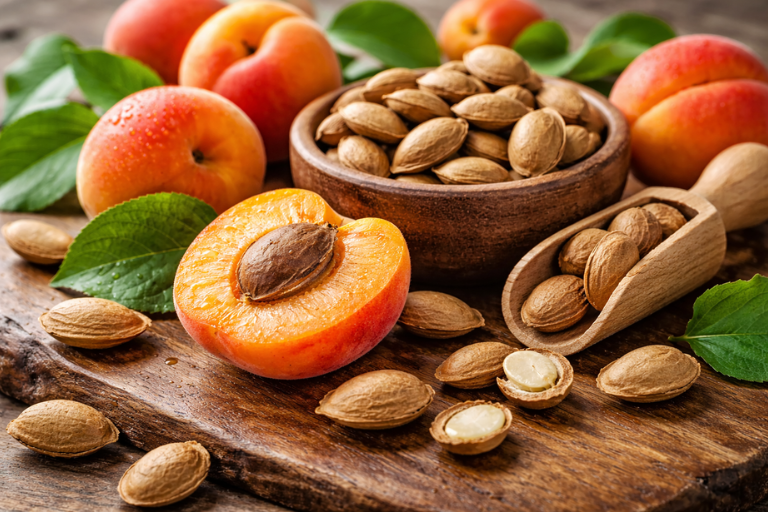
Apricot seeds are the small, almond-like kernels inside apricot pits, sold whole, halved, ground, or mixed into foods, and they naturally carry amygdalin—a cyanogenic glycoside most concentrated in bitter varieties.
Apricot seeds are almond-like kernels rich in amygdalin, especially in bitter varieties.
You’ll notice an almond-like taste because amygdalin’s breakdown releases benzaldehyde, which imparts bitterness. Apricot kernels sit alongside other Rosaceae sources: bitter almonds contain more amygdalin, while peaches, plums, cherries, and apple seeds contain less.
In plants, amygdalin and the enzymes that hydrolyze it stay separated until damage occurs. When you chew or digest kernels, beta-glucosidase in your intestine hydrolyzes amygdalin into glucose, benzaldehyde, and cyanide. That cyanide is the cytotoxic product. Consumers should stop using certain bitter apricot seed products due to the FDA’s safety alert about high amygdalin levels linked to cyanide toxicity.
Sweet almonds carry a recessive gene that drastically lowers amygdalin. You’ll also see amygdalin called vitamin B17—though it’s not a vitamin—and laetrile, a semi-synthetic form.
Apricot Seeds and Cancer: Claims vs. Evidence
Although enthusiasts promote amygdalin (laetrile) from apricot seeds as a “natural” cancer cure, the evidence doesn’t back the claim.
Human data are consistently negative: the only randomized clinical trial in 1982 found no benefit in cure, symptom relief, stabilization, or survival. In an NCI-supported trial, just 1 of 175 evaluable patients met response criteria. A 1953 case series showed no objective responses attributable to laetrile, with regressions mostly after standard therapies. Apricot kernels contain cyanogenic glycosides like amygdalin that can release hydrocyanic acid, raising safety concerns alongside the lack of proven efficacy.
A phase I study noted minimal anticancer activity; two participants who ate raw almonds during treatment developed cyanide-related symptoms.
Lab findings are mixed. Some cell and animal models report apoptosis, autophagy, and reduced proliferation, while other animal studies show no tumor shrinkage.
Systematic reviews conclude amygdalin is ineffective; major centers advise against its use pending better evidence.
Apricot Seeds Safety: Cyanide Risk, Dosing Limits, Who Should Avoid
Even when marketed as “natural,” eating apricot kernels can expose you to cyanide, and the risk varies widely by product and dose.
Kernel cyanide content spans roughly 0.122–4.09 mg/g; bitter kernels average ~0.5 mg cyanide each. Commercial products vary: Novodalin ~0.220 mg/g, while some home-made extracts reach 1.6 mg/g.
Because the lethal dose is 0.5–3.5 mg/kg body weight, modest overuse can be dangerous. Regulatory agencies have issued warnings and limits on apricot kernel consumption due to cyanide poisoning risks.
Even small overuse can be dangerous: lethal doses range 0.5–3.5 mg per kg body weight.
Stick to strict limits: many regulators suggest 1–2 small kernels daily; EFSA estimates three small kernels (≈370 mg) could reach the acute reference dose.
Don’t exceed five in an hour or 10 per day.
Stop immediately if you develop headache, weakness, nausea, confusion, shortness of breath, or rapid onset vomiting.
Avoid entirely if you’re pregnant, breastfeeding, a child or toddler, or seeking “medicinal” use.
Liver and Antioxidant Effects of Apricot Seeds: What Studies Show
From animal studies, a consistent picture emerges: apricot kernel supplementation can blunt chemically induced liver injury and boost antioxidant defenses, but evidence is preclinical.
You see improved liver function after D‑galactosamine injury and reduced centrilobular necrosis with carbon tetrachloride. Higher doses (around 1.5 mg/kg body weight) outperform lower ones for fibrosis reversal, and morphometry shows smaller damaged areas. Open Access publication details note the study was received June 2, 2011, accepted July 7, 2011, and assigned PMCID: PMC3155902 and PMID: 21736706.
Long‑term feeding lessens steatosis, likely via strong radical‑scavenging capacity.
You also get marked antioxidant gains in toxin‑exposed livers: SOD and catalase activities rise, glutathione pools increase (including total GSH at 10% and 20% diets), and malondialdehyde drops, signaling lower lipid peroxidation.
Structural indices improve too: liver index declines, mitoses and binucleated hepatocytes increase, and parenchymal volume falls at certain doses. Oleic acid and polyphenols likely drive these hepatoprotective effects.
Heart and Cholesterol Effects of Apricot Seeds: Fiber, Phenolics, Vitamin E
Cholesterol is where apricot seeds show their most human-tested promise. If your levels run high, daily bitter apricot kernels lowered total cholesterol and LDL in adults over 42 days, while normal-cholesterol participants didn’t change.
The most harmful LDL3–7 particles fell, and average LDL size increased—both shifts point to less plaque and oxidation risk. Markers like hs-CRP and liver enzymes stayed stable. In the study, participants consumed 60 mg/kg of bitter apricot kernels daily for 42 days. Omega-3s can also play a significant role in managing cholesterol levels and reducing cardiovascular risks.
Over 12 weeks, healthy adults also saw total and LDL cholesterol drop, though HDL didn’t rise and triglycerides climbed considerably.
You’re likely seeing effects from fiber, phenolics, and vitamin E working together: phytonutrients dampen oxidative stress, vitamin E shields lipids from oxidation, and the bioactive mix appears to target LDL subfractions.
Short-term data suggest cardiovascular risk reduction, especially if your LDL runs high.
Frequently Asked Questions
Can Apricot Seed Oil Be Used Safely for Skin or Hair Care?
Yes—you can use apricot seed oil safely for skin and hair when it’s cosmetic-grade and purified. You’ll moisturize, smooth fine lines, soothe scalp, add shine, and avoid greasiness. Patch-test first, especially with sensitive skin; don’t ingest.
Do Roasting or Soaking Apricot Seeds Reduce Amygdalin Content?
Yes. You’ll reduce amygdalin far more by soaking—especially long soaks with frequent water changes—achieving up to ~90–98% detoxification. Roasting alone barely lowers amygdalin. Grind, soak, rinse, then heat at 100°C to volatilize cyanide-related compounds effectively.
Are There Interactions With Common Medications or Supplements?
Yes. You risk interactions with liver-metabolized drugs, enzyme inducers/inhibitors, high-dose vitamin C, and B12 deficiency. Chemotherapy showed no direct interaction, but liver tests worsened with amygdalin. Stop kernels, disclose all supplements, monitor LFTs, and avoid unapproved amygdalin products.
How Do Sweet Versus Bitter Apricot Kernels Differ Nutritionally?
You’ll find sweet apricot kernels richer in monounsaturated fats, vitamin E, fiber, and protein, with low amygdalin. Bitter kernels taste strongly almond-bitter, carry high amygdalin (cyanide risk), offer proteins and phenolics, but lower antioxidant capacity and less palatable nutrition.
What Regulations Govern Apricot Seed Products in Different Countries?
You face strict, country-specific rules. Australia/New Zealand ban raw kernels and health claims. The U.S. restricts laetrile and claims. Canada enforces 20 ppm cyanide, testing, and bans “B17” claims. The EU warns, disallows laetrile, and sets aflatoxin limits.
Conclusion
You’ve seen both sides of apricot seeds: potential perks like antioxidant support, possible liver and heart benefits, and fiber and vitamin E—but also real cyanide risks, especially from bitter kernels. Don’t use them to treat cancer; evidence doesn’t back it, and major health bodies warn against it. If you’re curious, stick to small amounts from food-grade sources, avoid them if pregnant, breastfeeding, or with thyroid/liver issues, and talk to your clinician first. Safer, proven options should come first.