15 Skin Care Night Routine Tips for Glowing Skin Overnight
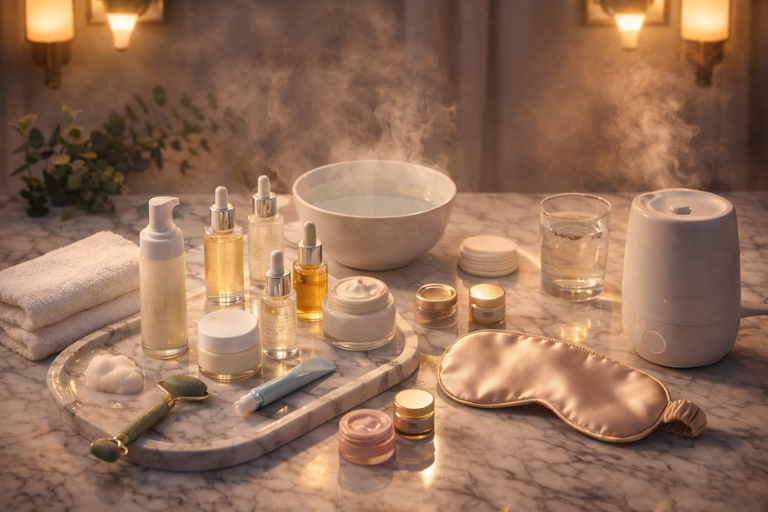
You want glow by morning, not guesswork. Start with double cleansing to lift makeup and grime, then pick an AHA or BHA that suits your skin. Keep exfoliation to 2–3 nights a week, layer hydrating serums from thinnest to thickest, and lock it in with a barrier‑boosting moisturizer. Target eyes with caffeine or peptides, and finish with an overnight mask. Do it right, and tomorrow’s mirror won’t keep your secrets—if you know these key moves.
Start Your Night Routine With Double Cleansing
Even if your day felt low-key, start your night routine with a thorough double cleanse to clear away makeup, sunscreen, excess oil, dirt, and pollution.
This two-step wash removes the full day’s buildup, primes skin for overnight repair, and boosts absorption of your serums and creams. It’s especially helpful at night so you go to bed with skin completely clean and ready to recover. Applying a gentle homemade cleanser can be an effective way to maintain skin hydration while cleansing.
Choose gentle, barrier-supportive formulas with hydrating ingredients and antioxidants to avoid stripping. Double cleansing uses an oil-based cleanser followed by a water-based cleanser to remove both oil- and water-based impurities, supporting all skin types.
Consistent double cleansing reveals a brighter, smoother complexion, keeps pores clear to reduce rough texture, and helps balance oil so shine softens over time.
Make it non-negotiable after SPF or city exposure; use it nightly if you wear heavy layers.
In the morning, a single, mild water-based cleanse usually suffices.
Remove Makeup With an Oil or Balm Cleanser
Before you reach for a foaming wash, melt away makeup with an oil or balm cleanser to leverage like-dissolves-like power. These formulas dissolve long-wear makeup, SPF, sebum, dirt, and pollution more effectively than wipes, with less rubbing—especially around eyes. Because they’re non-foaming and rely on emollients, they cleanse without stripping, supporting a calm, resilient barrier. Trials of quality balms show near-universal success and a deeply clean feel. Balms transform from solid to a milky liquid with water, making them easier to rinse and more travel-friendly.
- 1) Apply to dry skin, then massage 30–60 seconds, focusing on the lash line and lips to break down stubborn pigments.
- 2) Add lukewarm water to emulsify into a milky texture; use a soft cloth if you’re removing heavy makeup.
- 3) Rinse thoroughly; avoid hot water and aggressive rubbing to prevent tightness or redness. Regular use of such cleansing methods can enhance skin health by reducing inflammation and promoting a healthy complexion.
Balms offer mess-free control and travel ease; liquid oils spread quickly. Suitable for all skin types.
Follow With a Gentle Second Cleanse
Once makeup and SPF melt away with your balm or oil, reach for a gentle water-based cleanser to lift what’s left—sweat, dirt, bacteria, and any residue your first cleanse can’t dissolve.
This step clears water-soluble impurities, keeps pores unclogged, and helps your skin maintain a healthy pH.
Choose a mild gel or foam that suits your skin type, so you remove excess sebum without stripping your barrier. Massage it onto damp skin for 30–60 seconds, then rinse thoroughly. For most people, double cleansing improves the penetration of subsequent products, enhancing your overall routine’s effectiveness.
You’ll prevent congestion and reduce breakouts by eliminating both oil-based and water-based debris.
Double cleansing at night is ideal after heavy makeup, sunscreen, or sweaty workouts.
With consistent use, you’ll notice smoother texture, improved clarity and tone, and better absorption of serums and moisturizers.
Choose the Right AHA/BHA for Your Skin
While exfoliating acids can transform your skin, the right choice depends on your type and goals.
Exfoliating acids can transform your skin—choose based on your skin type and goals.
If you’re dry, dull, or photoaged, choose an AHA to smooth texture and fade fine lines. Oily, acne‑prone, or congested? Go for BHA (salicylic acid) to clear pores and curb oil. Sensitive or redness‑prone skin often tolerates BHA better. Combination skin can alternate AHA for tone and BHA for pores. Darker tones concerned about PIH typically fare better with BHA. Regular AHA use can increase photosensitivity, so daily sunscreen is essential.
1) Match to concerns:
- Fine lines/rough texture/sun damage: glycolic or lactic AHA.
- Blackheads/enlarged pores/acne: 0.5–2% salicylic acid.
- Blotchiness/superficial spots: AHAs.
2) Pick an acid:
– Glycolic (stronger), lactic (gentler), mandelic (mild), salicylic (pore‑clearing).
3) Choose strength:
– ≤10% AHA, ≤2% BHA for leave‑ons; higher needs pros.
Exfoliate 2–3 Nights a Week for Glow
Even with the right acid picked, your glow depends on cadence: aim to exfoliate 2–3 nights a week, then adjust to your skin’s response. Regular sunscreen use is essential after exfoliation to protect fresh skin from UV damage.
Oily, acne‑prone, and mature skin often thrive at 2–3 times weekly. Normal or combination skin can start at 1–2 times. Dry or sensitive skin should stick to once weekly or every other week with very gentle options.
Consistent, moderate exfoliation accelerates cell turnover, refines pores, fades dark spots, and boosts collagen—so skin looks smoother and firmer.
It also clears the dead‑cell barrier so actives penetrate better.
Choose the method that matches tolerance: salicylic acid for oil and congestion; AHAs for tone and texture; enzymes or PHAs for sensitive types; physical scrubs no more than once or twice weekly.
Watch for redness, tightness, or stinging—signs to scale back.
Use a Hydrating Toner to Prep and Plump
After smart, moderate exfoliation sets the stage, reach for a hydrating toner to flood skin with water-binding ingredients and restore balance.
Apply it immediately after cleansing to whisk away residual impurities, steady your pH, and lay a smooth, even surface. Seek humectants like hyaluronic acid and glycerin to pull in moisture, plus ceramides to fortify your barrier and curb transepidermal water loss. Hydrating toners prepare skin for better absorption of serums and moisturizers, enhancing their effectiveness. Additionally, staying hydrated is vital for overall skin health, as it supports natural moisture levels in the skin.
Apply toner post-cleanse to rebalance, refine, and drench skin with humectants and barrier-strengthening ceramides.
Soothing aloe, rosewater, or gentle witch hazel calm while antioxidants such as green tea or vitamin C guard against free radicals.
- 1) Press toner into damp skin with palms for a plumper look and softer feel.
- 2) Choose alcohol-free, non-comedogenic formulas that hydrate without heaviness.
- 3) In dry or heated environments, layer an extra pass to combat moisture loss.
Your skin feels cushioned, comfortable, and primed for what comes next.
Layer Serums: Hydrating, Brightening, Then Retinoid
Because order matters, layer serums from thinnest to thickest: start with a water-light hydrating serum to flood skin with humectants, follow with a targeted brightening formula, then finish with your retinoid. Apply the hydrating serum first—think hyaluronic acid, glycerin, or polyglutamic acid. These pull water into the stratum corneum, boosting plumpness and light reflection while supporting barrier function and helping later actives diffuse more evenly. Next, use a brightening serum with vitamin C, niacinamide, alpha arbutin, licorice, or gentle acids. Hydration first keeps to the thin-to-thick rule and positions antioxidants and pigment regulators close to skin for better payoff. If your brightener relies on strong AHAs or BHAs, alternate it with retinoid nights. Finish with your retinoid. Its thicker vehicle helps seal hydration and reduces water loss. Limit to 2–3 serums total. For best results, wait 60 seconds between each serum to allow full absorption and prevent pilling.
Apply a Night Retinoid Without Irritation
While retinoids can transform skin tone and texture, you’ll avoid the “retinol purge” by easing in with smart habits. Start with 2–3 non‑consecutive nights weekly for 2–4 weeks. Use a pea‑sized amount, dotted on forehead, cheeks, and chin, then spread in a thin, even layer. Choose lower strengths first (retinol or retinal), and only progress after at least two calm weeks with minimal flaking or sting. Expect delayed irritation around days 3–5, so space any increases. Nighttime use also prevents UV degradation, helping maintain retinoid potency and reduce irritation.
Ease into retinoids: start slow, use a pea-sized amount, choose lower strengths, and space increases.
1) Prep: Cleanse with a gentle, low‑pH, non‑foaming wash. Pat fully dry 10–20 minutes. Patch test several nights.
2) Buffer: Apply a ceramide‑rich moisturizer before/after; try the sandwich method. Shield high‑risk zones with a thicker layer.
3) Practice: Use at night only. Avoid eyelids, corners, and lips. Separate from strong actives. Pause if burning or cracking occurs.
Skin Cycle Your Actives and Plan Spot Treatments
Instead of layering every potent product nightly, rotate your actives to get results without wrecking your barrier.
Follow a simple four-night skin cycling plan: Consistency is crucial to see the best results over time.
Night 1, use a chemical exfoliant (AHA or BHA) to lift dead cells.
Night 2, apply a retinoid to boost cell turnover and texture.
Nights 3 and 4, focus on recovery with hydrators and barrier-repair ingredients like hyaluronic acid and ceramides.
Repeat the cycle, or adjust to a three-to-five-night rhythm based on your skin’s tolerance.
Plan spot treatments around this schedule. Use a benzoyl peroxide or sulfur spot treatment on recovery nights, or dab it after moisturizer to buffer strength on active nights.
Sensitive skin? Choose gentler formulas and extend recovery.
Expect smoother texture quickly, then clearer, steadier skin within weeks.
Target Dark Spots With Proven Brighteners
To fade dark spots efficiently, anchor your routine in proven brighteners that hit pigment from multiple angles. Lean on tyrosinase inhibitors: dermatologist-guided hydroquinone for stubborn melasma or solar lentigines; alpha arbutin or bearberry extract for gentler, long-term brightening; and kojic acid at 1–4%, often paired with vitamin C, niacinamide, or licorice for synergy. Layering brighteners can boost results because complementary actives create ingredient synergies that target pigmentation and skin health together.
Add melanocyte and melanin-transfer regulators: niacinamide to curb pigment transfer and fortify your barrier, azelaic acid for acne-related PIH and melasma, and tranexamic acid for resistant patches.
1) Start with a targeted inhibitor (alpha arbutin AM/PM, kojic acid nightly; reserve hydroquinone for short cycles).
2) Layer a regulator (niacinamide daily; azelaic or tranexamic at night).
3) Support turnover with retinoids or gentle acids to lift pigmented cells faster.
Add a Hydrating Antioxidant Serum at Night
Brightening actives work harder when the skin’s hydrated and defended, so pair them with a nightly hydrating antioxidant serum. At night, your skin’s renewal can speed up dramatically, so it absorbs antioxidants and humectants more efficiently.
Because transepidermal water loss rises while you sleep, choose a serum with hyaluronic acid and glycerin to pull in water and keep skin comfortably plump.
Load up on multi-antioxidant blends—think vitamin C with vitamin E, ferulic acid, or plant polyphenols—to neutralize overnight free radicals and support DNA repair.
This reduces oxidative stress that dulls tone, weakens collagen, and deepens fine lines. Consistent use helps fade spots, smooth texture, and improve elasticity and bounce.
A lightweight serum layers easily, reinforces the barrier, and helps you wake to fresher, brighter, firmer-looking skin.
Seal Moisture With the Right Night Moisturizer
While your skin shifts into repair mode at night, the right moisturizer locks in hydration and supports barrier recovery so you wake up smoother and more radiant.
After your serum, seal in water with a formula that reduces transepidermal water loss and delivers deeper, longer-lasting hydration than most day creams. This consistent cushioning improves softness, elasticity, fine-line plumping, and morning glow while minimizing dryness-induced irritation.
1) Choose your texture:
- Dry or mature: rich cream or balm with butters/oils for an occlusive seal.
- Normal/combination: mid-weight cream balancing glycerin and non-greasy emollients.
- Oily/acne-prone: lightweight gel-cream, non-comedogenic.
2) Scan ingredients:
– Humectants (glycerin, beta-glucans), occlusives/emollients (shea, squalane), niacinamide, antioxidants (vitamin E, soy).
3) Layer smart:
– Match to actives beneath, adding enough cushion to prevent irritation without heaviness.
Rebuild Your Barrier With Ceramides and Peptides
Even if your routine is minimal, rebuilding your barrier with ceramides and peptides pays off fast.
Ceramides make up about half of your outer barrier’s lipids, acting like mortar between skin cells. They reduce transepidermal water loss, seal in hydration, smooth texture, and shield against irritants and pollutants. Clinically, ceramide creams boost hydration and lower TEWL within 24 hours, outperforming placebos in dry skin and eczema.
Peptides back you up from deeper levels. They signal collagen and elastin production, improving firmness, elasticity, and repair after microdamage. Together, they’re synergistic: a stable lipid barrier helps peptides work with less irritation.
Apply peptides first on clean, slightly damp skin. Follow with a ceramide-rich moisturizer or balm to lock them in. Choose lighter ceramide formulas if you’re oily.
Treat Eyes: Caffeine for Puffiness, Peptides for Lines
Because the eye area is thin and reactive, target puffiness and fine lines with a focused duo: caffeine for quick de‑puffing and peptides for steady smoothing.
Tap a fragrance‑free caffeine gel or serum along the orbital bone—never the lash line. Caffeine constricts capillaries to curb swelling, tempers inflammation via phosphodiesterase inhibition, and offers antioxidant support. It can also nudge lipolysis and strengthen the barrier to reduce creasing. Expect results for several hours.
Follow with a peptide eye cream. Peptides signal fibroblasts to boost collagen and elastin, organize the extracellular matrix, and soften crow’s‑feet with steady use over weeks.
1) Use caffeine at night when salt, alcohol, or sleep position cause fluid buildup.
2) Pair with humectants for added plump.
3) Apply peptides nightly for cumulative smoothing.
Finish With an Overnight Mask, Then SPF in the Morning
To lock in your routine’s work, finish with an overnight mask, then start fresh with SPF in the morning.
Apply a thin, even layer as your final step after serum and moisturizer; it seals in actives, boosts hydration for 6–8 hours, and supports nighttime repair.
Choose by skin type: rich balms with squalane, glycerin, hyaluronic acid for dry skin; lightweight gels for oily or acne‑prone; balanced or multi‑masking for combination; fragrance‑free, barrier‑supporting options for sensitive.
Target goals with niacinamide, peptides, or gentle retinoids for brightness and firmness.
Use nightly if very dry, several times weekly for normal/combination, and 1–2 times weekly for oily.
Don’t rinse; cleanse in the morning. Then apply broad‑spectrum SPF to protect new radiance and maintain barrier gains.
Frequently Asked Questions
How Does Pillowcase Material Affect Overnight Skin Health and Breakouts?
It affects friction, bacteria, moisture, and product loss. Choose silk, satin, or bamboo to reduce tugging, allergens, and absorption. Avoid coarse, absorbent cotton. Wash weekly, rotate cases, and replace when worn. Silver‑infused fabrics can curb acne‑causing bacteria.
Can Evening Diet or Hydration Impact Morning Skin Glow?
Yes. Eat antioxidant- and omega-3–rich dinners, limit sugar, and choose collagen-supporting proteins. Hydrate with water and hydrating foods. Align meals with sleep for circadian DNA repair, reduced inflammation, steadier sebum, and improved overnight moisture—so you wake visibly brighter.
What’s the Ideal Time Between Skincare Steps Before Bed?
Wait about 1 minute between most steps. Give low‑pH acids 1–3 minutes. Let retinoids go on fully dry skin, waiting 5–10 minutes after cleansing if sensitive. Finish actives 30 minutes before bed. Layer thinnest to thickest.
Do Humidifiers Meaningfully Improve Overnight Skin Hydration?
Yes—especially in dry rooms, you’ll notice softer, less tight skin by morning. A clean, fine‑mist unit helps reduce TEWL. Keep humidity around 40–60%, pair with moisturizer, and avoid over‑humidifying to prevent breakouts, mold, or irritation.
How Do Medications or Hormones Affect Nighttime Skin Repair?
They greatly modulate repair. At night, falling cortisol, melatonin, and growth hormone boost collagen, DNA repair, and recovery. Medications can counter: steroids thin skin, diuretics dry it, photosensitizers raise damage, and some drugs trigger acne or microbiome shifts, hindering regeneration.
Conclusion
You’ve set yourself up for overnight radiance by cleansing smart, exfoliating wisely, and layering hydrating, brightening actives. Keep it simple: remove makeup, cleanse gently, then choose AHA or BHA a few nights a week. Feed your barrier with ceramides and peptides, target eyes thoughtfully, and lock everything in with a rich moisturizer. Finish with an overnight mask suited to your skin. Wake up refreshed—and don’t forget SPF in the morning to protect that glow you worked for.